Explore Cyprus with Our Interactive Map

Explore our top stories and discover ideas worth your time.

Vouni Palace Reliefs

Vouni Palace Reliefs

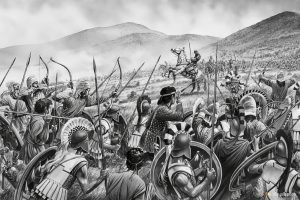
Vouni Palace was a Cypro-Classical hilltop complex built around 500 BC to control coastline movement and project authority over a contested landscape near Soli. Its architectural reliefs and capitals show Persian imperial symbols, including Hathor imagery, rosettes, and royal protection motifs, translated through local limestone carving and later blended with Greek spatial elements as political alignment shifted. This article explains why the site’s position mattered, how decoration was used to regulate experience inside the palace, and what the surviving fragments reveal about Cyprus negotiating empire without simply copying it. A Hilltop Built to Watch Soli Vouni was never meant to be subtle. Rising roughly 250 meters above sea level, the hill offers uninterrupted views across the coast and inland plains. From here, movement along the shoreline could be monitored with ease, especially the nearby territory of Soli, a city-kingdom that repeatedly resisted Persian authority. The location makes the palace’s purpose immediately clear. Vouni was built to watch, to assert presence, and to project authority outward. Comfort and urban life were secondary. This was a place where geography itself became part of governance. 500 BC: A Palace of Tension The palace was constructed around 500 BC, during a period when Cyprus stood at the intersection of competing powers. The island was under the control of the Achaemenid Persian Empire, yet many…

Read more
Kantou-Koufovounos

Kantou-Koufovounos

High on a hill near the Kouris River in the Limassol district of Cyprus sits Kantou Koufovounos, one of the island’s most significant Late Neolithic settlements. This archaeological site has quietly rewritten our understanding of life on Cyprus between 4,400 and 3,900 BC. Unlike the dramatic clifftop fortresses or coastal harbors that often capture imaginations, Kantou-Koufovounos was simply a community where people lived, worked, raised families, and built a society that lasted longer than many of its contemporary neighbors. The site takes its name from Koufovounos Hill, where it rests approximately 20 to 50 centimeters below the modern ground surface. This shallow depth speaks to how close we still are to these ancient inhabitants. The settlement sits on the western bank of the Kouris River, positioned in terrain that offered natural protection while remaining accessible to vital resources. Historical Background Excavations at Kantou-Koufovounos began in summer 1992 under the direction of the National and Kapodistrian University of Athens. This marked the first archaeological project the university undertook in Cyprus. The work continued through 1999, with additional periods in 1996, 1998, 2000, and 2001 dedicated to recording and studying the recovered materials. These careful excavations revealed rectangular residential units, storage pits, fire hearths, graves, and an extensive collection of stone tools. What makes this site particularly interesting is how much of…

Read more
Kampos tou Livadiou Circular Trail

Kampos tou Livadiou Circular Trail

The Kampos tou Livadiou trail offers a serene path through the heart of the Troodos forest. This circular route provides a perfect glance at the high altitude beauty of Cyprus. Visitors find a peaceful retreat within the dense pine groves and fresh mountain air. The path follows a level course around the plateau near the picnic area. It serves as an ideal choice for families or those who want a light walk. The trail stays under the shade of ancient trees for most of the loop. Each step brings a new view of the deep valleys below the mountain peaks. This specific area holds a rich variety of local plants and rare birds. The silence of the woods creates a calm space for reflection and nature study. Many people visit this spot to escape the heat of the coastal cities. It remains a top destination for outdoor enthusiasts on the island. Trail Overview Location: Troodos National Forest Park, Cyprus Distance: 1.9 miles (3.0 km) Route Type: Circular Difficulty: Easy Elevation Gain: 33 feet (10 meters) Duration: 45 – 60 minutes Best Time to Visit: Year-round Terrain: Flat Forest Floor Geological and Ecological Significance The terrain around Kampos tou Livadiou consists mainly of plutonic rocks from the Troodos ophiolite. These formations represent a slice of the ancient ocean crust from ninety…

Read more