Explore Cyprus with Our Interactive Map

Explore our top stories and discover ideas worth your time.

Religious Life in Cyprus

Religious Life in Cyprus

Religious life in Cyprus centers on Orthodox Christianity, which defines cultural identity for approximately 90 percent of Greek Cypriots even among those who rarely attend services. The Church of Cyprus holds autocephalous status, meaning it governs itself independently while remaining in communion with other Orthodox churches worldwide. This independence, granted at the Council of Ephesus in 431 AD, has survived centuries of foreign occupation including Frankish Crusaders, Venetian merchants, Ottoman Turks, and British colonizers. The church functioned not just as religious institution but as guardian of Greek language, culture, and national identity during periods when political sovereignty was impossible. Orthodox practice structures daily life through home iconostases with burning oil lamps, morning and evening prayers, feast day celebrations, and approximately 180 annual fasting days. The liturgical calendar organizes social activities, agricultural work, and family gatherings around major celebrations including Easter, the Dormition of the Virgin Mary on August 15, and hundreds of local patron saint festivals called panigyria. Ancient Christian Foundations on the Island Christianity reached Cyprus in 45 AD when the Apostle Paul traveled with Barnabas, a native Cypriot, and Mark the Evangelist from Syrian Antioch. They arrived first at Salamis on the eastern coast before crossing westward to Paphos, where they converted Sergius Paulus, the Roman proconsul governing Cyprus. This conversion made Cyprus the first territory in the…

Read more
Saint Neophytos Cave Monastery

Saint Neophytos Cave Monastery

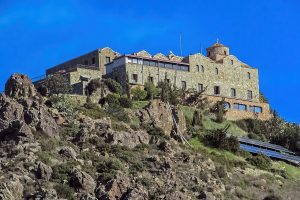
Saint Neophytos Monastery is one of the most historically significant monastic sites in Cyprus. Located on a hillside near the village of Tala, the monastery is closely connected to the life and writings of Neophytos, a medieval Cypriot monk, writer, and chronicler who spent much of his life in isolation inside a rock-cut cave. Born in 1134 in the mountain village of Kato Drys near Lefkara, Neophytos came from a farming family and was one of eight children. He later became known for his extensive writings on politics, society, natural disasters, and life in medieval Cyprus. Although he chose a secluded lifestyle, his manuscripts became some of the most valuable historical sources from the Byzantine and early Frankish periods on the island. Historical Background Neophytos grew up in modest conditions and reportedly learned to read and write only after entering monastic life. Historical accounts state that when his family arranged a marriage for him, he left home and joined the Monastery of Saint John Chrysostomos in northern Cyprus. There, he worked as an assistant sacristan while continuing his studies. Despite living in a monastery, Neophytos preferred isolation and repeatedly sought permission to live as a hermit. In 1158, he traveled to Jerusalem and visited monasteries and historical sites in the region before returning to Cyprus. After attempting to travel to…

Read more
Roman Road Network

Roman Road Network

Cyprus already had roads before the Romans arrived. The earliest routes date back to the Bronze Age, and by the end of the Hellenistic period, a road network circled the entire island. These pre-Roman roads connected cities with their surrounding territories and linked major settlements along the coast. However, they were often simple tracks suitable for pedestrians and pack animals rather than the engineered highways Romans built elsewhere in their empire. When Cyprus became a Roman province in 22 BC under Emperor Augustus, the new administration inherited this existing network. The Romans added secondary roads and improved certain routes, but they did not rebuild the entire system to match the standards used in Italy or other provinces. This practical approach reflected Cyprus's geography and peaceful status. The island was stable enough not to require a large military presence, so the roads served primarily civilian purposes rather than rapid military deployment. Augustus and later Emperor Titus are credited in inscriptions as the creators of the formal Roman road system on Cyprus. The roads they established formed part of the imperial network, meaning they received official recognition and maintenance funding from Rome itself. How the Road System Worked The main roads formed a coastal highway that encircled the island, connecting all major cities. From this primary route, secondary roads branched inland to…

Read more