Explore Cyprus with Our Interactive Map

Explore our top stories and discover ideas worth your time.

Cyprus Scenic Mountain Passes

Cyprus Scenic Mountain Passes

Cyprus mountain roads offer some of the Mediterranean's most spectacular drives, with routes that climb from sea level to nearly 2,000 meters through ancient forests, traditional villages, and panoramic viewpoints. These roads showcase the island's dramatic geography while connecting travelers to centuries of history and natural beauty. Mount Olympus Road The road to Mount Olympus climbs to 1,952 meters above sea level, making it the highest point on the island. Two military bases occupy the summit, one British, limiting public access to the very top. However, roads leading toward the peak provide stunning views of surrounding valleys and forests. The journey starts from several possible directions, with routes from Limassol through Platres being among the most popular. The ascent features countless switchbacks and hairpin turns as the road gains elevation. Dense pine forests cover the mountainsides, giving way to more exposed terrain at higher altitudes. Winter transforms this area into Cyprus's only ski destination, with snow covering the peaks from January through March. Drivers should fill fuel tanks before attempting the climb because petrol stations become scarce above 1,000 meters. The temperature drops noticeably with altitude, sometimes falling 10 degrees Celsius cooler than coastal areas. This makes the mountain roads a welcome escape during summer heat but creates challenging conditions in winter when ice forms on shaded sections. Cedar Valley…

Read more
Teucer of Salamis

Teucer of Salamis

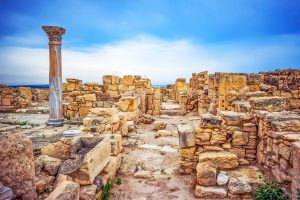
Teucer of Salamis was a legendary Greek hero from the Trojan War, famed as a skilled archer and half-brother to the mighty Ajax. Banished from his homeland after the war, he journeyed to Cyprus under divine guidance and founded the ancient city of Salamis, naming it after his lost island home. His tale of exile, resilience, and renewal weaves into Cyprus's cultural fabric, turning personal tragedy into a founding myth that still inspires thoughts on identity and fresh starts. The Legendary Archer Who Bridged Worlds Think of Teucer as more than just a side character in epic tales - he's a bridge between the chaos of war and the hope of new beginnings. In Greek mythology, he's the son of King Telamon of Salamis Island and Hesione, a Trojan princess captured during a raid on Troy long before the famous war. This mixed heritage made him a natural outsider: Greek by upbringing but with Trojan blood, nephew to King Priam and cousin to Hector and Paris. As an archer rather than a frontline brute, Teucer embodied precision and strategy, fighting from behind his brother's massive shield. But his real legacy lies in Cyprus, where he didn't conquer but created, founding Salamis as a haven for exiles like himself. It's a story that captures the island's essence - a melting pot…

Read more
Almond Tree In Cyprus

Almond Tree In Cyprus

Picture a Cypriot hillside in late February, when most trees are still bare. Suddenly, clouds of delicate pink and white flowers appear as if by magic, painting the landscape in soft pastel tones weeks before any leaves unfold. This early burst of beauty belongs to the almond tree, a cherished symbol of spring and one of the island’s most generous gifts. A Tree Steeped in Mediterranean Sweetness Prunus amygdalus, the almond tree, belongs to the Rosaceae family – the same group as peaches, cherries and roses. In Cyprus it grows as a graceful deciduous tree, usually 4–10 metres tall, with a rounded crown and slender branches. It thrives in the sunny, well-drained soils of the island’s valleys, hillsides and traditional orchards. Roots in the Dawn of Agriculture Almonds are among the very first fruit trees domesticated by humans, with archaeological evidence from the Early Bronze Age in the Levant and remains found in Tutankhamun’s tomb. The wild ancestor likely grew in the hills of western Asia and the eastern Mediterranean. In Cyprus, cultivation dates back thousands of years; the tree appears in ancient texts and has been part of village life for generations. Early naturalists such as Unger and Kotschy noted almond orchards during their 1862 explorations, while modern forest and agricultural records show how the almond has been woven…

Read more