Almond Tree
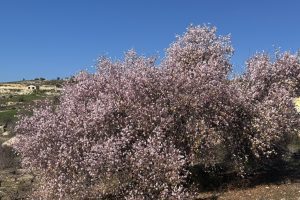
Picture a Cypriot hillside in late February, when most trees are still bare. Suddenly, clouds of delicate pink and white flowers appear as if by magic, painting the landscape in soft pastel tones weeks before any leaves unfold. This early burst of beauty belongs to the almond tree, a cherished symbol of spring and one of the island’s most generous gifts. Konstantin-Solovev A Tree Steeped in Mediterranean Sweetness Prunus amygdalus, the almond tree, belongs to the Rosaceae family – the same group as peaches, cherries and roses. In Cyprus it grows as a graceful deciduous tree, usually 4–10 metres tall, with a rounded crown and slender branches. It thrives in the sunny, well-drained soils of the island’s valleys, hillsides and traditional orchards. Roots in the Dawn of Agriculture Almonds are among the very first fruit trees domesticated by humans, with archaeological evidence from the Early Bronze Age in the Levant and remains found in Tutankhamun’s tomb. The wild ancestor likely grew in the hills of western Asia and the eastern Mediterranean. In Cyprus, cultivation dates back thousands of years; the tree appears in ancient texts and has been part of village life for generations. Early naturalists such as Unger and Kotschy noted almond orchards during their 1862 explorations, while modern forest and agricultural records show how the almond has been…
Read more