Explore Cyprus with Our Interactive Map

Explore our top stories and discover ideas worth your time.

Home Life in Cyprus – Family and Cultural Bonds

Home Life in Cyprus – Family and Cultural Bonds

Family stands at the center of Cypriot life, shaping everything from daily routines to major life decisions. Multiple generations often live in close proximity and gather regularly for meals and celebrations. kanikahotels-com The concept of family extends beyond parents and children to include grandparents, aunts, uncles, and cousins who form tight support networks. Home represents more than a dwelling, it serves as the primary social hub where traditions pass between generations and cultural identity remains strong. Historical Roots of Family Structure The importance of family in Cyprus traces back thousands of years through Greek, Roman, and Byzantine civilizations. Ancient Greeks identified themselves first as family members, then by place of origin, and lastly as citizens. This hierarchy persisted through Ottoman rule from 1571 to 1878 and British colonial administration until 1960. home-cy During these periods, families provided crucial support when governmental systems proved unreliable. The Orthodox Church strengthened family bonds through baptisms, weddings, and religious festivals that reinforced kinship ties. How Cypriot Families Live Today Modern Cypriot homes reflect both traditional values and contemporary needs. Nuclear families form the basic household structure, but children typically live with parents much longer than in Western cultures. Young adults commonly remain at home throughout their twenties, often until marriage around age 29 for women and 30 for men. This extended co-residence stems partly…

Read more
Cyprus Youth Music and Dance Initiatives

Cyprus Youth Music and Dance Initiatives

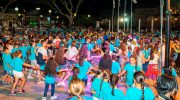
In Cyprus, music and dance often arrive in a young person’s life long before anyone calls them “heritage.” They appear in school assemblies, in family celebrations, and in the easy confidence of a village circle dance that seems to know its own steps. Youth initiatives across the island connect inherited traditions with contemporary expression, shaping identity and confidence while helping the next generation reinterpret culture in a society built at a crossroads. avia-discount A Cultural Education That Starts Early For many children, traditional rhythms and movements are first encountered casually, through school programs, local associations, or community gatherings, where participation matters more than perfection, and the goal is simply to join in. financialmirror-com Two learning paths tend to develop side by side. State-supported education introduces structure through music schools and organised dance instruction, prioritising technical skill and preservation of established forms. At the same time, community-based groups such as youth clubs, folklore associations, and informal workshops offer a more flexible approach that emphasises shared experience and learning by doing. Together, these routes allow young Cypriots to experience culture as both discipline and everyday practice, rather than choosing one and rejecting the other. Learning Beyond the Classroom Some of the strongest youth initiatives thrive outside formal education, because tradition in Cyprus is most alive when it sits inside social life instead…

Read more
Kition Cyclopean Walls

Kition Cyclopean Walls

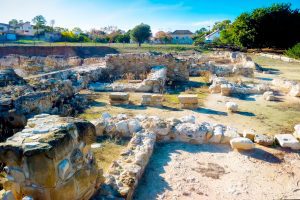
A sacred complex in Kition constructed with massive stone blocks, housing temples dedicated to Astarte and Melqart, serving the Phoenician community. larnakaregion-com The Cyclopean Walls and Temples of Kition represent a cornerstone of Cyprus's ancient heritage, where monumental architecture and religious devotion intertwined to form a vibrant sacred precinct in the heart of the island's earliest urban center. Located in modern Larnaca, ancient Kition was one of Cyprus's ten city-kingdoms, thriving as a hub of trade, culture, and spirituality from the Late Bronze Age onward. This complex, characterized by its imposing walls built from enormous limestone blocks, enclosed a series of temples primarily dedicated to the Phoenician deities Astarte, goddess of fertility and war, and Melqart, a protector figure akin to Heracles. Serving the Phoenician settlers who dominated the city from the 9th century BC, the site facilitated rituals, offerings, and communal gatherings that reinforced social bonds and economic ties across the Mediterranean. As a testament to Cyprus's role in bridging Eastern and Western civilizations, Kition's sacred spaces evolved over centuries, blending indigenous Cypriot traditions with influences from Mycenaean Greece, Phoenicia, and beyond, offering modern visitors a window into the island's multifaceted past. A Sacred Complex in Ancient Kition The Cyclopean Walls and Temples of Kition formed the defensive and spiritual core of the ancient city, sprawling across several hectares…

Read more