Explore Cyprus with Our Interactive Map

Explore our top stories and discover ideas worth your time.

Heroic Tales of Digenis Akritas

Heroic Tales of Digenis Akritas

Digenis Akritas stands as one of the most celebrated heroes in Byzantine literature and Greek folklore. His stories blend historical events with supernatural feats, creating a figure who represents courage, strength, and the defense of Christian lands against invaders. The name Digenis means "two bloods" or "of two peoples," referring to his mixed Byzantine Greek and Arab heritage. Akritas translates to "border lord" or "frontiersman," reflecting his role as a defender of the Byzantine Empire's eastern frontiers. While the epic poem about his life originated in the 12th century, oral traditions about Digenis existed for centuries before and continue to this day, particularly in Cyprus, Crete, and Asia Minor. Historical Context The epic poem of Digenis Akritas emerged from the tradition of Acritic songs, narrative ballads that celebrated the warriors who defended the Byzantine Empire's borders. These defenders, called Akrites, received land grants along the empire's edges in exchange for military service. They lived dual lives as both farmers and soldiers, working their fields during peace and taking up arms when Arab raiders threatened Byzantine territory. The Arab incursions into Byzantine lands from the 7th to the 11th centuries provided the historical context for these stories. The border regions, particularly around the Euphrates River and in Cappadocia, witnessed constant skirmishes and raids. The epic poem itself exists in six known…

Read more

Diarizos Valley, Cyprus

Diarizos Valley, Cyprus

The Diarizos Valley stretches through the heart of western Cyprus, where ancient traditions meet rare wildlife in one of the island's most important conservation zones. Located east of Paphos and carved by the fourth-longest river in Cyprus (Diarizos River), this valley combines ecological significance with centuries of winemaking heritage across 14 traditional villages. The area covers 8,804 hectares and serves as both a Natura 2000 protected site and an Important Bird Area recognized for its unique biodiversity. The Diarizos River flows for 42 kilometers from two sources on the southeastern slopes of the Paphos Forest near Mount Olympus. Its name derives from the Greek word for two roots, referencing the Platys and Kaminaria tributaries that merge north of the historic Tzelefos Bridge to form the main river channel. Unlike most Cypriot rivers, the Diarizos maintains water flow throughout all seasons, making it one of only five permanently flowing rivers on the island. The river basin extends across 278 square kilometers between the western slopes of Mount Olympus at 1,951 meters elevation and the Paphos Forest peaks. The elevation gradient ranges from 800 meters near the source down to 50 meters where the river approaches the Paphos plain before reaching its Mediterranean outlet near Kouklia village. This dramatic descent creates varied habitats that support different plant and animal communities at each…

Read more
Artisanal and Industrial Fishing

Artisanal and Industrial Fishing

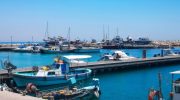
Fishing in Cyprus exists in two distinct worlds. Small boats with weathered wood head out at dawn from coastal shelters, while larger vessels equipped with modern technology venture into deeper waters. The Cypriot fishing fleet comprised 858 vessels in 2019, representing a sector that contributes around 0.8% to GDP but holds significant importance in coastal communities.  This industry balances traditional methods passed down through generations with contemporary commercial operations. Over 300 types of fish have been found in the sea around Cyprus, yet the eastern Mediterranean's warm, nutrient-poor waters present unique challenges for fishers. The Three Faces of Cyprus Fishing Today There are three fishing segments in Cyprus: the trawler sector, both inland fishing (2 trawlers) and high sea trawlers (5 trawlers), purse seine fishing (3 purse seiners), and coastal fishing with 4 to 12 metres boats. Small-scale coastal fishing dominates the fleet. These artisanal fishers work close to shore, often using multiple gear types during a single trip to adapt to conditions and catch opportunities. The trawl fishery operates under strict regulations. Mesh size is 40 mm, the minimum depth of fishing is 50 m, and the fishing season lasts from November 7 to May 31. These restrictions aim to protect fish stocks and sensitive bottom habitats. Trawlers cannot operate in depths beyond 1,000 meters. There are also around…

Read more