Explore Cyprus with Our Interactive Map

Explore our top stories and discover ideas worth your time.

Panagia Asinou Church

Panagia Asinou Church

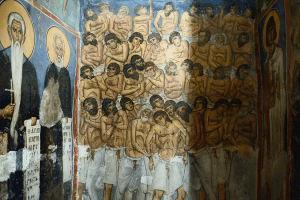
Asinou Church (Panagia Phorviotissa), near Nikitari in the Troodos foothills, preserves one of the Mediterranean’s most complete sequences of Byzantine wall painting, built up in phases from the 12th to the 17th century. Its modest scale, secluded setting, and protective timber roof helped the frescoes survive when many urban churches were altered or lost. This article explains how the church evolved, how its painted program is structured, and what its layered imagery reveals about faith, community life, and historical change in Cyprus. noticketback.com A Church Protected by Its Own Isolation Asinou sits in the foothills of the Troodos range, away from coastal cities and major trade routes. That distance shaped its survival. While many urban churches were altered, damaged, or rebuilt, Asinou remained relatively untouched, sheltered by geography as much as intention. irecommend.ru The setting still feels deliberate. Almond trees and pines surround the church, and the valley softens sound. This sense of removal is not accidental. Byzantine monasteries often sought quiet landscapes where spiritual life could unfold without interruption. At Asinou, that isolation became a form of protection, preserving paintings that would otherwise have been lost. Why It Is Called Panagia Phorviotissa The church's formal name, Panagia Phorviotissa, refers to the 'Monastery of Forvion' (or 'of the vetches'/'of the spurges'), a title linked to rural life and the surrounding…

Read more

Cyprus Climate Patterns 2026

Cyprus Climate Patterns 2026

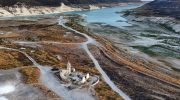
Cyprus experiences a subtropical Mediterranean climate characterized by hot, dry summers from mid-May to mid-September and rainy, changeable winters from November to mid-March separated by short autumn and spring seasons. The island enjoys between 300 and 340 sunny days annually, making it one of the sunniest places in Europe. vokrugsveta-ru. However, 2026 continues a troubling pattern of climate variability and extremes that have marked recent years. Variability in annual rainfall is characteristic for the island, and droughts are frequent and sometimes severe. Understanding these patterns becomes crucial for agriculture, water management, and planning across all sectors of Cypriot life. Temperature Patterns Across the Island Cyprus is a region with a hot climate. The day temperatures range from 16 degrees Celsius in January to 34 degrees Celsius in August. Temperatures during the night go from 7 degrees Celsius in February to 22 degrees Celsius in August. These averages mask significant regional variation driven by topography and distance from the coast. Variations in temperature and rainfall are governed by altitude and, to a lesser extent, distance from the coast. Coastal areas maintain more moderate temperatures year-round, with average January temperatures around 12 degrees Celsius. The sea itself ranges from 16 degrees Celsius in February to 27 degrees Celsius in August, extending the practical swimming season from May through October -mirror.co-uk The inland…

Read more
Australian Pine in Cyprus

Australian Pine in Cyprus

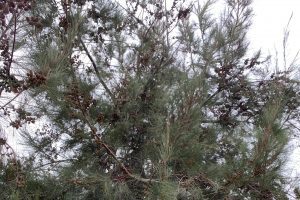
Picture yourself walking along a sandy Cypriot beach on a breezy afternoon, where tall, slender trees sway like green fountains, their needle-like branches rustling softly like the sea itself. These are the coastal she-oaks, or Casuarina trees, quiet guardians of our shores that have a story as intriguing as the waves they overlook. But how did these Australian natives find their way to our island paradise? www.wikimedia.commons.org Getting to Know the She-Oaks Coastal she-oaks belong to the Casuarinaceae family, a group of trees and shrubs mostly from the southern hemisphere that look a bit like pines but are actually flowering plants. In Cyprus, the main species you'll encounter is Casuarina equisetifolia, often just called she-oak or Australian pine, along with a few others like C. cunninghamiana and C. glauca. Locally, they're known as Καζουαρίνα (Kazouarina), a name borrowed from the Malay word for cassowary, because their drooping branches resemble the feathers of that big, flightless bird. A Journey Across Oceans These trees first grew in the sandy coasts and woodlands of Australia, Southeast Asia, and the Pacific islands, where they've been part of the landscape for millions of years. They arrived in Cyprus during the British colonial era in the late 19th and early 20th centuries, much like eucalyptus and acacia, brought in to help stabilize dunes, provide quick shade,…

Read more