Explore Cyprus with Our Interactive Map

Explore our top stories and discover ideas worth your time.

Akamas Peninsula National Park

Akamas Peninsula National Park

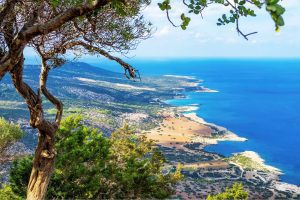
Akamas Peninsula National Park occupies the northwestern tip of Cyprus, beginning just north of Paphos and extending to Cape Arnaoutis. The landscape varies from golden beaches and dramatic coastal cliffs to arid plains covered in Mediterranean scrub and mountain forests of pine and juniper. shutterstock-com Deep gorges carved by seasonal rivers cut through the limestone terrain. No paved roads cross the interior, and most of the peninsula remains uninhabited. The area takes its name from Akamas, a son of the mythological hero Theseus, who supposedly founded the ancient city of Soli after fighting in the Trojan War. Historical Background Until the year 2000, the British military used Akamas for training exercises and as a firing range. Under the 1960 Treaty of Establishment, the British Army was allowed to use the peninsula for up to 70 days each year. The military presence actually helped preserve the area by preventing development. When the British withdrew, conservation groups and the Cyprus government began the long process of establishing protected status. visitcyprus-com In preparation for Cyprus joining the European Union, most of Akamas received designation under the Natura 2000 network between 2003 and 2009. Two turtle nesting beaches became Sites of Community Importance. The Polis-Gialia area received status as a Special Area of Conservation. The entire peninsula was designated a Special Protection Area for…

Read more
Kyrenia Castle

Kyrenia Castle

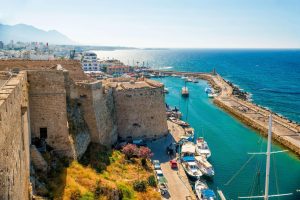
Kyrenia Castle stands at the edge of one of Cyprus’s most sheltered harbours, where land and sea have negotiated power, trade, and survival for centuries. Unlike hilltop fortresses built to dominate territory from afar, this castle was designed to watch the water closely. Its purpose has always been practical: to protect the harbour, control movement, and adapt to whoever ruled Cyprus at the time. That continuous adaptation rather than a single defining moment is what gives Kyrenia Castle its lasting significance. Adobe-Stock-com A Fortress Built for a Living Harbour Kyrenia Castle occupies a narrow strip of land between the town and the sea, positioned so that every vessel entering the harbour passes beneath its walls. From its earliest days, the castle was inseparable from daily life. Trade ships, fishing boats, and naval vessels all moved through the same space, watched over by stone walls that were never purely symbolic. Adobe-Stock-com This closeness to the harbour distinguishes Kyrenia Castle from many medieval fortifications. It was not a distant refuge, but an active participant in the rhythms of the town. Its defensive role was intertwined with commerce, communication, and maritime control. Byzantine Foundations and the First Line of Defence The earliest phase of Kyrenia Castle dates to the Byzantine period, when coastal settlements across the Eastern Mediterranean were reinforced against Arab naval…

Read more
Saranda Kolones Fortress

Saranda Kolones Fortress

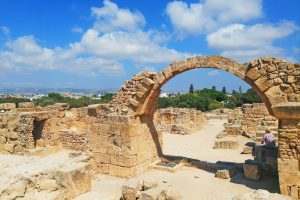
Inside the Paphos Archaeological Park, just north of the old harbor, a pile of broken stones and toppled columns marks where one of Cyprus's most important medieval fortresses once stood. Saranta Kolones, which translates to Forty Columns, served as the main defensive stronghold protecting Paphos during a turbulent period when Arab raids threatened the island. Today, visitors walk among its ruins and discover a fortress that endured multiple rebuilds, witnessed crucial historical events, and met a violent end in one of the worst earthquakes ever to strike Cyprus. tripadvisor-com Historical Background The fortress was built at the end of the 7th century AD under Byzantine rule. Historical records indicate that Theodore, the brother of Emperor Heraclius I, supervised its construction. At that time, the Arab Caliphate had emerged as a powerful force in the Middle East, and Cyprus found itself in the path of expansion. Arab forces launched raids on the island, making coastal cities particularly vulnerable. Paphos, with its strategic harbor and position on shipping routes, needed strong defenses. hotel-com The Byzantine builders created a formidable structure. The fortress featured walls three meters thick, substantial enough to resist siege weapons of that era. Four massive corner towers anchored the defenses, with four additional intermediate towers positioned along the connecting walls. A moat surrounded the entire complex, and access was…

Read more