Explore Cyprus with Our Interactive Map

Explore our top stories and discover ideas worth your time.

Cyprus Youth Music and Dance Initiatives

Cyprus Youth Music and Dance Initiatives

In Cyprus, music and dance often arrive in a young person’s life long before anyone calls them “heritage.” They appear in school assemblies, in family celebrations, and in the easy confidence of a village circle dance that seems to know its own steps. Youth initiatives across the island connect inherited traditions with contemporary expression, shaping identity and confidence while helping the next generation reinterpret culture in a society built at a crossroads. avia-discount A Cultural Education That Starts Early For many children, traditional rhythms and movements are first encountered casually, through school programs, local associations, or community gatherings, where participation matters more than perfection, and the goal is simply to join in. financialmirror-com Two learning paths tend to develop side by side. State-supported education introduces structure through music schools and organised dance instruction, prioritising technical skill and preservation of established forms. At the same time, community-based groups such as youth clubs, folklore associations, and informal workshops offer a more flexible approach that emphasises shared experience and learning by doing. Together, these routes allow young Cypriots to experience culture as both discipline and everyday practice, rather than choosing one and rejecting the other. Learning Beyond the Classroom Some of the strongest youth initiatives thrive outside formal education, because tradition in Cyprus is most alive when it sits inside social life instead…

Read more
Marriage and Birth Traditions of Cyprus

Marriage and Birth Traditions of Cyprus

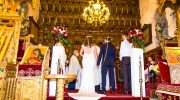
Marriage and birth stand as the most significant life transitions in traditional Cyprus society, each marked by elaborate rituals that involve entire communities. Wedding customs symbolize separation from childhood families and entry into adult society, while birth traditions welcome new members into both family and village. limassoltourism-com Orthodox Christianity frames these milestones through sacraments of marriage and baptism, but older customs dating to pre-Christian times persist beneath the religious overlay. The preservation and transmission of these customs falls mainly to new couples, their families, musicians who perform traditional songs, and folkloric groups that keep practices alive through demonstration and participation. Engagement and Marriage Preparations The engagement is usually arranged by the families of the bride and groom, who agree on the dowry, the wedding date, and other details. The groom's family visits the bride's family with gifts such as jewelry, clothes, and money. The bride and groom exchange rings and wear them on their right hands until the wedding day. In earlier times, marriages in Cyprus used to be arranged through the services of matchmakers known as proxenitra who facilitated negotiations between families. kopiaste-org Upon engagement, the groom's family accepts the task of making traditional sesame-coated breads called glistarkes that the bride's family hands out as wedding invitations. These round breads carry symbolic meaning related to fertility and abundance. The…

Read more
Omodos Traditional Village & Monastery

Omodos Traditional Village & Monastery

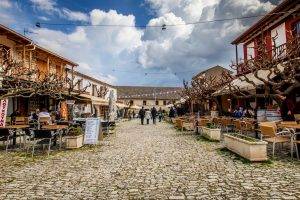
Omodos is a historic mountain village in Cyprus’s Troodos range, known for its Byzantine monastery, traditional architecture, and wine-making heritage. Located 42 kilometers northwest of Limassol at an elevation of 800 meters, the village lies within the Krasochoria district, the traditional wine-producing region of Cyprus. Its location in this wine heartland has shaped the local economy and identity for centuries. Shutterstock-com The village centers around a large cobblestone square, possibly the largest in Cyprus at 3,000 square meters, dating back to 1910. Stone houses with red-tiled roofs, wooden balconies, and flower-filled courtyards line narrow streets that wind through the settlement. The architecture reflects a careful balance between preservation and modern use, with many traditional homes now serving as guesthouses, wine cellars, and small museums. Globeguide-com Historical Foundation According to local legend, the village formed around a miraculous discovery. Residents from the neighboring villages of Ano and Kato Koupetra, which no longer exist, observed a mysterious fire appearing in the bushes at night. When they investigated at dawn, they found no trace of fire. After this event repeated over several nights, they excavated the site and uncovered a small cave that contained a wooden cross. A chapel was built above the cave to house the sacred relic, and this structure became the foundation of the Monastery of the Cross. Orthphoto-net The…

Read more