Explore Cyprus with Our Interactive Map

Explore our top stories and discover ideas worth your time.

Papoutsa Peak Cyprus Eco Trails

Papoutsa Peak Cyprus Eco Trails

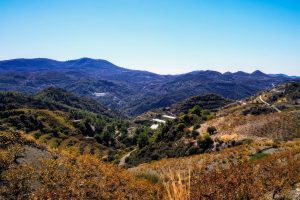
Papoutsa Peak stands at 1,554 metres in the eastern Troodos Mountains, surrounded by one of Cyprus's most important forest reserves. The forests are part of the Adelfoi Forest system, a vast protected area recognized within the Troodos Geopark for its ecological significance. The peak sits between Mount Olympus to the west and Madari to the north, creating a corridor of protected wilderness that covers over 120 square kilometres. Unlike more accessible Troodos peaks with developed facilities, Papoutsa maintains a wilder character with fewer visitors and more pristine ecosystems. The mountain lies within the Papoutsa and Adelfoi Forests mentioned by the Troodos Geopark as among the island's most noteworthy woodland areas. These forests protect crucial habitat for species found nowhere else on Earth. The combination of elevation, geology, and minimal human disturbance creates conditions where rare plants and animals can survive pressures that threaten them in more accessible locations. Historical Background The Troodos Mountains, including Papoutsa, emerged approximately 92 million years ago as oceanic crust from the ancient Tethys Ocean. Tectonic forces pushed this underwater rock upward through obduction, eventually creating the island's central mountain mass. Papoutsa consists of the same serpentinized harzburgite and peridotite rocks found throughout Troodos, representing mantle material from thousands of metres beneath the ancient seabed. These ultramafic rocks create unique soil chemistry with high concentrations of…

Read more
Jewish Quarter of Famagusta

Jewish Quarter of Famagusta

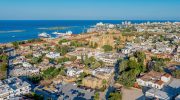
The Jewish Quarter of Famagusta stood as one of the most significant Jewish settlements in the eastern Mediterranean during the medieval period. Famagusta was one of the most cosmopolitan cities of its era, with distinct quarters for different communities including Greeks, Syrians, and Jews. The Jewish quarter was called zuecha or zudecha in Venetian documents, with its location clearly marked on a 1571 map of the city. Medieval Famagusta contained more Jews than any other Greek island according to the 12th century traveler Benjamin of Tudela, who documented three distinct Jewish sects living on Cyprus. The community prospered as money lenders, merchants, and traders who connected Europe with the Eastern Mediterranean. By the 16th century, approximately 2,000 Jews lived in Famagusta, making it one of the largest Jewish populations in the region. The quarter contained synagogues, schools, and the full infrastructure of a thriving Jewish community. From Ancient Roots to Medieval Flowering Jewish presence in Cyprus dates back possibly to the 3rd century BC during the Roman conquest of the island. Ancient synagogues existed in at least three locations on Cyprus including Golgoi, Lapethos, and Constantia-Salamine, with an inscribed column from the 4th century recording the 3rd century renovation of a synagogue. Cypriot Jews participated in the diaspora-wide Kitos War revolt against Rome in 117 CE, resulting in severe Roman…

Read more

Cyprus Workweek Structure and Professional Norms

Cyprus Workweek Structure and Professional Norms

The Cyprus workweek follows EU labor regulations with Mediterranean characteristics. Standard working hours range from 38 to 48 hours per week, with the legal maximum set at 48 hours including overtime. Full-time employment is legally defined as 40 hours per week, typically distributed as 8 hours per day across 5 working days.  Professional culture balances European business standards with relationship-focused traditions. The structure reflects both modern efficiency requirements and traditional values about work-life balance, family time, and personal connections. How Cyprus Developed Its Work Standards Colonial rule under the British from 1878 to 1960 helped establish the foundation for modern business systems and labor regulations. The British introduced standardized office hours, formal employment contracts, and structured business practices. After independence in 1960, Cyprus maintained these European frameworks while preserving Mediterranean social customs. EU entry in 2004 brought significant changes, opening new trade and investment opportunities. Cyprus adopted EU working time directives, which set clear limits on maximum hours and mandatory rest periods. According to EU directives, employees should not work more than 48 hours per week including overtime, averaged over a four-month period. This averaging system allows for seasonal variations while protecting worker health. The 2013 financial crisis affected employment patterns significantly. The middle class struggled under the economic climate, with unemployment becoming a serious problem. However, this period also…

Read more