Explore Cyprus with Our Interactive Map

Explore our top stories and discover ideas worth your time.

Cyprus Fertile River Valleys

Cyprus Fertile River Valleys

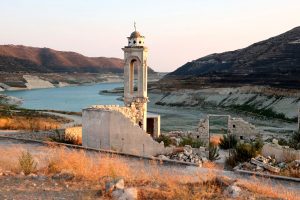
Cyprus contains approximately 35 streams and rivers, though most qualify as temporary watercourses that flow only during winter rains. These rivers create fertile valleys that have supported agricultural communities for over 9,000 years. The island receives an estimated 600 million cubic meters of usable runoff from annual rainfall, a limited resource distributed unevenly across the landscape. Major rivers, including the Pedieos, Kouris, Xeros, Vasilikos, and Diarizos originate in the Troodos Mountains, flow through productive valleys, and terminate either at the Mediterranean coast or in modern reservoir systems. The Pedieos River Valley and Central Plains Agriculture The Pedieos River extends 100 kilometers from its source near Machairas Monastery in the Troodos range, making it the longest river in Cyprus. The river flows northeast through the Mesaoria Plain, passes through Nicosia, and then continues east to Famagusta Bay near the ancient city of Salamis. Archaeological evidence confirms continuous agricultural settlement along the Pedieos valley from the Bronze Age through modern times. The ancient town of Tamasos developed on the left bank of the Pedieos, its ruins extending across a hill overlooking the rich valley below. The river derives its name from ancient Greek words meaning to see the east, as its course coincides with the path of the dawn goddess. The Mesaoria Plain, traversed by the Pedieos and several tributary floodplains, once…

Read more

Cyprus Scenic Mountain Passes

Cyprus Scenic Mountain Passes

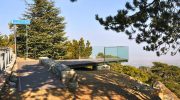
Cyprus mountain roads offer some of the Mediterranean's most spectacular drives, with routes that climb from sea level to nearly 2,000 meters through ancient forests, traditional villages, and panoramic viewpoints. These roads showcase the island's dramatic geography while connecting travelers to centuries of history and natural beauty. Mount Olympus Road The road to Mount Olympus climbs to 1,952 meters above sea level, making it the highest point on the island. Two military bases occupy the summit, one British, limiting public access to the very top. However, roads leading toward the peak provide stunning views of surrounding valleys and forests. The journey starts from several possible directions, with routes from Limassol through Platres being among the most popular. The ascent features countless switchbacks and hairpin turns as the road gains elevation. Dense pine forests cover the mountainsides, giving way to more exposed terrain at higher altitudes. Winter transforms this area into Cyprus's only ski destination, with snow covering the peaks from January through March. Drivers should fill fuel tanks before attempting the climb because petrol stations become scarce above 1,000 meters. The temperature drops noticeably with altitude, sometimes falling 10 degrees Celsius cooler than coastal areas. This makes the mountain roads a welcome escape during summer heat but creates challenging conditions in winter when ice forms on shaded sections. Cedar Valley…

Read more
Platres to Prodromos Drive

Platres to Prodromos Drive

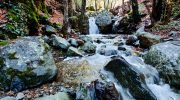
The scenic road from Platres to Prodromos traces one of the most beautiful routes in the Troodos Mountains. This approximately 18-kilometer drive connects two of Cyprus's most significant mountain villages, winding through dense pine forests at elevations between 1,100 and 1,400 meters above sea level. The route offers travelers a chance to experience the island's mountainous interior, where cool air and verdant landscapes contrast sharply with the coastal regions below. Platres sits at an altitude of 1,100 meters and serves as one of the largest resort villages in the Troodos range. Prodromos, positioned at 1,380 meters, holds the distinction of being the highest village in Cyprus. The road between them follows the natural contours of the mountain, revealing panoramic views of valleys, forests, and distant coastlines. Historical Routes and Mountain Connections The modern road between Platres and Prodromos has its roots in centuries-old paths that connected mountain communities. During the Byzantine period, these routes served monasteries and settlements that sought refuge in the highlands. Medieval maps show Prodromos marked as "Prodromo," indicating its existence as a settlement during that era. By the late 19th century, British colonial administrators recognized the Troodos Mountains as an ideal summer retreat from the coastal heat. They developed road infrastructure that linked villages such as Platres and Prodromos, transforming them into popular destinations for government…

Read more