Explore Cyprus with Our Interactive Map

Explore our top stories and discover ideas worth your time.

The Dove as a Peace Symbol

The Dove as a Peace Symbol

The white dove carrying an olive branch appears as the centerpiece of Cyprus's national emblem, adopted in 1960 when the island gained independence from British rule. The dove, symbolizing peace, and the olive branch, symbolizing peace-making, are important elements that emphasize Cyprus's aspiration for peace and stability after many years of conflict. These universal symbols of harmony are fundamental to the aspirations of the Republic of Cyprus, deliberately chosen to unite ethnic and cultural groups on the island without favoring Greek Orthodox crosses or Turkish crescents. Biblical Origins of the Peace Dove The dove as a peace symbol traces its roots to the biblical story of Noah's Ark. After the great flood, Noah sent out a dove to determine if waters had receded. The dove returned with an olive branch, signaling that land had emerged and God's wrath had ended. This story established the dove and olive branch as symbols of hope, new beginnings, and divine peace across Christian, Jewish, and Islamic traditions. The olive tree itself held sacred significance throughout Mediterranean civilization. In ancient Greece, the olive represented wisdom and was sacred to Athena. Victors at the Olympic Games received crowns woven from olive branches. The tree's long life, sometimes exceeding 800 years, made it a symbol of endurance and continuity. Its fruit and oil provided food, light, and…

Read more

Long-Distance Bus Travel Between Cyprus Cities

Long-Distance Bus Travel Between Cyprus Cities

The InterCity Buses company operates the primary network linking Nicosia, Limassol, Larnaca, Paphos, and the free Famagusta area. These routes run seven days a week throughout the year, with schedules designed to accommodate both weekday commuters and weekend travelers. Buses between Nicosia and Limassol depart every 30 minutes, with tickets costing between €6 and €8. The journey covers approximately 85 kilometers and takes between 1 hour 26 minutes and 1 hour 45 minutes, depending on traffic and specific route variations. The Larnaca to Paphos route passes through Limassol, creating a coastal corridor that serves tourist areas and residential zones. This route operates multiple times daily, though less frequently than the Nicosia-Limassol connection. Passengers can board at various stops along the way, making these buses practical for intermediate destinations. Routes also connect Nicosia with Paphos, Ayia Napa, and Paralimni. The free Famagusta area receives regular service from all major cities, ensuring residents have access to the broader transportation network. Each route features multiple departure times throughout the day, though frequency varies by demand and season. Understanding Service Frequency and Schedules On weekdays, the earliest bus from Limassol to Nicosia departs at 5:30 AM, with the last departure at 9:30 PM. Weekend and holiday schedules differ slightly, with first departures typically starting at 7:00 AM and final buses leaving around 10:30 PM.…

Read more
Cyprus Beaches And Water Sports

Cyprus Beaches And Water Sports

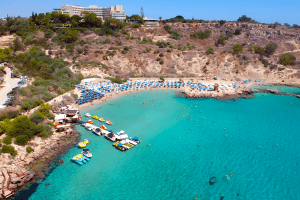
Cyprus ranks as the third largest island in the Mediterranean and boasts some of Europe's finest coastal areas, with 60 beaches marked with the Blue Flag, an international award in the field of ecology and environmental protection given to beaches and marinas. In practice this means incredibly clean beaches and crystal clear water. The eastern coast stands particularly renowned for its fantastic assortment of beaches considered by many to be the best on the entire island, with Ayia Napa and Protaras regions lined by glorious stretches of golden sand. The island's beaches offer something for everyone, from lively party atmospheres to secluded family-friendly coves, all benefiting from Cyprus's 340 days of sunshine annually and sea temperatures reaching 27 degrees Celsius during summer months. The Famous Beaches of Ayia Napa Nissi Beach stands as probably the most popular beach in Cyprus, stretching 500 meters with white sand and turquoise water. The water after entering remains quite shallow for a long distance and stays crystal clear with minimal waves. Nissi Beach got its name from an islet not far from the coast that visitors can reach when the tide is low in winter and spring, as a sand walkway unveils leading from the beach to the small island inhabited by low-level shrubs and pretty plants. The beach has earned Blue Flag status…

Read more