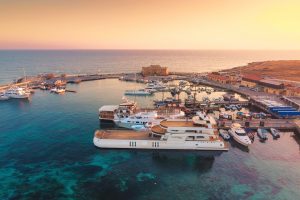
Explore Cyprus with Our Interactive Map

Explore our top stories and discover ideas worth your time.

Education System in Cyprus

Education System in Cyprus

Cyprus offers a diverse and well-structured education system that reflects the island’s blend of European academic standards and strong local cultural identity. From early childhood through upper secondary education, students move through clearly defined stages, with options that include public Greek schools and private international institutions offering British, American, or International Baccalaureate pathways. What matters most for families is not enrollment statistics, but how schools teach at each level, how students gain admission, and what extracurricular opportunities shape a child’s development. Whether planning long-term settlement or a temporary relocation, understanding how education works in Cyprus helps parents choose a pathway that supports both academic success and personal growth. Early Years Education (Ages 3–6) Early childhood education in Cyprus focuses on social development, communication skills, and early cognitive growth. Public kindergartens operate primarily in Greek and emphasize structured play, storytelling, music, art, and foundational numeracy. The goal is to prepare children emotionally and socially for primary school rather than introduce formal academic pressure. Private schools such as The Grammar School and The English School offer English-based early years programs. These schools often follow British early years frameworks that encourage independence, creativity, and interactive learning. Children develop language confidence and classroom discipline in a supportive environment. Primary Education (Ages 6–12) Primary education lasts six years and builds essential academic foundations. Public primary…

Read more
Cyprus Sustainable Wine Production

Cyprus Sustainable Wine Production

Cyprus hosts more than ten indigenous grape varieties that evolved over millennia to thrive in hot, dry Mediterranean conditions. These local grapes require significantly less water, fewer synthetic fertilizers, and minimal pesticide applications compared to international varieties. Research conducted by Cyprus University of Technology found that indigenous varieties like Xynisteri adapt better to drought and heat waves than introduced varieties such as Chardonnay. The indigenous white grape Xynisteri has earned recognition as one of the world's most environmentally friendly varieties. Studies measuring carbon footprints from vineyard to market found that Xynisteri produces lower greenhouse gas emissions than introduced varieties like Cabernet Sauvignon. This native grape thrives without irrigation in Cyprus's dry climate, conserving precious water resources while maintaining quality. The Carbon Footprint of Cyprus Wine Production Researchers at Cyprus University of Technology conducted the first comprehensive carbon footprint study of Cypriot wine in 2020. They analyzed data from 20 vineyards cultivating Xynisteri and tracked emissions through the entire production process. The study found that producing 76,000 bottles generated 99,586 kilograms of carbon dioxide equivalent, or 1.31 kilograms per 750 milliliter bottle. The research identified three main sources of emissions. Electrical energy consumption accounted for 46 percent of the total carbon footprint, making it the largest single contributor. Glass bottle production and packaging represented 18 percent of emissions, while vineyard operations…

Read more
Living History of Fishing In Cyprus

Living History of Fishing In Cyprus

Fishing has shaped life along the Cypriot coast for thousands of years. From small family boats setting out before sunrise to modern vessels working farther offshore, the way fish are caught reflects deeper stories about culture, sustainability, and identity. This article explores how artisanal and industrial fishing coexist in Cyprus, why certain marine species matter so deeply to local life, and how food, regulation, and global recognition are reshaping the island’s relationship with the sea. Understanding the Two Worlds of Fishing At its simplest, fishing in Cyprus today exists in two parallel worlds. One is artisanal fishing, rooted in tradition, small-scale effort, and close ties to local communities. The other is industrial fishing, shaped by modern technology, larger vessels, and wider markets. Artisanal fishing usually involves small boats operated by their owners, often with help from family members. These fishers work close to shore, rely on experience passed down through generations, and bring back relatively small catches that are sold fresh, often the same day. Industrial fishing, by contrast, uses larger, motorized vessels and mechanized gear to harvest greater volumes of fish, sometimes destined for processing or export rather than immediate local consumption. Both forms are legal and regulated, and both contribute to the island’s food supply. Yet they differ not just in scale, but in how they interact with…

Read more