Explore Cyprus with Our Interactive Map

Explore our top stories and discover ideas worth your time.

Why Troodos Mountains Are a UNESCO Geopark

Why Troodos Mountains Are a UNESCO Geopark

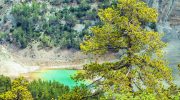
The Troodos Mountains occupy the central part of Cyprus, covering approximately 1,147 square kilometers or about 15 percent of the island. UNESCO designated Troodos as a Global Geopark in 2015 due to its exceptional geological significance. The mountain range represents an ophiolite, which is an uplifted fragment of oceanic crust and upper mantle that formed 92 million years ago during the Upper Cretaceous period. The highest peak, Mount Olympus, reaches 1,952 meters above sea level. What makes Troodos extraordinary is that the deepest rocks now sit at the highest elevations due to a dome structure created by tectonic forces. Visitors walking through Troodos can literally travel from the Earth's upper mantle to the ancient seafloor within a single day. The area contains 38 geosites that display this geological marvel, making it one of the most complete and best preserved ophiolite sequences in the world. Scientists consider Troodos the gold standard for understanding how oceanic crust forms and evolves. How ocean crust ended up on land The Troodos ophiolite formed in the Neotethys Ocean by seafloor spreading above a subduction zone approximately 92 to 82 million years ago. At that time, the African and Arabian tectonic plates were converging with the Eurasian plate. New oceanic crust formed as magma rose from the mantle and solidified at the spreading center. The process…

Read more
Cyprus Slow-Cooked Vegetable Recipes

Cyprus Slow-Cooked Vegetable Recipes

Slow-cooked vegetable dishes form a core part of traditional Cypriot cuisine, particularly preparations called yiahni or lathera. The term yiahni means steamy and refers to vegetables braised slowly with olive oil, tomatoes, and herbs in a tightly sealed vessel. Lathera refers to a style of cooking where vegetables braise in olive oil, often with tomatoes and herbs, until they become very tender and the sauce thickens. These dishes include fasolada, a white bean soup, louvi made with black-eyed beans and greens, gemista or stuffed vegetables, and fasolakia yiahni with green beans. The cooking method produces tender vegetables that absorb the flavors of olive oil, lemon, and fresh herbs while maintaining their nutritional value. Ancient Traditions and Religious Influence Fasolada has origins in Ancient Greece and was a traditional soup dedicated to the Greek God Apollo, cooked especially for the Pyanopsia Festival. According to myth, the tradition began when Theseus sailed from Athens to Crete to kill the Minotaur and stopped on the island of Delos to make a sacrifice to Apollo, promising to offer decorated olive branches if he won the battle. Orthodox Christian fasting periods shaped Cypriot vegetable cooking significantly. During the Great Lent period called Saracosti, the faithful fast for 48 days, and the Christmas fasting period runs from November 15 to December 24. All Wednesdays and Fridays…

Read more

Amathus Sacred Grove of Aphrodite Cyprus

Amathus Sacred Grove of Aphrodite Cyprus

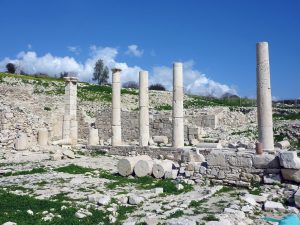
Geographic and Historical Setting Amathus, located on the southern coast of Cyprus near modern Limassol, was one of the most important ancient city-kingdoms of the island. Among its most significant religious features was the Sacred Grove of Aphrodite, a sanctuary associated with fertility, royal authority, and long-standing local traditions that predated classical Greek influence. Unlike urban temple complexes built in later periods, the sacred grove represented an earlier form of worship in which natural landscape and ritual space were closely connected. The site functioned as a center of spiritual life where religious practice was embedded within the rhythms of nature, agriculture, and seasonal renewal. pinterest-com Archaeological and literary evidence suggests that Amathus maintained a distinct cultural identity within Cyprus, blending indigenous traditions with influences from the eastern Mediterranean. The worship of Aphrodite at Amathus was deeply rooted in pre-Hellenic fertility cults that later merged with the Greek conception of the goddess. This layered religious history gave the sanctuary a unique character. Rather than serving solely as a mythological birthplace, as in Palaepaphos, Amathus became known as a living center of ritual activity that linked divine fertility with political and social order. Sacred Landscape and Ritual Environment The Sacred Grove at Amathus was not confined to a single temple building but extended across a natural setting that included trees, open spaces,…

Read more