Explore Cyprus with Our Interactive Map

Explore our top stories and discover ideas worth your time.

Why Retirement in Cyprus Popular Among Europeans

Why Retirement in Cyprus Popular Among Europeans

Cyprus has emerged as one of Europe's top retirement destinations, attracting thousands of retirees annually with its combination of Mediterranean climate, favorable tax treatment, and accessible healthcare. The island offers multiple pathways to residency for retirees from EU and non-EU countries, with costs and requirements that make long-term settlement achievable for many pensioners. Understanding why Europeans choose Cyprus for retirement reveals practical advantages that extend beyond the obvious appeal of year-round sunshine. The Tax Advantage That Changes Everything Cyprus offers one of Europe's most attractive tax regimes for foreign pension income. Tax-resident retirees can choose between two taxation methods for their foreign pensions. The first option applies a flat 5% tax rate on pension income exceeding €5,000 annually, with amounts below this threshold remaining exempt. The second option taxes pension income at progressive rates ranging from 20% to 35% based on total earnings. Most retirees select the 5% flat rate, which dramatically reduces tax burdens compared to home countries. A British retiree paying 40% tax in the UK who moves to Cyprus immediately cuts their pension tax to just 5% on amounts over €5,000. This difference adds thousands of euros to annual retirement income without any change to the pension itself. Cyprus maintains double taxation agreements with 67 countries including the UK, United States, Germany, France, and most EU members.…

Read more
Sousta (Cypriot Style)

Sousta (Cypriot Style)

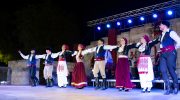
Sousta (Cypriot Style) is a dynamic folk dance from Cyprus that emphasizes balance, agility, and gender dialogue, traditionally performed in social gatherings rather than formal stages. Characterized by intricate footwork, playful interactions between partners, and rhythmic accompaniment, it reflects the island's cultural blend of Greek, Ottoman, and local influences. This dance serves as a living expression of community and courtship, preserving ancient movement patterns while adapting to contemporary celebrations. A Dynamic Expression of Cypriot Culture Sousta in its Cypriot form stands as one of the island's most energetic and interactive folk dances, where pairs or groups move in synchronized steps that highlight physical coordination and social connection. Originating from communal events like weddings and festivals, it involves men and women facing each other in lines or circles, exchanging gestures that mimic dialogue through body language. The dance's emphasis on balance comes from precise foot placements and weight shifts, agility from quick turns and hops, and gender dialogue from the call-and-response patterns where leads alternate between partners. This structure not only entertains but also reinforces social norms and relationships, making sousta a cultural mirror of Cypriot life. Unlike staged performances common in mainland Greece, Cypriot sousta thrives in informal settings, where spontaneity and participation define the experience. Historical Origins and Evolution The roots of sousta trace back to ancient Greek dance…

Read more

National Forest Park of Machairas

National Forest Park of Machairas

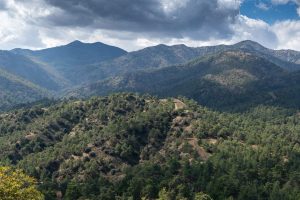
The National Forest Park of Machairas protects one of Cyprus's most important natural areas through 6,057 hectares of Mediterranean forest. It supports over 600 plant species and serves as the source of the island's two largest rivers. The park was officially declared a National Forest Park on December 22, 2004, through decree 61.368. The designation initially covered the Machairas forest at 43.93 square kilometers and the smaller Lythrodontas forest at 1.31 square kilometers. On June 1, 2005, decree 62.114 added the adjacent area called Vounia tou Anemou, which covers 1.126 square kilometers. The total protected area now spans 60.6 square kilometers across parts of Nicosia and Larnaca districts. The forest takes its name from the historic Machairas Monastery, which occupies a commanding position at the head of a wooded valley on one of the highest slopes of Kionia Peak. The monastery's name derives from the Greek word for sword or knife. By 1921, Machairas Forest covered 15.26 square miles and was recognized as one of the five main state forests in Cyprus, though it was smaller than the largest, Paphos Forest. The park received designation as a Natura 2000 site and Important Bird Area due to its ecological significance. Part of the forest has been declared a Special Protection Area to safeguard its biodiversity. The Department of Forests manages the…

Read more