Explore Cyprus with Our Interactive Map

Explore our top stories and discover ideas worth your time.

Jewish Quarter of Famagusta

Jewish Quarter of Famagusta

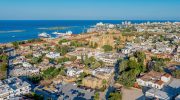
The Jewish Quarter of Famagusta stood as one of the most significant Jewish settlements in the eastern Mediterranean during the medieval period. Famagusta was one of the most cosmopolitan cities of its era, with distinct quarters for different communities including Greeks, Syrians, and Jews. northcyprusinvest-net The Jewish quarter was called zuecha or zudecha in Venetian documents, with its location clearly marked on a 1571 map of the city. Medieval Famagusta contained more Jews than any other Greek island according to the 12th century traveler Benjamin of Tudela, who documented three distinct Jewish sects living on Cyprus. The community prospered as money lenders, merchants, and traders who connected Europe with the Eastern Mediterranean. By the 16th century, approximately 2,000 Jews lived in Famagusta, making it one of the largest Jewish populations in the region. The quarter contained synagogues, schools, and the full infrastructure of a thriving Jewish community. From Ancient Roots to Medieval Flowering Jewish presence in Cyprus dates back possibly to the 3rd century BC during the Roman conquest of the island. Ancient synagogues existed in at least three locations on Cyprus including Golgoi, Lapethos, and Constantia-Salamine, with an inscribed column from the 4th century recording the 3rd century renovation of a synagogue. Cypriot Jews participated in the diaspora-wide Kitos War revolt against Rome in 117 CE, resulting in severe…

Read more
Maa-Palaikastro

Maa-Palaikastro

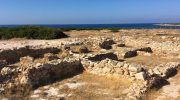
Maa-Palaikastro is a fortified Bronze Age settlement on the west coast of Cyprus, built during a time of major upheaval in the ancient Mediterranean. Strategically positioned and strongly defended, it played an important role in early settlement, copper production, and trade, and is closely linked to the arrival of Greek-speaking populations on the island. wikipedia-org What remains today tells the story of resilience, planning, and cultural change at a crucial moment in Cyprus’s history. A Rocky Peninsula with a Big Story Perched on a narrow rocky peninsula on the Coral Bay coast of western Cyprus, Maa-Palaikastro (often simply called Maa) may look quiet and unassuming today. Yet beneath its surface lies the story of one of the island’s most important early settlements, shaped by movement, survival, and cultural change at a turning point in Mediterranean history. semiestrel-ru Archaeological excavations revealed that this small site played a surprisingly large role in the story of Cyprus, linking the island to wider events unfolding across the ancient world. A New Community in an Uncertain World Maa-Palaikastro was founded around 1200 BCE, a time when the eastern Mediterranean was in turmoil. Powerful kingdoms were collapsing, trade routes were breaking down, and people were migrating in search of safety and opportunity. Against this backdrop, a group of settlers, likely connected to the Mycenaean Greek world,…

Read more

Palaepaphos Kouklia

Palaepaphos Kouklia

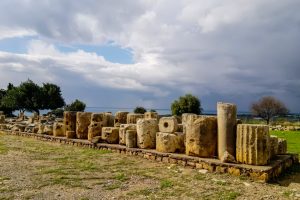
Kouklia is a village in the Paphos District built over the site of the ancient city of Palaepaphos, mythical birthplace of Aphrodite, which became the centre for her worship in the ancient world. This modest village 16 kilometers east of modern Paphos holds the remains of one of the longest continuously operating religious sanctuaries in human history. tripadvisor-com From around 1200 BC, Palaepaphos was a major religious centre famous all over Cyprus and throughout the Mediterranean. The city served as both a political capital and a sacred site, where the ancient goddess of fertility transformed over centuries into the Greek deity known as Aphrodite. The Sanctuary of Aphrodite is the most famous of the Ancient Greek Goddess' sanctuaries, and its ancient remains date back to the 12th century BC, whilst it remained a place of worship until the 3rd to 4th centuries AD. The sanctuary occupied a commanding position on a limestone plateau overlooking what was once a harbor and lagoon. According to Professor Maria Iacovou from the University of Cyprus, the sanctuary would have been located very close to the original port authority of ancient Paphos. The strategic location connected the religious site directly to sea routes, which brought pilgrims from across the Mediterranean world. Historical Background The Cypriots worshipped a goddess of fertility from as early as the…

Read more