Explore Cyprus with Our Interactive Map

Explore our top stories and discover ideas worth your time.

Cyprus Identity Heritage Culture

Cyprus Identity Heritage Culture

Cypriot identity is often anchored less in present residence than in a remembered origin, usually a village, a landscape, or a family plot tied to names and stories. Land and place act as evidence of continuity, and after 1974, displacement intensified this logic by turning home into something carried through memory, ritual, and return visits rather than daily access. This article explains how villages, language, minority community anchors, family houses, and diaspora ties keep belonging active across the island and beyond. kiprinform-com Land as Memory, Not Just Ground The connection between Cypriots and land stretches back thousands of years. Early communities depended on shared soil for survival, and this dependence shaped how people understood themselves in relation to their surroundings. Land was not owned in the modern sense. It was worked collectively, remembered collectively, and defended collectively. kiprinform-com. Over time, this relationship became more structured, especially as agriculture, trade, and settlement patterns evolved. Yet even as systems of ownership developed, land remained more than property. It became a record of continuity. Fields, paths, and village boundaries carried meaning because they were tied to labour, ancestry, and survival. To belong was to be rooted. The Village is the Core of Identity When Cypriots ask each other where they are from, they are usually not asking about a city or a current…

Read more

Cyprus Honey

Cyprus Honey

Honey in Cyprus is not simply a food product. It reflects landscape, climate, and survival shaped over centuries. Produced mainly in mountain and rural areas, Cypriot honey carries the character of wild thyme, pine forests, citrus groves, and seasonal movement across the island. Long before sugar became common, honey served as the primary sweetener, a form of medicine, and a symbol of hospitality. Its role has never disappeared. Instead, it has evolved alongside changing lifestyles and technologies. thegreekvibe-com An Island That Shapes Its Honey Cyprus’s geography plays a decisive role in how honey is produced. Two mountain ranges, varied elevations, and sharply contrasting microclimates allow flowering to unfold in stages rather than all at once. Coastal plains warm early in the year, while foothills and high mountain slopes bloom later, extending the foraging season for bees. This vertical landscape makes beekeeping in Cyprus inherently mobile. Apiaries are often moved throughout the year, following blossoms from lowland citrus groves to the thyme-covered slopes of the Troodos Mountains. Honey here is shaped as much by movement as by place, with each harvest reflecting a specific altitude, season, and environment. The Native Bee and Local Resilience At the heart of Cypriot honey production is a native honeybee adapted to the island's demanding conditions. This bee has developed endurance in heat, wind, and drought…

Read more
Cyprus Material Symbolism Traditions

Cyprus Material Symbolism Traditions

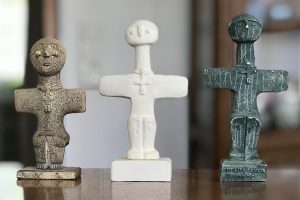
Material Symbolism (Stone, Bronze, Gold, Glass) in ancient Cypriot art reflected deliberate choices where each substance carried layers of spiritual, social, and economic significance. Stone embodied enduring strength drawn from the island's landscape, bronze represented transformation and resilience, gold signified divine favor and elite status, and glass evoked wonder through its luminous qualities. This intentional selection transformed artifacts into carriers of meaning, highlighting how materials conveyed broader cultural values in a society shaped by trade, ritual, and belief. estateofcyprus-com Materials as Carriers of Cultural Meaning Ancient Cypriot art utilized materials not merely for their practical properties but as elements infused with symbolism. Stone, bronze, gold, and glass each evoked specific associations, drawn from the island's natural resources and imported influences. Stone's durability suggested permanence and connection to the earth, bronze's forged nature symbolized human mastery over elements, gold's rarity and luster implied celestial or royal authority, and glass's translucence hinted at ethereal mystery. These choices formed a visual language that intertwined spiritual beliefs with social hierarchies and economic realities, evident across artifacts from domestic items to temple offerings. metmuseum-org Historical Development of Material Use The symbolic role of materials in Cypriot art emerged in prehistoric periods, around 8000 BC during the Neolithic era, when local stones and clays were shaped into basic figurines. By the Bronze Age, beginning approximately 2500…

Read more