Explore Cyprus with Our Interactive Map

Explore our top stories and discover ideas worth your time.

Cave of the 40 Martyrs Troodos

Cave of the 40 Martyrs Troodos

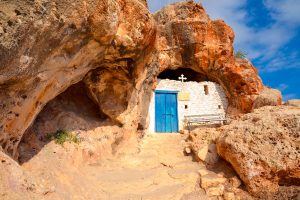
Hidden in the hills near Protaras, the Cave of the 40 Martyrs is a small chapel carved into limestone rock. This place brings together ancient faith, natural geology, and centuries of devotion in one simple, quiet space. blogspot-com The cave church, known locally as Ayioi Saranta, sits in a natural limestone formation on Fanou Hill. The name translates to the Forty Saints, a direct reference to the 40 Martyrs of Sebaste. This is not a grand cathedral with ornate decoration. It is a cave with a white wall, a blue door, and a stone dome above. Inside, rough rock walls hold a few icons and candles. The floor was paved, but otherwise the cave remains much as nature formed it. The Story of the 40 Martyrs The dedication of this cave connects to events that happened over 1,700 years ago. In 320 AD, forty Roman soldiers from the Legio XII Fulminata refused to abandon Christianity during the persecution under Emperor Licinius I. They were stationed near Sebaste in what is now Turkey. Their punishment was brutal. According to Bishop Basil of Caesarea, who documented the story in the 4th century, the soldiers were stripped naked and left to freeze on a frozen lake during a winter night. earlychristians-org One soldier gave in to the cold and ran to the warm…

Read more

Cyprus Quality Of Life Work

Cyprus Quality Of Life Work

Cyprus offers a compelling combination of Mediterranean island living with modern European employment standards. The cost of living in Cyprus is approximately 12 percent cheaper than in the UK, while the quality of life is high, owing to Cyprus being one of the safest countries in the world. fetchpik-com Cyprus was ranked as the 5th best place for lifestyle amongst major European cities and is certainly a fantastic place to live and raise a family. With its year-round sunlight, distinctive natural landscapes, and rich culture, the nation boasts an appealing environment and lifestyle, offering families a perfect combination to enjoy life and work. Standard Working Hours and Time Flexibility The standard time norm of working in Cyprus is 40 hours for a 5-day working week. This can vary per industry but is within the limits of 40 to 46 hours, and overtime is generally paid. This gives a lot of employees the opportunity to maintain a good work-life balance and unwind earlier than in other European countries. Normal office hours are between 8:30 AM to 1 PM and from 2 PM to 5:30 PM, although some offices will take a longer lunch break or work shorter days during the summer months. fetchpik-com Government offices open between 7:30 AM to 8:30 AM and then close between 2:30 PM to 3:30 PM.…

Read more
Tamassos Sacred Valley

Tamassos Sacred Valley

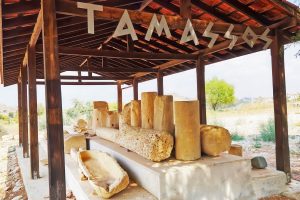
Tamassos was an inland city-kingdom that thrived from the Late Bronze Age to the Roman period, from around 1200 BC to the 10th century AD. The city appears in an Assyrian inscription from about 673 BC as Tamesi, a city-state that paid tribute to the Neo-Assyrian Empire. Homer may have mentioned it in the Odyssey as Temese, described as the main copper market on the island. culturespot-cy The archaeological site is next to the modern village of Politiko. Much of the ancient city center has not been excavated because it lies under the village and the nearby Monastery of Saint Herakleidios. Archaeologists have uncovered two large royal tombs from the 6th century BC, the foundations of a temple to Aphrodite, parts of city walls, and signs of extensive copper-processing workshops. Historical Background The region was inhabited since the Chalcolithic Age, and villages in the area were densely populated from the Early Bronze Age. Small farming settlements existed long before Tamassos became a unified city. The discovery and use of copper deposits transformed the farmland into an industrial center. The population grew significantly after the copper mines were exploited. Tombs and copper-processing workshops from the Late Bronze Age show this growth. Tamassos controlled major mines near its capital, like Mavrovouni and Kokkinopezoula, which made it a center of copper production. Classical…

Read more