Explore Cyprus with Our Interactive Map

Explore our top stories and discover ideas worth your time.

Kition Cyclopean Walls

Kition Cyclopean Walls

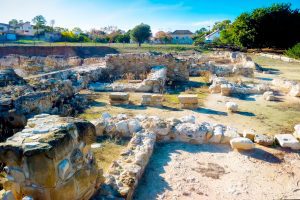
A sacred complex in Kition constructed with massive stone blocks, housing temples dedicated to Astarte and Melqart, serving the Phoenician community. larnakaregion-com The Cyclopean Walls and Temples of Kition represent a cornerstone of Cyprus's ancient heritage, where monumental architecture and religious devotion intertwined to form a vibrant sacred precinct in the heart of the island's earliest urban center. Located in modern Larnaca, ancient Kition was one of Cyprus's ten city-kingdoms, thriving as a hub of trade, culture, and spirituality from the Late Bronze Age onward. This complex, characterized by its imposing walls built from enormous limestone blocks, enclosed a series of temples primarily dedicated to the Phoenician deities Astarte, goddess of fertility and war, and Melqart, a protector figure akin to Heracles. Serving the Phoenician settlers who dominated the city from the 9th century BC, the site facilitated rituals, offerings, and communal gatherings that reinforced social bonds and economic ties across the Mediterranean. As a testament to Cyprus's role in bridging Eastern and Western civilizations, Kition's sacred spaces evolved over centuries, blending indigenous Cypriot traditions with influences from Mycenaean Greece, Phoenicia, and beyond, offering modern visitors a window into the island's multifaceted past. A Sacred Complex in Ancient Kition The Cyclopean Walls and Temples of Kition formed the defensive and spiritual core of the ancient city, sprawling across several hectares…

Read more

Cyprus Valleys Summer Guide

Cyprus Valleys Summer Guide

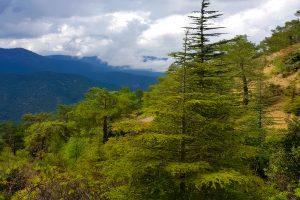
When summer temperatures on coastal Cyprus climb past 40 degrees Celsius, the mountain valleys offer something different. These elevated landscapes carved into the Troodos Mountains maintain temperatures 10 to 15 degrees cooler than the scorching lowlands. The valleys provide more than comfortable weather. They create microclimates where fruit trees thrive, rivers flow year-round, and villages preserve centuries of mountain culture. chooseyourcyprus.com Temperature drops about 5 degrees Celsius for every 1,000 meters of elevation gained. In July and August, when lowland areas reach 34 to 40 degrees, the mountain valleys average 28 degrees at their highest points. Night temperatures fall to comfortable levels, often 10 degrees cooler than daytime peaks. This temperature difference transforms the valleys into natural air conditioning systems for an island known for intense summer heat. Cedar Valley and the Paphos Forest Sanctuary Cedar Valley sits at the intersection of three districts, nestled within the 70,000-hectare Paphos Forest at elevations above 1,000 meters. The valley takes its name from 130,000 Cyprus cedars that grow nowhere else on Earth. Cedrus brevifolia represents an endemic subspecies closely related to the famous cedars of Lebanon. These trees, with their upright trunks and broad foliage, can reach 40 meters in height. cyprusisland.net The cedar forest shares space with Calabrian pines, which thrive in the Mediterranean climate and can grow to similar heights…

Read more
Kourion Theatre

Kourion Theatre

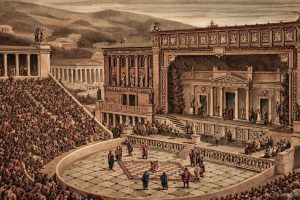
The Theatre of Kourion is one of the most impressive ancient theatres in Cyprus. It was built in the Late Hellenistic period and later enlarged under Roman rule. The theatre shows how important performances and public gatherings were in ancient times. Its location on a cliff overlooking the Mediterranean Sea highlights both careful city planning and an appreciation for natural beauty. The theatre could hold up to 3,500 spectators and was used for plays and other public events for many centuries. trapvisitor-com The History of Kourion and Its Theatre Kourion was one of the most important city-kingdoms in ancient Cyprus. Tradition says it was founded by Greeks from Argos in the Peloponnese in the 13th century BCE, during the Mycenaean expansion. Archaeological evidence supports links with Argos, and the city’s people saw themselves as descendants of Greek settlers. wikipedia-org The city sat on hills above the fertile Kouris River valley, giving it both rich farmland and strong defenses. This location helped Kourion become a major political and economic center during the Classical, Hellenistic, and Roman periods. The theatre was first built at the end of the 2nd century BCE under Ptolemaic rule. The original building was fairly small. In the early 2nd century AD, under Roman Emperor Trajan, it was greatly expanded. More seats were added, and the architecture was…

Read more