Explore Cyprus with Our Interactive Map

Explore our top stories and discover ideas worth your time.

Religious Life in Cyprus

Religious Life in Cyprus

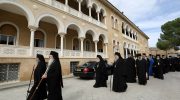
Religious life in Cyprus centers on Orthodox Christianity, which defines cultural identity for approximately 90 percent of Greek Cypriots even among those who rarely attend services. The Church of Cyprus holds autocephalous status, meaning it governs itself independently while remaining in communion with other Orthodox churches worldwide. This independence, granted at the Council of Ephesus in 431 AD, has survived centuries of foreign occupation including Frankish Crusaders, Venetian merchants, Ottoman Turks, and British colonizers. The church functioned not just as religious institution but as guardian of Greek language, culture, and national identity during periods when political sovereignty was impossible. pursuingveritas-com Orthodox practice structures daily life through home iconostases with burning oil lamps, morning and evening prayers, feast day celebrations, and approximately 180 annual fasting days. The liturgical calendar organizes social activities, agricultural work, and family gatherings around major celebrations including Easter, the Dormition of the Virgin Mary on August 15, and hundreds of local patron saint festivals called panigyria. Ancient Christian Foundations on the Island Christianity reached Cyprus in 45 AD when the Apostle Paul traveled with Barnabas, a native Cypriot, and Mark the Evangelist from Syrian Antioch. They arrived first at Salamis on the eastern coast before crossing westward to Paphos, where they converted Sergius Paulus, the Roman proconsul governing Cyprus. This conversion made Cyprus the first territory in…

Read more
Church of Timios Stavros in Pelendri

Church of Timios Stavros in Pelendri

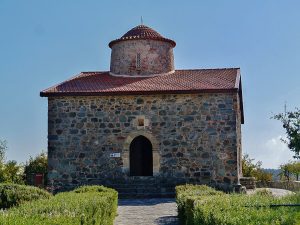
Church of Timios Stavros in Pelendri is a 12th-century Byzantine chapel in Cyprus's Troodos Mountains that evolved into a multi-part complex, famed for its Palaiologan frescoes blending spiritual depth with artistic refinement. Part of the UNESCO-listed Painted Churches, it showcases the island's medieval religious heritage through layered architecture and vivid paintings. This site captures how faith adapted over time, offering insights into Cyprus's enduring spiritual traditions. wikipedia-org An Evolving Byzantine Chapel in the Mountains Timios Stavros exemplifies the organic development of Byzantine religious architecture in Cyprus, starting as a modest single-aisled chapel and expanding into a domed, multi-section structure that reflects centuries of theological and cultural shifts. Dedicated to the Holy Cross, a symbol central to Orthodox Christianity representing salvation and divine power, the church served as a spiritual focal point for mountain communities. Its location in the lush Marathasa Valley, surrounded by pine forests and terraced fields, underscores the Troodos region's role as a refuge for monastic and village life, where sacred spaces blended seamlessly with the natural environment. The site's evolution mirrors broader patterns in Cypriot ecclesiastical building, where practicality met piety, creating resilient havens amid the island's turbulent history of invasions, earthquakes, and political changes. The church's design emphasizes functionality suited to the high-altitude climate, with thick stone walls sourced from local quarries to withstand heavy rains…

Read more
Cyprus Oral Tradition & Values

Cyprus Oral Tradition & Values

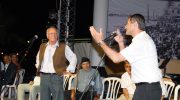
Oral tradition in Cyprus represents the ancient practice of passing knowledge, history, and cultural values through spoken words rather than written records. This method of communication shaped Cypriot society for thousands of years, preserving stories, customs, and wisdom from generation to generation. The island's oral heritage includes folk songs, legends about Byzantine warriors, myths featuring gods and heroes, and improvised poetry competitions that continue today. Cyprus developed its oral traditions through centuries of cultural exchange, influenced by Greek, Byzantine, Ottoman, and other Mediterranean civilizations. These spoken narratives served multiple purposes in village life, from entertaining communities during festivals to teaching moral lessons to children. Unlike written texts that remained fixed, oral stories adapted to each telling, allowing narrators to emphasize different themes based on their audience and circumstances. Ancient Roots of Spoken Stories The tradition of oral storytelling in Cyprus traces back to ancient Greek practices brought to the island in the second millennium BCE. Early Cypriot communities relied on spoken word to preserve their history, religious beliefs, and cultural knowledge before widespread literacy existed. Professional storytellers called rhapsodes traveled between villages, reciting epic poems and heroic tales that kept historical memory alive. In-Cyprus Cyprus shared the broader Greek oral tradition that produced works like the Iliad and Odyssey, which were composed, performed, and transmitted orally for generations. Local storytellers…

Read more