Explore Cyprus with Our Interactive Map

Explore our top stories and discover ideas worth your time.

Cyprus Folk Dance Workshops

Cyprus Folk Dance Workshops

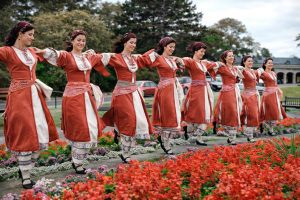
Cypriot folk dance is not something observed from a distance. It is something entered, shared, and carried by the group. Across Cyprus, workshops and demonstrations keep traditional dance alive by teaching it as a social practice rather than a staged performance. Whether held in village squares, community halls, or coastal courtyards, these gatherings connect rhythm, memory, and collective life in ways that still feel natural on the island today. politistiko-ergastiri.org Rather than preserving dance as choreography alone, Cypriot workshops focus on movement as a form of communication. Steps are learned not just as patterns, but as expressions shaped by history, environment, and social structure. Participation matters more than polish, and understanding matters more than display. Dance as a Social Language Traditional dance in Cyprus developed as a shared language rather than a spectacle. Long before formal instruction existed, dances were learned through observation and repetition during weddings, harvest celebrations, and religious festivals. Movement reflected everyday rhythms and reinforced bonds within the community. Modern workshops continue this approach. Instead of separating dancers into performers and audiences, they recreate the original logic of participation. Circles and open lines organise people spatially and socially, assigning roles, setting pace, and encouraging mutual awareness. A dance begins only when the group moves together, and its success depends on collective rhythm rather than individual expression. Foundational…

Read more

Monastery of Saint John Lampadistis

Monastery of Saint John Lampadistis

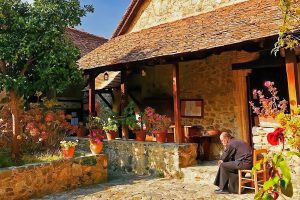
The Monastery of Saint John Lampadistis, located in the Marathasa Valley of the Troodos Mountains near the village of Kalopanayiotis, is one of the most distinctive monuments within the UNESCO World Heritage group known as the Painted Churches of the Troodos Region. Its importance lies not only in its remarkable frescoes but also in its unusual architectural composition. Unlike single-phase churches, this monastic complex combines three interconnected churches built in different periods, all enclosed beneath a later protective roof. This layered structure makes the monastery a rare example of architectural continuity, reflecting the gradual development of religious space in response to changing spiritual, artistic, and community needs. tui-co-uk The monastery is dedicated to Saint John Lampadistis, a local Cypriot saint whose life is associated with piety, endurance, and miraculous healing. According to tradition, he lived in the region during the Byzantine period and became a figure of popular devotion after his death. His tomb within the complex transformed the monastery into a pilgrimage center, attracting worshippers seeking spiritual assistance. The religious importance of the site ensured its continued maintenance and expansion over centuries, leading to the creation of a complex that embodies both local religious tradition and broader Byzantine artistic influence. Architectural Composition and Structural Evolution The most remarkable feature of the Monastery of Saint John Lampadistis is the combination…

Read more
Erimi-Pamboula Cyprus

Erimi-Pamboula Cyprus

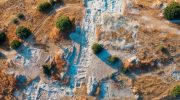
Erimi-Pamboula sits quietly in southern Cyprus, yet this ancient settlement tells one of the island's most important stories. From 3500 to 2900 BC, this village thrived along the Kouris River, giving its name to an entire culture that shaped Cyprus for over a thousand years. -reddit-com Erimi-Pamboula represents the heart of what scholars call the Chalcolithic period in Cyprus, a time when people first combined stone tools with early metalwork. The settlement stretched across 15 hectares on a low plateau just three miles from the coast, where the Kouris River provided fresh water and access to valuable resources. The village was large enough and influential enough that the entire cultural period became known as the "Erimi culture," a name still used today. The site rests within what is now the modern village of Erimi, located in the Kouris River valley. This valley has attracted people for thousands of years because of its natural advantages. Historical Background The modern story of Erimi-Pamboula begins in 1933. Cypriot archaeologist Porphyrios Dikaios arrived at the site and spent three years excavating what would become one of the most important prehistoric settlements in Cyprus. Though Dikaios only uncovered about 150 square meters, he found layers of occupation stretching 5.5 meters deep, revealing centuries of continuous human activity. nicosia-castle-auctions-com His work laid the foundation for understanding…

Read more