Explore Cyprus with Our Interactive Map

Explore our top stories and discover ideas worth your time.

Halloumi and Festival Foods of Cyprus

Halloumi and Festival Foods of Cyprus

Cyprus is a culinary treasure trove where traditional flavors meet modern tastes, and nowhere is this more evident than in its cheese and festival foods. Halloumi, the island’s most famous export, embodies the island’s culture, history, and social life. Beyond its grillable texture and unique flavor, halloumi represents centuries of agricultural tradition, village cooperatives, and community heritage. In-Cyprus Cyprus’s festival foods, from grape harvest sweets to carnival pastries, highlight seasonal cycles, religious celebrations, and communal joy. For locals and visitors alike, tasting halloumi with a slice of watermelon, sampling fresh loukoumades, or savoring grape must treats is a journey into the island’s heart. These foods are not just meals, they are symbols of hospitality, identity, and Cypriot tradition. Halloumi - Cyprus’s Culinary Icon Halloumi is a semi-hard, white cheese with a high melting point, allowing it to be fried or grilled without losing shape. In 2021, it received Protected Designation of Origin (PDO) status, meaning only cheese produced in Cyprus according to traditional methods can bear the name “halloumi.” Traditionally made from goat and sheep milk, PDO regulations require at least 25% of these milks during peak seasons, increasing annually to reach 50% by 2029. Modern production sometimes incorporates cow’s milk, especially for export, but true Cypriot halloumi remains rooted in traditional dairy practices. Wikipedia-Com Interestingly, Cypriots enjoy halloumi in…

Read more

Paphos Archaeological Park

Paphos Archaeological Park

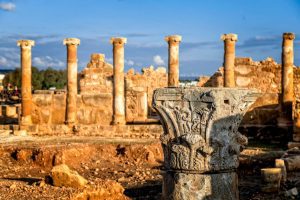
Paphos Archaeological Park, known in antiquity as Nea Paphos, represents one of the most significant archaeological landscapes in the eastern Mediterranean. Established in the late fourth century BCE during the Hellenistic period, the city was deliberately founded as a political and administrative center under the Ptolemaic rulers who controlled Cyprus after the campaigns of Alexander the Great. Its coastal position provided both strategic and economic advantages, linking the island to major maritime routes that connected the Greek world, Egypt, and the Near East. Adobe-Stock-com When the Romans annexed Cyprus in 58 BCE, Nea Paphos retained its prominence and became the island’s capital, a role that further strengthened its political, commercial, and cultural influence. The city’s development under successive Hellenistic and Roman administrations illustrates its adaptability and importance within broader imperial systems, making it a key example of urban life in antiquity. audleytravel-com The archaeological remains reveal a carefully organized urban center designed to support governance, religion, trade, and social life. Streets, residential areas, and public structures were arranged according to principles common in Hellenistic and Roman urban planning, emphasizing accessibility and civic order. Adobe-Stock-com Public spaces such as administrative buildings, marketplaces, and entertainment venues were positioned to encourage interaction and collective identity. This structured environment reflects a society that valued civic organization and shared public life. The city was not…

Read more
St Basil Day Cyprus

St Basil Day Cyprus

Saint Basil Day on January 1 serves as Cyprus's primary gift-giving occasion rather than Christmas Day, honoring the fourth-century bishop known for his charity and liturgical contributions to Orthodox Christianity. Cypriots call the celebration Protochronia, meaning first day of the year, combining religious observance with New Year festivities. asceticlifeofmotherhood-com The centerpiece tradition involves cutting vasilopita, a special cake containing a hidden coin that brings good luck to whoever finds it in their slice. Families gather at midnight on New Year's Eve or the morning of January 1 to perform the ceremonial cake cutting, with slices allocated to Christ, Saint Basil, the house, absent family members, and each person present. The day also features the renewal of waters ritual, where all water containers in homes are emptied and refilled with fresh Saint Basil's Water blessed with a basil sprig and cross. Children receive gifts from Agios Vasilis, the Cypriot equivalent of Santa Claus, maintaining ancient traditions of generosity and new beginnings. Saint Basil the Great and His Legacy Basil of Caesarea, born around 330 AD in Cappadocia, was one of the most influential theologians in early Christianity. As bishop of Caesarea in modern Turkey, he established hospitals, soup kitchens, and hospices for the poor and sick, creating what historians consider the first organized charitable institutions in Christian history. His theological writings…

Read more