Explore Cyprus with Our Interactive Map

Explore our top stories and discover ideas worth your time.

Left-Hand Driving System in Cyprus

Left-Hand Driving System in Cyprus

Cyprus stands out in Europe as one of only four countries where cars travel on the left side of the road. This unique characteristic catches many visitors by surprise, but it reflects a fascinating blend of historical influence and practical continuity that has shaped the island's transportation system for over a century. paphosmotorentals.cy The British assumed administrative control of Cyprus in 1878 through the Cyprus Convention with the Ottoman Empire. The island officially became a British crown colony in 1925 and remained under British rule until gaining independence in 1960. During this 82-year period, British authorities introduced left-hand traffic to match the system used throughout the British Empire. At that time, the British Empire was expanding rapidly across the globe. Countries under British control, including Australia, India, New Zealand, and numerous others, all adopted left-hand driving. When Cyprus joined this group, it made practical sense to maintain consistency with other British territories. The infrastructure built during the colonial period, from road layouts to signage systems, was all designed for left-hand traffic. When Cyprus gained independence in 1960, authorities faced a choice about whether to switch to right-hand driving like most European countries or maintain the existing system. They chose to keep left-hand traffic because the population had become accustomed to it over eight decades, and changing would have required massive…

Read more
Two Festivals, One Island

Two Festivals, One Island

Cyprus expresses its culture best when it gathers people together in public spaces, after sunset, with music in the air and tradition close at hand. Two annual festivals capture this instinct especially clearly: the Limassol Wine Festival and the Ayia Napa International Festival. Though different in tone and setting, they reveal how Cyprus balances heritage and openness, local pride and global exchange. Experiencing them side by side offers a clear insight into how celebration functions as a cultural language on the island. kiprinform-com Two Ways of Telling the Same Story At first glance, these festivals appear to represent different worlds. Limassol's event revolves around wine, harvest traditions, and large-scale public gatherings, while Ayia Napa's focuses on music, performance, and international cultural exchange. Yet both serve the same purpose: they turn shared space into shared identity. kanikahotels-com Limassol’s festival unfolds in a broad seaside garden, encouraging movement, conversation, and repetition. Ayia Napa’s festival concentrates activity in a historic square, drawing attention inward toward performance and spectacle. One spreads outward, the other gathers inward, but both rely on the same idea that culture becomes meaningful when it is experienced collectively. Why These Festivals Were Created in the First Place Neither festival began as a decorative addition to the calendar. Each emerged from a practical and cultural need. The first Limassol Wine Festival…

Read more

Cypriot Festivals Traditions

Cypriot Festivals Traditions

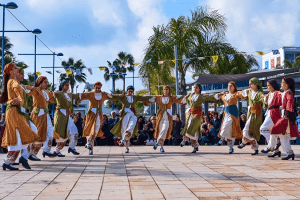
Across Cyprus, tradition does not survive in museums alone. It lives in streets closed for parades, village squares filled with music, and festivals where children dance the same steps their grandparents once learned. From large urban celebrations in Limassol and Nicosia to small rural gatherings in the Troodos Mountains, festivals remain the island’s most effective way of passing folk culture from one generation to the next. horosho-tam.ru These events are not staged nostalgia. They are active systems of cultural transmission, where music, dance, costume, and storytelling are learned by participation rather than explanation. Why Festivals Matter More Than Performances A concert can be watched. A festival must be joined. Cypriot festivals work because they blur the line between performer and audience. Children rehearse for months with local dance groups. Teenagers volunteer as organisers. Elders sing, comment, correct, and remember. Culture is not presented as something finished, but something ongoing. eaff.eu This is why festivals succeed where formal instruction often fails. They create emotional memory alongside skill. Limassol: Where Tradition Meets the Crowd Limassol has long been known as Cyprus's most celebratory city. Its festivals combine rural tradition with urban scale, keeping folk culture visible even as the city modernises. The Limassol Carnival: Satire, Song, and Continuity The Limassol Carnival is one of the island's oldest surviving festive traditions. Rooted in…

Read more