Explore Cyprus with Our Interactive Map

Explore our top stories and discover ideas worth your time.

Saint Paul and Barnabas

Saint Paul and Barnabas

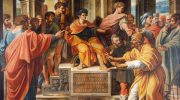
In 45 or 46 AD, two men arrived on the eastern shores of Cyprus at the port city of Salamis. Their names were Paul and Barnabas, accompanied by a young assistant named John Mark. This journey marked the beginning of what would become known as the First Missionary Journey of early Christianity, and Cyprus held the distinction of being the first stop outside Palestine where these apostles would preach to Gentile populations. The island was about to become the first place in the world governed by a Christian ruler. alaturka-com Barnabas was actually a native of Cyprus, born Joseph in Salamis to a Jewish family of the tribe of Levi. The early Christian community in Jerusalem had renamed him Barnabas, which means "son of encouragement" in Aramaic. He had sold his property and given all the proceeds to the apostles, demonstrating a remarkable commitment to the new faith. His companion Paul, still known at this time as Saul, had recently converted from being a persecutor of Christians to becoming one of their most passionate advocates. Together, they set out from Antioch in Syria on a mission that would change the religious landscape of the Mediterranean world. Historical Background When Paul and Barnabas landed at Salamis, they immediately went to the Jewish synagogues to preach. This pattern of starting with Jewish…

Read more
Coral Bay Beach, Paphos, Cyprus

Coral Bay Beach, Paphos, Cyprus

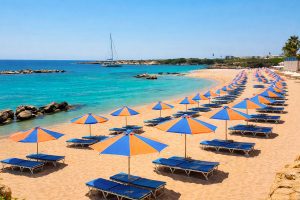
The beach stretches approximately 500 meters along a horseshoe-shaped bay. Two limestone headlands flank the shoreline and create natural protection from strong winds and waves. This geographical formation keeps the waters remarkably calm even when other beaches experience rough conditions. cyprusbylocals-com The sand at Coral Bay is fine and golden, considered among the best examples of sandy beach terrain in Cyprus. Unlike many Mediterranean beaches that feature pebbles or coarse sand, Coral Bay offers soft sand that remains comfortable for barefoot walks and beach activities. The waters are shallow and clear enough to see the seabed, which makes the beach particularly suitable for children and less confident swimmers. Cyprus recognized Coral Bay as its ninth plastic-free beach, part of a broader environmental initiative to reduce plastic waste along the island's coastlines. This designation reflects ongoing efforts to maintain the beach's natural beauty and protect marine ecosystems. Historical Background At the northern end of Coral Bay sits the Maa-Paleokastro archaeological site, where the first Mycenaean Greeks settled in 1200 BC. These settlers arrived on Cyprus after the fall of the Mycenaean kingdoms in mainland Greece. The site marks the beginning of the Hellenization of Cyprus, the process through which Greek language and culture spread across the island. The settlement takes its name from its imposing defensive walls, which were always visible…

Read more
Sheftalia Cypriot Sausage Tradition

Sheftalia Cypriot Sausage Tradition

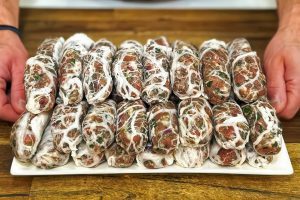
Sheftalia looks like a sausage, but it behaves very differently. There is no casing to snap, no neat uniformity, and no attempt to imitate anything else in the Mediterranean. Instead, minced meat, herbs, and onion are wrapped loosely in caul fat and cooked slowly over charcoal, producing something softer, juicier, and unmistakably Cypriot. facebook-com This is a dish shaped by village logic rather than factory precision. Its endurance comes from how well it fits the island’s rhythms of cooking, gathering, and shared meals. To understand sheftalia is to understand how Cyprus turns necessity into identity. Built Around Fire, Not Convenience Sheftalia is inseparable from the grill. It is not cured, dried, or stored. It is mixed, wrapped, and cooked fresh, usually over charcoal rather than gas. This choice matters. As the caul fat melts, it bastes the meat from the outside, dripping onto the coals and sending smoke back into the sausage. The cooking process is interactive and attentive, requiring turning, patience, and an understanding of heat. Unlike conventional sausages, which rely on tight casings and internal pressure, sheftalia remains deliberately loose. The meat steams gently inside its fatty wrap while the exterior browns. The result is not crispness, but succulence, a texture designed for slow eating rather than fast handling. Why Caul Fat Changes Everything The defining feature of…

Read more