Explore Cyprus with Our Interactive Map

Explore our top stories and discover ideas worth your time.

Cyprus Coastal Seafood Festivals

Cyprus Coastal Seafood Festivals

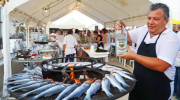
Seafood festivals in Cyprus are joyful coastal celebrations that bring together food, tradition, and community life. Held mainly in seaside towns such as Zygi, Latchi, Limassol, Larnaca, and Paphos, these events reflect the island’s long relationship with the sea and its fishing heritage. Through simple dishes, shared tables, and open harbors, they offer an easy and memorable way to experience Cyprus beyond the beach. What Are Seafood Festivals in Cyprus? Seafood festivals in Cyprus are local events that celebrate fishing culture and fresh Mediterranean seafood. They are usually organized by municipalities, community councils, or local fishing groups and take place near harbors, marinas, or coastal promenades. Some are clearly defined annual festivals, while others are part of broader cultural or religious celebrations that include seafood as a central element. At their core, these festivals focus on sharing freshly prepared fish and seafood in a relaxed, social setting. Visitors can expect grilled fish, octopus, calamari, and traditional fish meze served alongside music, conversation, and sea views. The atmosphere is informal and welcoming, designed to bring locals and visitors together rather than impress with spectacle. Roots in Coastal Life and Fishing Traditions Cyprus has always been shaped by the sea. For centuries, small coastal communities relied on fishing not only for food but for trade, identity, and survival. Harbors doubled as social…

Read more

National Forest Park of Machairas

National Forest Park of Machairas

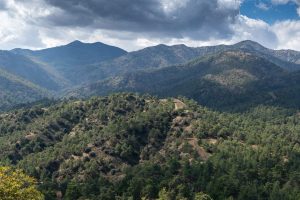
The National Forest Park of Machairas protects one of Cyprus's most important natural areas through 6,057 hectares of Mediterranean forest. It supports over 600 plant species and serves as the source of the island's two largest rivers. Adobe-Stock-com The park was officially declared a National Forest Park on December 22, 2004, through decree 61.368. The designation initially covered the Machairas forest at 43.93 square kilometers and the smaller Lythrodontas forest at 1.31 square kilometers. On June 1, 2005, decree 62.114 added the adjacent area called Vounia tou Anemou, which covers 1.126 square kilometers. The total protected area now spans 60.6 square kilometers across parts of Nicosia and Larnaca districts. Adobe-Stock-com The forest takes its name from the historic Machairas Monastery, which occupies a commanding position at the head of a wooded valley on one of the highest slopes of Kionia Peak. The monastery's name derives from the Greek word for sword or knife. By 1921, Machairas Forest covered 15.26 square miles and was recognized as one of the five main state forests in Cyprus, though it was smaller than the largest, Paphos Forest. visitcyprus-org The park received designation as a Natura 2000 site and Important Bird Area due to its ecological significance. Part of the forest has been declared a Special Protection Area to safeguard its biodiversity. The Department of…

Read more
The Ancient Gods and Goddesses of Cyprus

The Ancient Gods and Goddesses of Cyprus

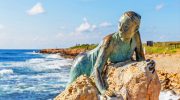
Long before saints and churches, Cyprus was home to powerful gods and goddesses whose temples dotted the island and whose myths shaped Mediterranean culture. From Aphrodite rising from the sea foam to warrior deities protecting cities, Cyprus's ancient pantheon blended Greek, Phoenician, and local traditions into something uniquely Cypriot — and traces of these divine beings still linger in the landscape today. A Crossroads of the Divine Ancient Cyprus didn't worship just one set of deities. Instead, the island's position at the crossroads of Greek, Near Eastern, and Egyptian civilizations created a rich religious tapestry where different cultures' gods merged, borrowed from each other, and sometimes became the same deity under different names. myfirstticket-com From the Bronze Age onward, Cypriots worshipped a Great Goddess of fertility who would eventually be identified with the Greek Aphrodite. But they also honored male gods adapted from neighboring lands — Phoenician warrior protectors, Greek sky fathers, and mysterious local spirits. By classical times, the island had developed a complex pantheon where Greek Aphrodite and Apollo appeared alongside Near Eastern Astarte and Resheph, creating a unique mythic identity that belonged fully to neither East nor West but to Cyprus itself. Where Divine Traditions Met and Merged Cyprus's religious history stretches back thousands of years, with each wave of settlers adding new layers to the island's…

Read more