Explore Cyprus with Our Interactive Map

Explore our top stories and discover ideas worth your time.

Cyprus Folk Dance Workshops

Cyprus Folk Dance Workshops

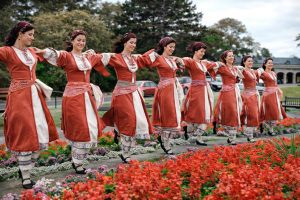
Cypriot folk dance is not something observed from a distance. It is something entered, shared, and carried by the group. Across Cyprus, workshops and demonstrations keep traditional dance alive by teaching it as a social practice rather than a staged performance. Whether held in village squares, community halls, or coastal courtyards, these gatherings connect rhythm, memory, and collective life in ways that still feel natural on the island today. politistiko-ergastiri.org Rather than preserving dance as choreography alone, Cypriot workshops focus on movement as a form of communication. Steps are learned not just as patterns, but as expressions shaped by history, environment, and social structure. Participation matters more than polish, and understanding matters more than display. Dance as a Social Language Traditional dance in Cyprus developed as a shared language rather than a spectacle. Long before formal instruction existed, dances were learned through observation and repetition during weddings, harvest celebrations, and religious festivals. Movement reflected everyday rhythms and reinforced bonds within the community. Modern workshops continue this approach. Instead of separating dancers into performers and audiences, they recreate the original logic of participation. Circles and open lines organise people spatially and socially, assigning roles, setting pace, and encouraging mutual awareness. A dance begins only when the group moves together, and its success depends on collective rhythm rather than individual expression. Foundational…

Read more

Limassol Archaeological Museum

Limassol Archaeological Museum

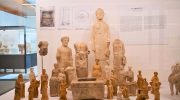
The Limassol Archaeological Museum houses a rich collection spanning 9,000 years of human civilization in southern Cyprus. Founded in 1948 and originally housed in Limassol Castle, the museum moved to its current purpose-built structure in 1975. The building consists of two long rooms joined together by two transversal spaces, covering 3,000 square meters. The exhibits focus on discoveries from the Limassol district, particularly from the ancient kingdoms of Kourion and Amathous. dynamic-media-cdn Unlike the Cyprus Museum in Nicosia, which displays material from across the entire island, this regional facility concentrates on southern coastal culture and trade. The collection includes pottery, jewelry, sculptures, tools, and everyday objects that provide insight into how ancient Cypriots lived in this fertile and strategic region. Entry is free, making the museum accessible to all visitors. Historical Background The museum displays remains of pygmy elephants and pygmy hippopotamus found at the Pre-Neolithic site of Akrotiri Aetokremnos, the earliest known site in Cyprus. These extinct animals lived on the island before humans arrived, providing evidence of Cyprus's unique ecosystem during the Ice Age. The pygmy species evolved smaller body sizes due to island isolation, a common evolutionary pattern. Tools and pottery from the Aceramic Neolithic I period through the Late Bronze Age demonstrate how early settlers developed agriculture and craft technologies. wikimedia-org Objects excavated from Chillourokampos in…

Read more
Cyprus Wine Museum Erimi

Cyprus Wine Museum Erimi

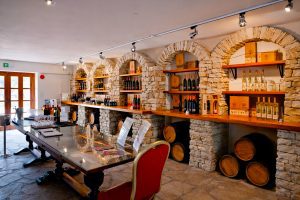
The Cyprus Wine Museum sits at the most important historical crossroads in Cyprus. The location connects the road between ancient Kourion and Kolossi Castle, the old Limassol to Paphos route, and the roads leading to the wine villages in the Troodos Mountains. Erimi village itself has produced wine for over 5,500 years. The prehistoric settlement of Sotira lies nearby, where archaeologists discovered the oldest grape seed remains on the island. Kolossi Castle stands just a short distance away, the medieval headquarters of the Knights Hospitaller who gave Commandaria wine its name. wanderlog-com Historical Background Composer Anastasia Guy founded the museum in 2004 after years of planning. The building belonged to her family for generations and originally functioned as a traditional Cypriot inn. Guy recognized that Cyprus was one of the first wine-producing countries in the world and saw an opportunity to preserve this heritage. The concept, developed in 1998, received approval from the Cyprus Tourism Organization in 2001 and underwent construction from 2002 to 2004. President Tassos Papadopoulos performed the official inauguration in 2004. The museum immediately began enriching its collections with archaeological items on loan from the Cyprus Archaeological Museum, the Pierides Museum of Marfin Laiki Bank, and other institutions. In 2005, the Ministry of Transport approved official road signs directing visitors from archaeological sites and public roads. The…

Read more