Explore Cyprus with Our Interactive Map

Explore our top stories and discover ideas worth your time.

How Infrastructure Overcomes Cyprus’s Rugged Terrain

How Infrastructure Overcomes Cyprus’s Rugged Terrain

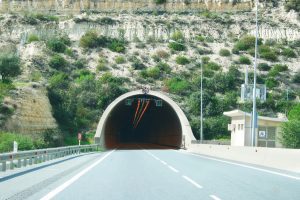
The Troodos Mountains cover roughly one-third of Cyprus, stretching across most of the western portion. Mount Olympus rises to 1,952 meters, making it the island's highest peak. These mountains formed through the collision of African and European tectonic plates, pushing ancient seabed rock formations skyward over millions of years. Climbfinder The landscape varies dramatically within short distances. Coastal areas sit at sea level while mountain villages perch at elevations exceeding 1,000 meters. Steep valleys cut through the terrain, with rivers carving gorges that modern roads must somehow cross. Wanderlog In 2011, heavy rainfall triggered 128 separate landslide incidents in Paphos, causing significant damage to roads and buildings. These geological realities force engineers to constantly assess slope stability when planning new infrastructure. The island's geology includes unstable clay-rich soils and fractured rock formations that shift during rainfall, creating ongoing maintenance demands. Building Motorways Through Mountains Cyprus developed its motorway network relatively recently compared to European neighbors. The A1, completed in October 1985, became the island's first motorway. Despite this late start, Cyprus now leads all European Union members with 36.8 kilometers of motorway per 100,000 inhabitants. The network totals approximately 7,206 kilometers of paved roads and 4,387 kilometers of unpaved routes. No toll roads exist anywhere on the island. The Public Works Department manages motorways and major roads, while municipalities handle…

Read more
Cyprus Food Festivals

Cyprus Food Festivals

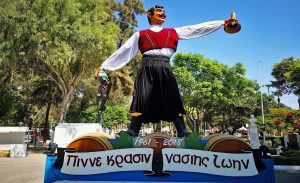
Culinary festivals in Cyprus are not staged food shows or seasonal attractions created for visitors. They are extensions of village life, shaped by agriculture, memory, and the belief that food is meant to be shared. Across the island, festivals dedicated to wine, halloumi, olives, and everyday cooking traditions offer a way to understand Cyprus through participation rather than observation. Food as a Social Language In Cyprus, food festivals usually revolve around a single local product or a small group of related dishes. These events are organised by municipalities, village councils, or community groups, not private promoters. Their purpose is communal before it is celebratory. fastforward-com Recipes, techniques, and rituals that rarely appear in written form are performed publicly, often by people who learned them informally from parents and grandparents. Preparing food together, offering it freely, and eating collectively reinforces the Cypriot idea of hospitality, where sharing food is inseparable from social belonging. Festivals Guided by the Agricultural Calendar The timing of culinary festivals follows the land rather than marketing schedules. Cyprus’s climate supports vineyards, olive groves, dairy farming, and small-scale agriculture, and festivals emerge naturally around moments of harvest and seasonal transition. Spring festivals often highlight fresh produce and early agricultural yields. Summer events reflect abundance and outdoor life, while autumn brings the most significant celebrations, particularly those dedicated to…

Read more

Cyprus Red Fox

Cyprus Red Fox

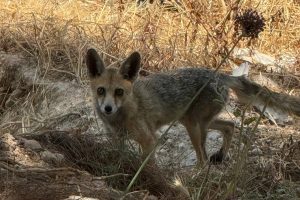
There is an animal on Cyprus that has been blamed for stolen chickens, celebrated in folktales, painted as the ultimate villain of the farmyard and yet, science tells us a very different story. The Cyprus fox, a unique island subspecies found nowhere else on Earth, is one of the most misunderstood creatures in the Eastern Mediterranean. Once you learn the truth about it, you may never look at a pair of amber eyes at dusk in quite the same way again. From the Family of Clever Ones The Cyprus fox belongs to the family Canidae the great clan that includes wolves, jackals, wild dogs, and domestic dogs. Within this family sits the genus Vulpes, the "true foxes," a group of about twelve species spread across the globe, from the tiny big-eared fennec fox of the Sahara to the ghost-white Arctic fox of the frozen north. Our island's fox is a member of Vulpes vulpes the red fox which is arguably the most successful and widespread wild carnivore on the planet, ranging from the Arctic Circle all the way down to North Africa, across Eurasia, and into North America. But the fox living in Cyprus is not simply a red fox that wandered over. It is a distinct island subspecies, formally described in 1907 by the American naturalist Gerrit Smith Miller,…

Read more