Explore Cyprus with Our Interactive Map

Explore our top stories and discover ideas worth your time.

Palaepaphos Kouklia

Palaepaphos Kouklia

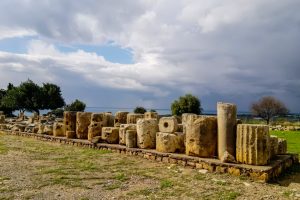
Kouklia is a village in the Paphos District built over the site of the ancient city of Palaepaphos, mythical birthplace of Aphrodite, which became the centre for her worship in the ancient world. This modest village 16 kilometers east of modern Paphos holds the remains of one of the longest continuously operating religious sanctuaries in human history. tripadvisor-com From around 1200 BC, Palaepaphos was a major religious centre famous all over Cyprus and throughout the Mediterranean. The city served as both a political capital and a sacred site, where the ancient goddess of fertility transformed over centuries into the Greek deity known as Aphrodite. The Sanctuary of Aphrodite is the most famous of the Ancient Greek Goddess' sanctuaries, and its ancient remains date back to the 12th century BC, whilst it remained a place of worship until the 3rd to 4th centuries AD. The sanctuary occupied a commanding position on a limestone plateau overlooking what was once a harbor and lagoon. According to Professor Maria Iacovou from the University of Cyprus, the sanctuary would have been located very close to the original port authority of ancient Paphos. The strategic location connected the religious site directly to sea routes, which brought pilgrims from across the Mediterranean world. Historical Background The Cypriots worshipped a goddess of fertility from as early as the…

Read more
Nea Paphos Ancient Capital of Roman Cyprus

Nea Paphos Ancient Capital of Roman Cyprus

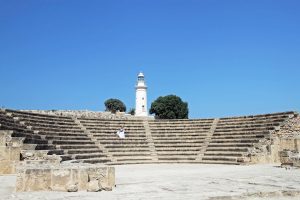
Nea Paphos occupies a coastal plain on the southwestern shore of Cyprus, adjacent to the modern city of Paphos. Founded in the 4th century BC by Nikokles, the last king of nearby Palaipaphos, Nea Pafos then went from strength to strength, particularly under the Ptolemaic kingdom from the 3rd century BC. The city was located on a peninsula surrounded by a natural bay and between the two small hills called Fanari and Fabrika. irecommend-ru Nea Paphos was founded at the turn of the 4th and 3rd century BC as an important harbour located on the sea trade route from Rhodes to Alexandria. Thanks to its strategic location, from the 2nd century BC Nea Paphos became the capital of Cyprus and the seat of the strategos, general managing the island. The site preserves remains of villas, palaces, theaters, and tombs that span from the Hellenistic period through the Byzantine era, making it one of the Mediterranean's most significant archaeological areas. Historical Background Thanks to the extensive and modern port and access to cider wood from the nearby forests, Nea Paphos became a base of Ptolemaic navy and a military garrison made up of mercenaries was stationed here. The multicultural character of the city was probably complemented by many sailors and merchants, but also by pilgrims who, through the eastern city gate,…

Read more
Traditional Cypriot Houses: Courtyards and Climate

Traditional Cypriot Houses: Courtyards and Climate

Traditional Cypriot houses were designed as working systems for heat, privacy, and shared family life, using local stone, inward-facing layouts, and courtyards that cooled and organised daily routines. Over centuries, builders added layers rather than replacing the whole, blending arches, timber projections, and flexible rooms into a coherent domestic logic that still feels practical today. This article explains how courtyards, materials, and spatial features like the kamara and sachnisi made these homes resilient, and why restoration efforts aim to preserve function as well as appearance. pinterest-com Architecture That Accumulated Over Centuries Cyprus rarely erased its past when new powers arrived. Instead, architectural ideas accumulated. Neolithic stone foundations, Byzantine masonry, Lusignan arches, Venetian defensive logic, and Ottoman wooden additions coexist within a single vernacular tradition. The traditional house became a quiet record of this continuity. Rather than following stylistic purity, Cypriot builders reused, adapted, and layered. A medieval structure might gain an Ottoman timber projection. A Venetian urban plan might absorb domestic courtyards. The result was not uniformity, but coherence. Houses responded to climate, density, and social needs long before sustainability became a concept. Living inward in a demanding environment One defining feature unites almost all traditional Cypriot homes: they turn inward. High stone walls and modest street-facing facades protected families from heat, dust, noise, and unwanted attention. Life unfolded inside,…

Read more