Explore Cyprus with Our Interactive Map

Explore our top stories and discover ideas worth your time.

Freshwater Wetlands and Ponds Cyprus

Freshwater Wetlands and Ponds Cyprus

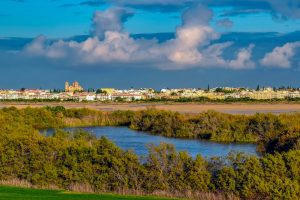
Freshwater Wetlands and Seasonal Ponds are temporary ecosystems in inland depressions across Cyprus, supporting amphibians, migratory waterfowl, and rare fish. These habitats form during winter rains, transforming dry basins into vibrant pools that host diverse life before evaporating in summer heat. Facebook.com They play a crucial role in the island's biodiversity, offering breeding grounds and stopovers in an otherwise arid landscape, highlighting nature's cyclical resilience. A Temporary Ecosystem Inland Freshwater wetlands and seasonal ponds in Cyprus represent ephemeral water bodies that appear in low-lying inland areas, filling with rainwater and runoff to create shallow, nutrient-rich habitats. These depressions, scattered across the Mesaoria Plains and Troodos foothills, range from small ponds of a few square meters to larger wetlands like the one at Paralimni, covering up to 2 square kilometers in wet seasons. wikipedia.org They support amphibians like the green toad, migratory waterfowl such as teals, and rare fish species adapted to fluctuating water levels. This temporary nature - flooding in winter (November-March) and drying in summer (June-September) - fosters a dynamic ecosystem where life cycles sync with rainfall, making them vital for species survival in Cyprus's semi-arid climate. Historical Formation and Evolution These ecosystems formed during the Holocene epoch around 10,000 years ago, as post-glacial climate shifts created depressions from river erosion and tectonic subsidence, per geological studies by the…

Read more

Myrtou-Pigadhes Sanctuary

Myrtou-Pigadhes Sanctuary

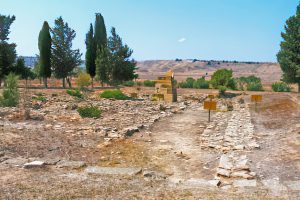
A Late Bronze Age sanctuary featuring a rare monumental altar with "horns of consecration," establishing a clear religious link between Cyprus and Minoan Crete. blogspot-com The Myrtou-Pigadhes Sanctuary represents a pivotal archaeological site in Cyprus, illuminating the island's religious practices during the Late Bronze Age and its cultural exchanges with the Aegean world. Located in the northwest region near the village of Myrtou, this sanctuary dates primarily to the 16th to 11th centuries BC and is renowned for its monumental stepped altar adorned with "horns of consecration," a distinctive Minoan symbol that underscores direct influences from Cretan religious traditions. As a rural cult center, it served local communities for rituals involving offerings, animal sacrifices, and possibly fertility or solar worship, blending indigenous Cypriot elements with imported Minoan motifs. This site highlights Cyprus's role as a Mediterranean hub, where trade in copper and ceramics facilitated the spread of religious ideas, fostering a syncretic spirituality that bridged Eastern and Western traditions and influenced subsequent Iron Age cults. A Late Bronze Age Cult Center Nestled on a low hill in the fertile plains south of the Kyrenia Mountains, the Myrtou-Pigadhes Sanctuary spans approximately 0.5 hectares, comprising open courts, altars, and storage areas that reflect an organized religious complex. Excavated in the 1950s by archaeologist Joan du Plat Taylor, the site reveals a sequence…

Read more
Phaneromeni Necropolis Larnaca History Facts

Phaneromeni Necropolis Larnaca History Facts

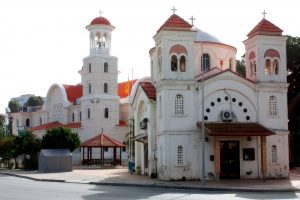
Beneath the streets and churches of modern Larnaca lies a network of ancient tombs that gave the city its name. The Phaneromeni necropolis represents a vast burial ground used for over 1,500 years, from the Late Bronze Age through the Phoenician and Hellenistic periods, preserving layers of history beneath one of Cyprus's oldest continuously inhabited cities. in-cyprus.philenews.com The name Larnaca comes from the ancient Greek word larnax, meaning sarcophagus or stone coffin. This etymology directly reflects the thousands of tombs and burial chests discovered throughout the city. An American consul in the late 19th century claimed to have explored more than 3,000 tombs in the Larnaca area, and archaeological work continues to uncover more burial sites with each new construction project. A Tomb That Became a Church The Catacomb of Phaneromeni Church sits next to the old Panagia Phaneromeni Church, about 7 meters from the east wall of the church building. This rock-cut tomb consists of two chambers connected by a corridor, carved entirely from natural rock. The structure suggests it originally served as a pagan burial site during Phoenician times, possibly as early as 1200 BCE based on the architecture. cyprusisland.net1 The catacomb was discovered in 1870 and was officially dated to the 8th century CE based on its use as a Christian burial site and place of worship.…

Read more