Cyprus and Greece share the same national anthem, the Hymn to Liberty, making them the only two countries in the world to use the same musical composition for their national anthems. On November 16, 1966, it was unilaterally decided by the Greek members of government that the Greek anthem would be used by Cyprus as well.

The Turkish members had already boycotted the government by this point. This decision reflected the cultural and historical ties between Greece and Cyprus, both of which share language, traditions, and a sense of common identity, though it also revealed the deep division between the island’s two communities.
The Revolutionary Poem Behind the Music
Dionysios Solomos wrote Hymn to Liberty in 1823 in Zakynthos during the Greek War of Independence when Greeks fought to break free from nearly 400 years of Ottoman rule. He was only 25 years old at the time. The poem consists of 158 four-line stanzas, making it the longest national anthem text in the world. Inspired by the Greek War of Independence, Solomos wrote the hymn to honor the struggle of Greeks for independence after centuries of Ottoman rule.

The Hymn to Liberty recounts the misery of the Greeks under the Ottomans and their hope for freedom. He describes different events of the War, such as the execution of Patriarch Gregory V of Constantinople, the reaction of the Great Powers, extensively the Siege of Tripolitsa and the Christian character of the struggle. The poem presents the goddess of liberty and recalls the past martyrdoms that occurred during the country’s history and the revolt against foreign rule.
Only the first two stanzas officially became the national anthem of Greece in 1864 and Cyprus in 1966. These verses speak directly to liberty personified, recognizing her by the dreadful sword she holds and the fierce gaze with which she surveys the earth. The lyrics celebrate how liberty arose from the sacred bones of the Greeks and call upon her with ancient valor.
The Composer Who Created the Melody
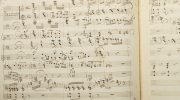
In 1828, Nikolaos Mantzaros, a Corfiot operatic composer, set the poem to music. He composed two choral versions, one for the whole 158-stanza poem in 24 parts and a shorter one for just the first two stanzas. The latter is the version adopted as the national anthem. Mantzaros based his composition on folk motifs, though not as a march, and dedicated it to the first King of Greece, Otto.

Otto awarded Mantzaros with the Silver Cross of the Order of the Redeemer as a token of appreciation and Solomos with the Gold Cross of the same order. However, during Otto’s reign from 1832 to 1862, an anthem based on God Save the King was used, with a text glorifying Otto. The royal anthem then in use was a musical derivative from the German one.
After Otto’s ouster in 1862, the new King George I and the Greek establishment decided to look for a clearly Greek work, both with respect to the poetry and the music. The Hymn to Liberty was readily there, extremely popular since the Revolution times, often recited or sung during patriotic meetings and celebrations. The Hymn to Liberty was adopted as the national and royal anthem of Greece in 1864.
Why Cyprus Chose This Anthem
After gaining independence from Britain in 1960, Cyprus waited six years before adopting the Hymn to Liberty as its national anthem in 1966. This decision emphasized solidarity and unity with Greece, especially given the island’s complex political situation. While Cyprus has its own distinct history, the choice of anthem reinforced cultural bonds at a time when Greek Cypriot national consciousness was strengthening.

The Turkish community does not recognize this anthem and instead uses the Turkish anthem for their self-proclaimed nation in northern Cyprus. In 2004, as a requirement of joining the European Union, a peace plan was proposed by UN Secretary General Kofi Annan, which included different national symbols to make them more inclusive of both communities. This also included a wordless anthem that was agreed to by both Turkish and Greek members of the national symbols committee. However, the plan was rejected by the voters and the Greek Hymn to Freedom remains the Cypriot national anthem.
The Hidden Impact of This Choice
The shared anthem represents more than cultural affinity. It embodies Greek Cypriot political identity and aspirations. During the period leading to Cyprus’s independence and afterward, many Greek Cypriots supported enosis, or union with Greece. The adoption of Greece’s anthem signaled this political orientation, even though Cyprus remained an independent republic.

Today, the anthem serves as a shared symbol for Greeks and Greek Cypriots, representing not only national pride but also the enduring cultural bonds between the two nations. The anthem is always played during official occasions put forth by the Cypriot government. It is also played at sporting events when Cypriot athletes compete internationally.
The Hymn to Liberty has been performed at every closing ceremony of the Olympic Games to pay tribute to Greece as the birthplace of the Olympic Games. Most renditions performed during the closing ceremonies are instrumental. This gives the anthem international recognition beyond its role as a national symbol.