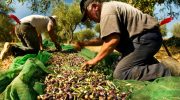
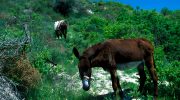
Traditional animal farming formed the economic and cultural foundation of Cyprus villages for millennia, with sheep, goats, cattle, pigs, and poultry sustaining rural communities through meat, milk, eggs, and raw materials for clothing and tools. The Bronze Age village of Politiko-Troullia from 2050 to 1850 BC already showed evidence of copper metallurgy alongside sheep, goat, cattle, and pig consumption, establishing patterns that persisted for 4,000 years.
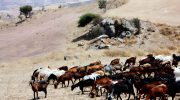
Sheep and goat farming developed particular importance due to their suitability for Cyprus’s rocky terrain, scrubland vegetation, and semi-arid climate. These hardy animals provided the milk for halloumi, Cyprus’s most famous product, which traditionally used only sheep and goat milk before modern commercial production began adding cow milk.
The island maintained approximately 3,500 shepherds and goat farmers into the 20th century who followed transhumance patterns between lowland winter pastures and mountain summer grazing. This traditional system collapsed during the 1980s as modernization, European Union regulations, and urban migration transformed animal husbandry from small family enterprises into larger commercial operations.
Ancient Livestock Traditions and Bronze Age Evidence
Archaeological excavations at Politiko-Troullia in the Troodos foothills revealed sophisticated Bronze Age livestock management strategies that combined herding with copper metallurgy and crop cultivation. Faunal analysis identified consumption of sheep, goat, cattle, and pig as daily subsistence, with community-scale ritual feasting focused on fallow deer. The inhabitants practiced selective herd management, with isotopic analysis showing goats had higher mobility and more diverse diets compared to sheep and cattle who received dietary supplementation and grazed in more constrained ranges.

This Bronze Age division of labor between goat browsing on wild scrubland plants and sheep/cattle grazing on managed pastures established patterns that continued through subsequent civilizations. Goats exploited marginal lands unsuitable for cultivation, climbing rocky hillsides to browse on thorny shrubs, aromatic herbs, and tree foliage. Their ability to thrive on poor vegetation made them ideal for Cyprus’s landscape where productive agricultural land was limited. Sheep required better pasturage but provided superior wool and fattier meat preferred for celebrations.
The integration of animal husbandry with crop production created sustainable agricultural systems where livestock manure fertilized fields, animals consumed crop residues and weeds, and draft animals provided traction for plowing and transportation. This mixed farming approach characterized Mediterranean agriculture from the Bronze Age through the 20th century, only collapsing when mechanization and chemical fertilizers eliminated livestock’s essential functions.
Seasonal Grazing Patterns and Transhumance
Traditional sheep and goat herding followed seasonal cycles dictated by rainfall patterns and vegetation growth. From approximately October to June during the rainy season, herds relied on wild plants in scrublands, hilly areas, rocky terrain, and fallow agricultural fields. Green vegetation flourished during these months, providing adequate nutrition without supplemental feeding. Herders moved flocks daily from village pens to grazing areas within several kilometers, returning animals to secure enclosures at night for protection from predators and thieves.
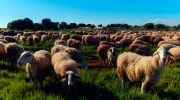
As summer drought desiccated lowland vegetation, herders practiced transhumance by moving flocks to Troodos mountain pastures where higher elevations maintained green foliage through hot months. This vertical migration required coordination among multiple villages sharing traditional mountain grazing rights. Extended family members or hired shepherds accompanied flocks for months, living in rough stone shelters called mandres while tending animals. The separation of herders from villages during summer created distinct shepherd culture with specialized knowledge, songs, and customs passed through generations.
In predominantly hilly landscapes unsuitable for agriculture, goat herds continued year-round browsing without seasonal migration. These areas, particularly in the Akamas Peninsula and Kyrenia Range foothills, maintained goat populations that rarely descended to lowlands. The goats’ superior climbing ability allowed exploitation of nearly vertical terrain where sheep could not venture, maximizing the productive use of Cyprus’s diverse topography.
The Role of Donkeys and Working Animals
Donkeys served as essential working animals in traditional Cyprus agriculture, providing transportation for people and goods across terrain too steep or rocky for wheeled vehicles. Farmers used donkeys to carry harvested crops from fields to villages, transport water from distant sources, and move construction materials for building and repairs. The animals’ sure-footedness on narrow mountain paths and ability to carry substantial loads relative to body size made them indispensable in villages without road access.
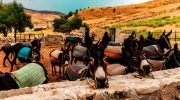
Mules, the hybrid offspring of male donkeys and female horses, combined donkey hardiness with horse size and strength. Wealthier farmers kept mules for heavier hauling including plowing fields, moving large stones, and transporting bulk goods to markets. The distinction between donkey and mule ownership reflected social stratification, with mule possession signaling prosperity and higher status within village hierarchies.
Oxen provided draft power for plowing before tractors mechanized agriculture in the mid-20th century. These castrated male cattle possessed the strength and endurance for turning heavy clay soils, particularly in the Mesaoria Plain where deep alluvial deposits required substantial force to break. Oxen worked in pairs yoked to wooden plows, with skilled plowmen guiding teams through methodical furrows that prepared fields for planting. The slow, powerful animals represented significant capital investment that only established farmers could afford.
Halloumi Production and Dairy Economy
Traditional halloumi cheese used exclusively sheep and goat milk, giving it the distinctive salty, creamy flavor that defined the product for centuries. Small village cheese-makers followed methods passed through generations, beginning with fresh milk heated to specific temperatures. Rennet extracted from lamb or kid stomachs coagulated the milk into curds that were cut, heated again, and molded into characteristic blocks. The cheese was then cooked in hot whey, folded into distinctive layers, and preserved in brine made from sea salt.
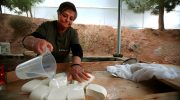
The cheese-making process occurred daily during peak milk production from January through May when ewes and does lactated after giving birth. Shepherds delivered morning and evening milking to village cheese-makers or processed milk themselves in simple facilities adjacent to animal pens. The labor-intensive work required constant attention to temperature, timing, and hygiene to produce consistent quality. Failed batches represented significant economic loss since spoiled cheese could not be sold or consumed.
Government regulations in 2012 required halloumi to contain at least 51 percent sheep and goat milk to secure Protected Designation of Origin status from the European Union. This standard attempted to preserve traditional production methods against commercial producers who had increased cow milk proportions to 90 percent to reduce costs. Dairy farmers protested the regulations, with some purchasing cheese production facilities to continue making cow-milk cheese labeled halloumis rather than halloumi, creating market confusion.
The Decline of Small Family Farms
Agricultural land in Cyprus consists almost entirely of small privately owned family enterprises with mean holding sizes of 4.5 hectares. These holdings fragment into separate parcels averaging just over half a hectare located across multiple villages, creating inefficient farming patterns. The approximately 42,500 smallholders struggle to achieve economies of scale or justify investments in modern equipment. Mountain holdings average only 2.7 hectares compared to 5.6 hectares in plains, further disadvantaging hill farmers.
During the 1980s, livestock production roughly doubled due to government subsidies, strict import regulations, and research that improved animal quality and management. Greek Cypriots achieved self-sufficiency in pork and poultry but continued importing beef, veal, and mutton. European Union accession in 2004 required gradual lifting of import restrictions, exposing inefficient breeders to international competition that forced many out of business.
The 1974 Turkish invasion disrupted traditional farming patterns by displacing shepherds from northern grazing lands. The division left the Turkish Cypriot north with four-fifths of citrus and cereal production and two-thirds of green fodder, while the south retained nearly all grape-growing areas and two-thirds of livestock populations. The resulting large-scale population exchange created substantial agricultural unemployment that required government intervention including financial assistance.
Contemporary Sheep and Goat Farming
Modern sheep and goat farming remains largely family-run businesses with somewhat increasing contributions from hired labor. Average flock sizes are 150 sheep or 110 goats, with 21 percent of farm units keeping sheep and 46 percent keeping goats. Mixed sheep-goat flocks are common in western and central Cyprus, allowing farmers to exploit different ecological niches with complementary species. Only 20 percent of milk produced is processed on farm, with most delivered to commercial processors for halloumi, yogurt, and anari whey cheese production.

The sector produces approximately 25,000 tons of sheep and goat meat annually, with milk production corresponding to 22 percent of total Cyprus milk output and contributing 8 percent to total animal production value. Farm-gate prices in 2008 averaged around 0.8 euros per kilogram for sheep milk and slightly less for goat milk. Sheep farms locate primarily in lowland villages while goat-breeding firms concentrate in mountainous areas, reflecting each species’ different terrain preferences.
Future sustainability requires breeding disease-resistant animals, conserving local breeds adapted to climatic conditions, and identifying genetic markers for enhanced production. A collaborative project involving Cyprus University of Technology and the Agricultural Research Institute addresses these goals. Higher on-farm processing of milk products could improve profitability by capturing value-added margins currently claimed by commercial processors.