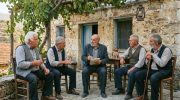
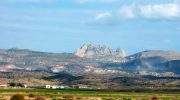
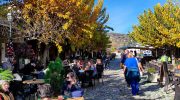
Since the arrival of the first permanent settlers of Cyprus during the early phase Neolithic, people have been living in houses made of stone and mud brick. The island’s vernacular architecture uses local materials such as stone, clay, and wood, with traditional Cypriot houses featuring thick stone walls, small windows, and flat or pitched roofs designed to keep interiors cool in the hot Mediterranean climate.
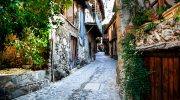
These materials came directly from the landscape, with builders quarrying limestone from hillsides, digging clay from valley floors, and cutting timber from mountain forests. The reliance on local materials created regional variations in building styles while establishing construction methods that persisted for millennia until modern industrialization introduced concrete, steel, and imported materials.
Stone as the Foundation of Village Architecture
Buildings were constructed with locally available materials, primarily stone for foundations and lower courses. The main materials include limestone, sandstone, shell rock, and granite, with structures reaching two or three stories high depending on the type of stone used. Limestone dominated as the most common building stone across Cyprus due to its abundance and relative ease of quarrying and shaping.
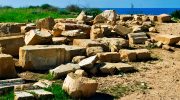
Kafkalla, a type of soft limestone, is easy to work with and has been extensively used in traditional Cypriot architecture, particularly for constructing houses, churches, and public buildings. The porous nature of kafkalla allows for efficient cutting with simple hand tools, though it requires protection from weathering through lime plaster or paint. Paphos limestone, another commonly used variety, is known for its durability and attractive appearance, found in various historical sites including the Paphos archaeological park.
Sandstone, abundant in many parts of Cyprus, has been used for centuries in building structures including houses, walls, and pavements. It is appreciated for its ease of carving and attractive earthy tones ranging from cream to reddish brown. Sandstone weathers differently than limestone, developing texture and patina that add character to old buildings.
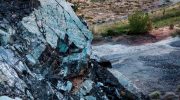
Basalt, found in the Troodos mountain range, is a hard volcanic stone used for road construction and in building foundations. Its dark color and density made it less popular for walls but ideal for ground-level courses requiring exceptional strength. Some village houses incorporated basalt foundation stones topped by lighter limestone walls.
The exterior walls are constructed of local limestone, which is a durable and commonly used material in Cyprus. The walls are several feet thick in some places and are designed to resist lateral loads and provide structural stability. This mass provided thermal benefits, absorbing heat during the day and releasing it slowly at night, moderating temperature fluctuations.
Mud Brick and Earth Construction
Early hand-shaped mud bricks are attested at sites like Kalavassos-Tenta and Khirokitia dating to the Neolithic period around 7000 BC. These buildings were supplemented by mud or mud brick superstructures built atop stone foundations. The combination of stone bases with mud brick walls became standard practice that continued through millennia.
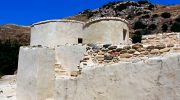
Mud bricks were formed by mixing clay-rich soil with water, straw, and sometimes animal dung to improve binding and reduce cracking. The mixture was packed into wooden molds and left to dry in the sun for several weeks until hard enough for construction. Typical bricks measured roughly 40 by 20 by 10 centimeters, though sizes varied by region and period.
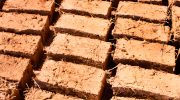
Buildings with stone foundations and mud walls became progressively larger and better constructed over time, with more developed compartmentalization of interior space. The mud brick walls required regular maintenance, with exterior surfaces receiving annual coatings of mud plaster mixed with straw and lime to protect against rain erosion.
The use of timber and adobe bricks, along with stone, provided both insulation and aesthetic appeal in Ottoman-era houses. Adobe offered superior thermal performance compared to stone, keeping interiors cooler in summer and warmer in winter. However, this type of architecture requires constant maintenance, as exposure to elements causes deterioration when buildings are left neglected for extended periods.
Lime and Gypsum Mortars
The microstructural investigation of prehistoric mortars selected from various archaeological sites of Cyprus demonstrated that the discovery of lime and gypsum technology had occurred on the island during the Neolithic period. Floors were often made of packed earth or clay, and some were coated with lime plaster, creating smooth waterproof surfaces.
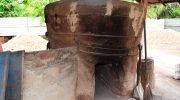
Lime production required heating limestone to high temperatures in kilns, driving off carbon dioxide and leaving quicklime. When mixed with water, quicklime became slaked lime suitable for making plaster and mortar. The process demanded significant fuel, usually supplied by burning wood or brush, and technical knowledge to control kiln temperatures.
Gypsum plaster offered an alternative to lime, created by heating gypsum rock to moderate temperatures. High-quality gypsum flagstones were used for flooring in wealthier homes, particularly during later periods. The large balcony floors in the Mukhtar’s house at certain villages were made of gypsum slabs, valued for their smooth finish and pale color.
The selection of raw materials for the preparation of mortars was based on the geology of each area. The absence of volcanic rocks in Cyprus led to the use of bricks as additives in the preparation of hydraulic mortars, mortar that could set underwater or in damp conditions. Crushed brick or ceramic fragments mixed into lime mortar created primitive concrete that served for foundations and water management structures.
Timber and Roofing Materials
Wood played essential roles despite Cyprus’s limited forest resources. Fine wooden roof beams called volitsia supported ceilings and roofs, with beams often left exposed inside houses as decorative elements. Juniper, Cyprus cedar, and pine provided durable timber resistant to insects and decay. Older houses featured massive beams hand-hewn from single tree trunks.
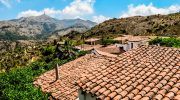
The roof of buildings is a traditional pitched roof, covered with terracotta tiles laid in herringbone patterns, which is supported by timber trusses that span between load-bearing walls. These clay tiles, called keramides in Greek, were formed on curved molds and fired in kilns. Their overlapping arrangement shed rainwater while allowing air circulation to reduce heat buildup.
Flat roofs covered with packed earth were more common in lowland areas with minimal rainfall. These roofs required layers of brush, reeds, and compacted clay mixed with lime or bitumen to create waterproof surfaces. Annual maintenance involved re-compacting the roof surface and adding fresh material where cracks appeared.
Wooden shutters protected window openings, with carefully crafted panels that could be angled to control light and airflow. Door construction used mortise and tenon joints to create frames that held vertical planks. Hardware including hinges, latches, and locks were forged from iron by village blacksmiths.
Why Traditional Materials Defined Village Character
The reliance on local materials created architecture intimately connected to landscape and climate. Buildings literally grew from the ground they occupied, with quarries near villages providing stone while nearby clay deposits supplied brick material. This local sourcing meant construction could proceed without dependence on imported resources or long-distance transport.
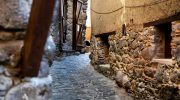
Regional variations in geology created distinctive architectural styles. Mountain villages built primarily with darker volcanic stones differed visually from lowland settlements using pale limestone. Coastal areas incorporated coral stone and shells into walls, while forest regions made greater use of timber.
The materials also dictated building techniques and forms. Stone’s compression strength encouraged thick walls and small openings. Mud brick required protection from rain, leading to deep eaves and lime-washed surfaces. Timber scarcity meant spans were limited, creating small rooms that could be roofed without excessive beams.
Traditional materials performed well in Cyprus’s climate. Stone and earth walls moderated interior temperatures through thermal mass. Small windows reduced heat gain while thick walls provided insulation. Lime plaster allowed walls to breathe, preventing moisture buildup that would damage mud brick cores. These passive environmental controls made buildings comfortable without mechanical heating or cooling.