Cyprus holds one of the longest unbroken wine traditions in the world, with archaeological evidence placing winemaking on the island at approximately 5,500 years ago. Pottery fragments discovered at Erimi village and analyzed in 2005 by Italian archaeologist Maria-Rosaria Belgiorno showed traces of tartaric acid, proving that these Chalcolithic period vessels dated between 3500 BC and 3000 BC were used for wine storage. What makes Cyprus unique is not just the antiquity of its wine culture, but the remarkable continuity of production methods that survived for millennia.
- Historical Background
- The Pithari System of Fermentation
- Special Methods for Sweet Wine Production
- The Craft of the Pitharades
- Modern Winemakers Rediscovering Ancient Techniques
- Connection to Contemporary Winemaking
- Experiencing Traditional Winemaking Today
- A Testament to Human Innovation and Continuity
Historical Background
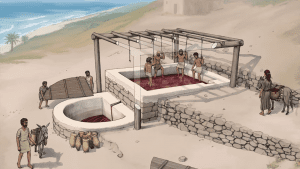
The earliest winemaking in Cyprus relied on simple but effective techniques. Grapes were placed in stone or clay basins where workers trod them with bare feet to extract the juice. A ceramic jug from Pyrgos dating to 2000 BC depicts a woman with her feet in a pressing vessel with juice flowing into a basin below, representing one of the earliest known visual records of grape treading anywhere in the Mediterranean.
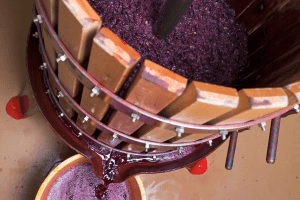
Medieval wine presses evolved into more sophisticated equipment, with the Omodos Wine Press representing a stunning example that is between 700 and 800 years old. This press features an enormous double wooden beam spanning the room, with a giant wooden screw attached to one end and weighted by a large stone that could be raised and lowered by pulley. Workers would place grapes on a large tray beneath the beam and cover them with planks. As two people rotated the screw, the heavy stone would rise and the beam would sink to press the grapes. Juice seeped into half-buried vats that were sealed to prevent spoilage during fermentation.
Similar medieval presses still exist in villages like Lania and other Commandaria region settlements. These presses served as communal facilities where entire villages would bring their harvest for processing.
The Pithari System of Fermentation
The most distinctive element of ancient Cypriot winemaking was the use of pithari, enormous clay jars that could hold between 500 and 2,000 liters of liquid. Cyprus retained hundreds of these vessels that dominated large-scale wine production well into the modern era and continue in use in villages for family production, similar to Roman dolium but clearly predating the Romans by thousands of years.
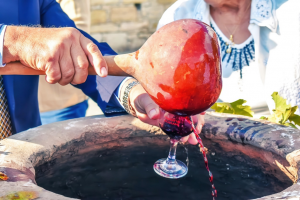
Traditional fermentation took place in these clay basins over approximately 12 days, with grapes pressed daily using a spilastirin, which was triturated wood shaped like a tripod, since fermentation caused high temperatures inside the jar. Once fermentation finished, the kouliasma or straining process began. A small basket or strainer was placed inside the jar at the center, and wine was collected in a gourd then transferred into a clean sterile jar.
The pithari were half-buried below village houses or in communal wineries. Their knob-like base facilitated moving and embedding them in earthen floors while contributing to the fermentation and maturation process. The clay pots enabled more grape purity, polymerized skin tannins, and increased oxidative characters compared to wooden barrels, which add their own intrusive woody aromas, flavors, and tannins.
Special Methods for Sweet Wine Production
Commandaria, Cyprus’s most famous wine, employed specialized techniques. The ancient method described in Hesiod’s Works and Days from the 8th century BC involved shriveling harvested grapes in the sun for ten days and ten nights, then covering them for five more days before fermenting. This sun-drying process concentrated the sugars dramatically.
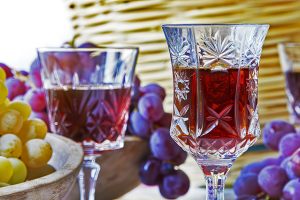
Following desiccation, fermentation employed half-buried pithari clay pots where the boiling foam was continuously skimmed off to eliminate active yeast and unwanted bacteria, arresting fermentation prematurely and naturally preserving high levels of residual sweetness. This technique created the distinctive sweet character without the need for fortification, which only became common in the 20th century.
The Craft of the Pitharades
Pithari production itself represented a specialized craft. Itinerant male potters called pitharades traveled through mountainous villages during the annual production season from early spring until October, just before the rainy season. These craftsmen lived primarily in villages like Phini, Lazania, Phikardou, Palekhorio, and Apliki.
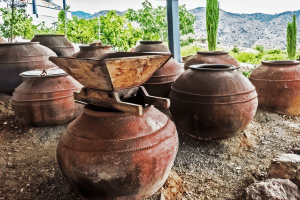
The jars were built to last for generations and often featured decorative patterns or inscriptions with dates and names of the makers. Many pithari from the 19th century still bear elaborate decorations and historical texts on their shoulders. After construction and firing, the interior was coated with hot pitch to make the vessels impermeable. The final products became permanent household installations due to their exceptional bulk and weight.
When pithari broke, they were not discarded but recycled as ovens, well-heads, bathtubs, and special saunas for new mothers, demonstrating the resourcefulness of traditional Cypriot culture.
Modern Winemakers Rediscovering Ancient Techniques
Contemporary Cypriot winemakers are actively reviving these traditional methods after decades of international-style production. Some boutique wineries now scour villages searching for old pithari to refurbish and bring back into use for fermentation. The results demonstrate that these ancient vessels create distinctive wine characteristics impossible to achieve with stainless steel or oak barrels.
Current PDO Commandaria regulations unfortunately require two years of aging in French barrels, a practice only about 40 years old that restricts producers from exploring more authentic pithari-based styles. Some winemakers lament these modern restrictions that prevent them from fully embracing historical production methods.
A few progressive wineries now ferment wines partially in pithari and partially in stainless steel, allowing them to blend the grape purity and oxidative complexity of clay fermentation with the clean, controlled characteristics of modern methods. This hybrid approach represents a thoughtful balance between preservation and innovation.
Connection to Contemporary Winemaking
The ancient pressing and fermentation techniques of Cyprus provide living links to the island’s 5,500-year wine heritage. While industrial methods dominate most production today, the preservation of medieval presses as cultural monuments and the revival of pithari fermentation by boutique producers keep these traditions alive. The techniques developed in ancient Cyprus influenced winemaking throughout the Mediterranean and remain relevant for understanding how climate, grape varieties, and vessels interact to create distinctive wines.
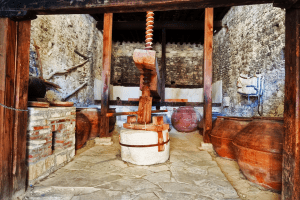
Modern understanding of these methods has also revealed their technical sophistication. The half-buried placement of pithari utilized stable ground temperatures for fermentation control. The skimming of foam during Commandaria production represented early yeast management. The use of sulphur smoke for sterilization predated modern chemical preservatives by millennia. These were not primitive methods but refined techniques developed through centuries of observation and experimentation.
Experiencing Traditional Winemaking Today
Visitors to Cyprus can observe preserved examples of ancient winemaking equipment throughout the wine regions. The Omodos Wine Press operates as a free museum displaying medieval pressing technology in excellent condition. The Cyprus Wine Museum in Erimi village occupies the exact location where the 5,500-year-old wine vessels were discovered and houses ancient jars, medieval pots, and traditional instruments.
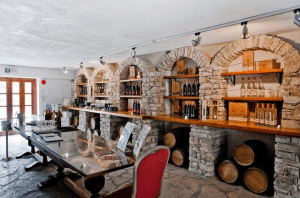
Numerous traditional wine presses still exist in villages like Lania, some with enormous clay vessels dated 1844 located near the pressing equipment. Many wineries and town squares display antique pithari as decorative elements, creating connections between past and present winemaking eras.
Some contemporary wineries offer tours that specifically highlight traditional techniques. Visitors can see refurbished pithari in active use and compare wines fermented in clay versus stainless steel or oak. These experiences provide tangible understanding of how fermentation vessels affect wine character and demonstrate why ancient methods continue to hold value for modern production.
A Testament to Human Innovation and Continuity
The ancient pressing and fermentation techniques of Cyprus represent remarkable achievements in agricultural technology and cultural continuity. From stone treading basins to sophisticated wooden beam presses, from massive clay fermentation jars to specialized sweet wine production methods, these techniques demonstrate human ingenuity applied to transforming grapes into wine. The survival and revival of these methods connects modern Cypriots with their ancestors across 5,500 years of unbroken tradition. For wine enthusiasts and history lovers alike, understanding these ancient techniques enriches appreciation of how traditional knowledge, when preserved and respected, continues to contribute valuable insights to contemporary practice.