Across Cyprus, tradition does not survive in museums alone. It lives in streets closed for parades, village squares filled with music, and festivals where children dance the same steps their grandparents once learned. From large urban celebrations in Limassol and Nicosia to small rural gatherings in the Troodos Mountains, festivals remain the island’s most effective way of passing folk culture from one generation to the next.
These events are not staged nostalgia. They are active systems of cultural transmission, where music, dance, costume, and storytelling are learned by participation rather than explanation.
- Why Festivals Matter More Than Performances
- Limassol: Where Tradition Meets the Crowd
- Nicosia: Tradition Inside a Modern Capital
- Rural Festivals: Where Tradition Is Densest
- Instruments, Dances, and Skills Kept Alive Through Repetition
- How Youth Inherit Tradition Rather Than Observe It
- Why Festivals Remain Cyprus’s Cultural Backbone
Why Festivals Matter More Than Performances
A concert can be watched. A festival must be joined.
Cypriot festivals work because they blur the line between performer and audience. Children rehearse for months with local dance groups. Teenagers volunteer as organisers. Elders sing, comment, correct, and remember. Culture is not presented as something finished, but something ongoing.
This is why festivals succeed where formal instruction often fails. They create emotional memory alongside skill.
Limassol: Where Tradition Meets the Crowd
Limassol has long been known as Cyprus’s most celebratory city. Its festivals combine rural tradition with urban scale, keeping folk culture visible even as the city modernises.
The Limassol Carnival: Satire, Song, and Continuity
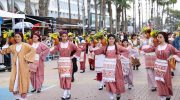
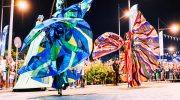
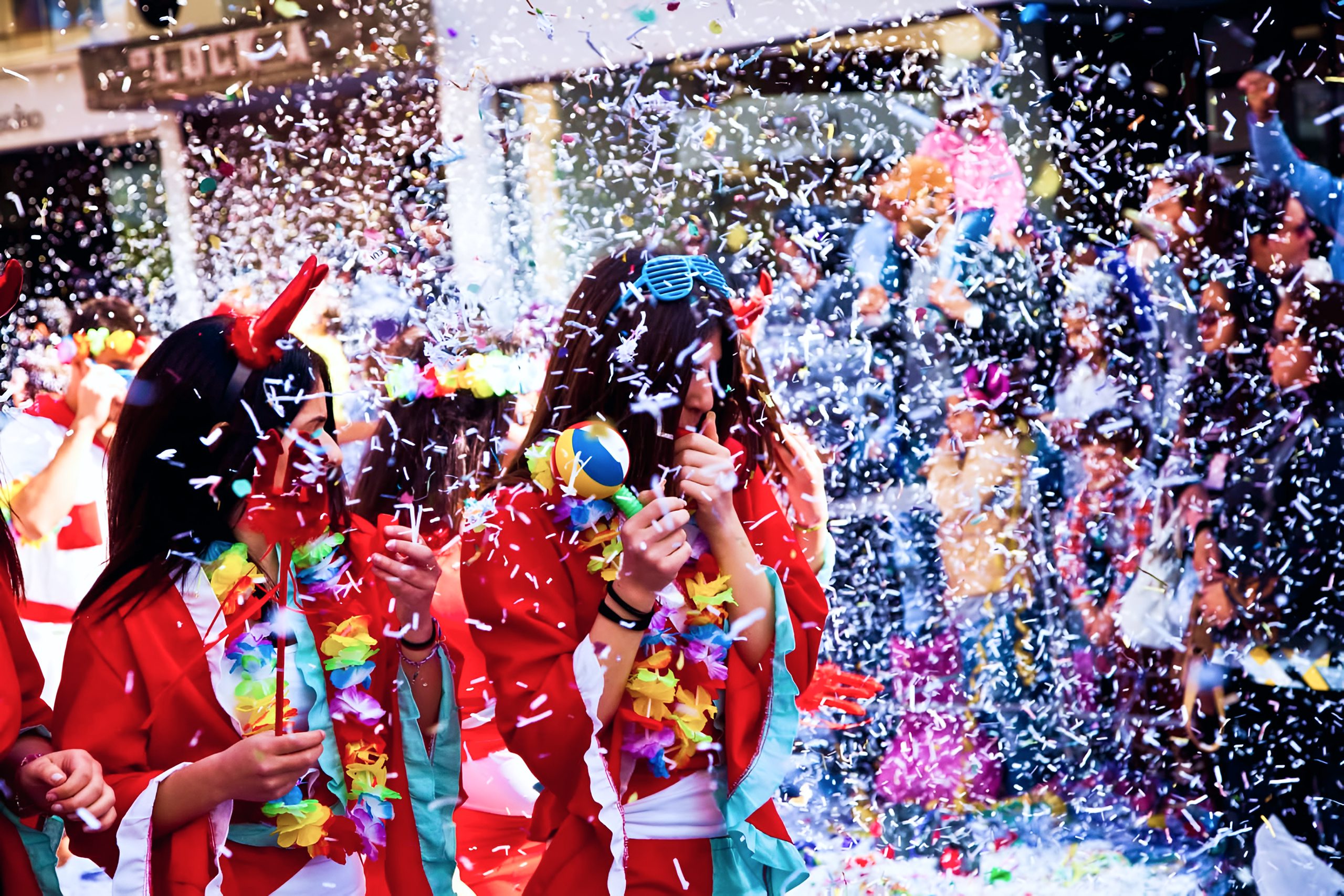
The Limassol Carnival is one of the island’s oldest surviving festive traditions. Rooted in pre-Lenten customs, it blends satire, music, and public participation over several days. While today’s carnival includes large parades and organised events, its core identity remains musical.
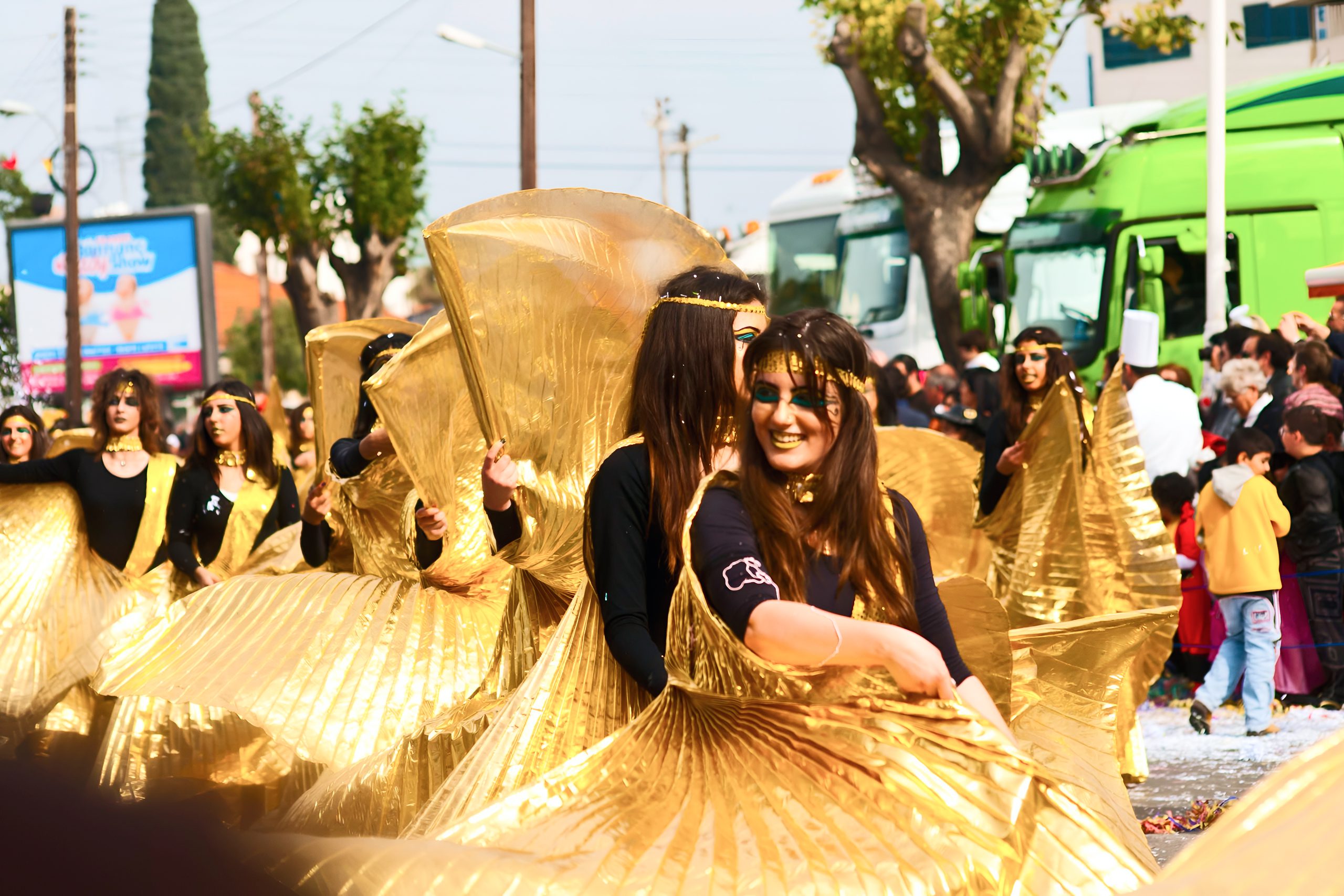
Traditional serenades, known locally as kantades, still define the sound of the carnival. These choral songs, accompanied by guitars and mandolins, link the modern festival to its nineteenth-century urban roots. The Children’s Parade plays a crucial role here. Participation often begins within families, turning carnival identity into something inherited rather than adopted.
The Limassol Wine Festival: Where Agriculture Becomes Performance
Held each autumn, the Limassol Wine Festival transforms agricultural heritage into a shared cultural event. Traditional dances, live folk music, and demonstrations of wine-making techniques place rural practices into a modern urban setting.
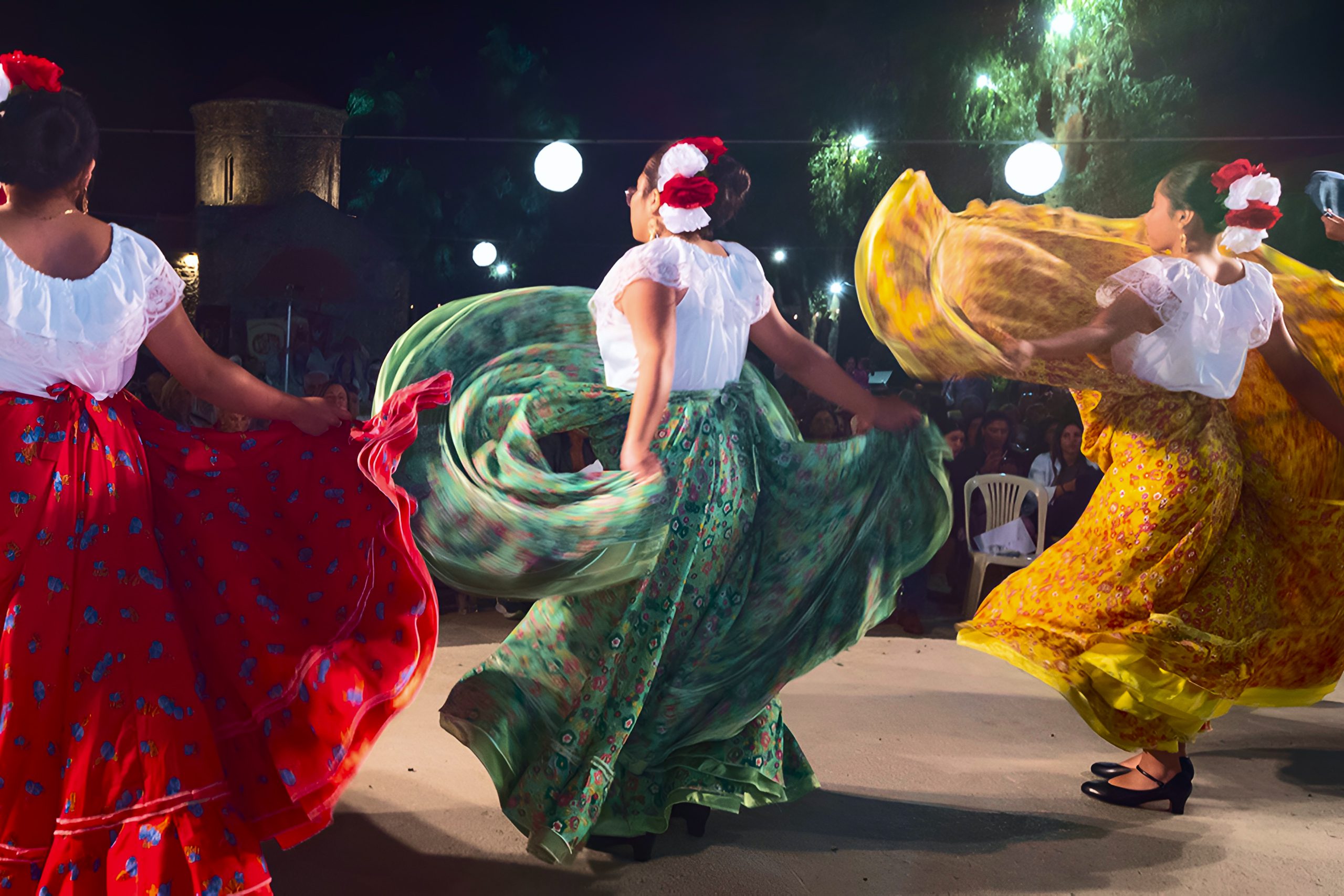
Children’s dance troupes are central to the evening programs, ensuring that folk movement and rhythm remain learned skills rather than symbolic gestures. While adults taste wine, younger participants rehearse identity.
Nicosia: Tradition Inside a Modern Capital
As a divided capital, Nicosia approaches cultural preservation differently. Here, festivals often focus on dialogue, neighbourhood identity, and shared space.
Mediterranean Folk Dance Festival
This international event brings Cypriot folk ensembles into conversation with dance traditions from across the region. Young performers train extensively to participate, often sharing stages with professional groups from abroad.
Rather than diluting local identity, this exposure sharpens it. By seeing their dances alongside others, Cypriot performers learn what makes their movements, rhythms, and formations distinctive. Comparison becomes a form of education, and pride grows from understanding difference rather than isolation.
Pame Kaimakli: Heritage at Street Level
The Pame Kaimakli festival unfolds within the lived spaces of the neighbourhood itself. Courtyards, narrow streets, and small squares become stages, removing the distance between daily life and cultural expression.
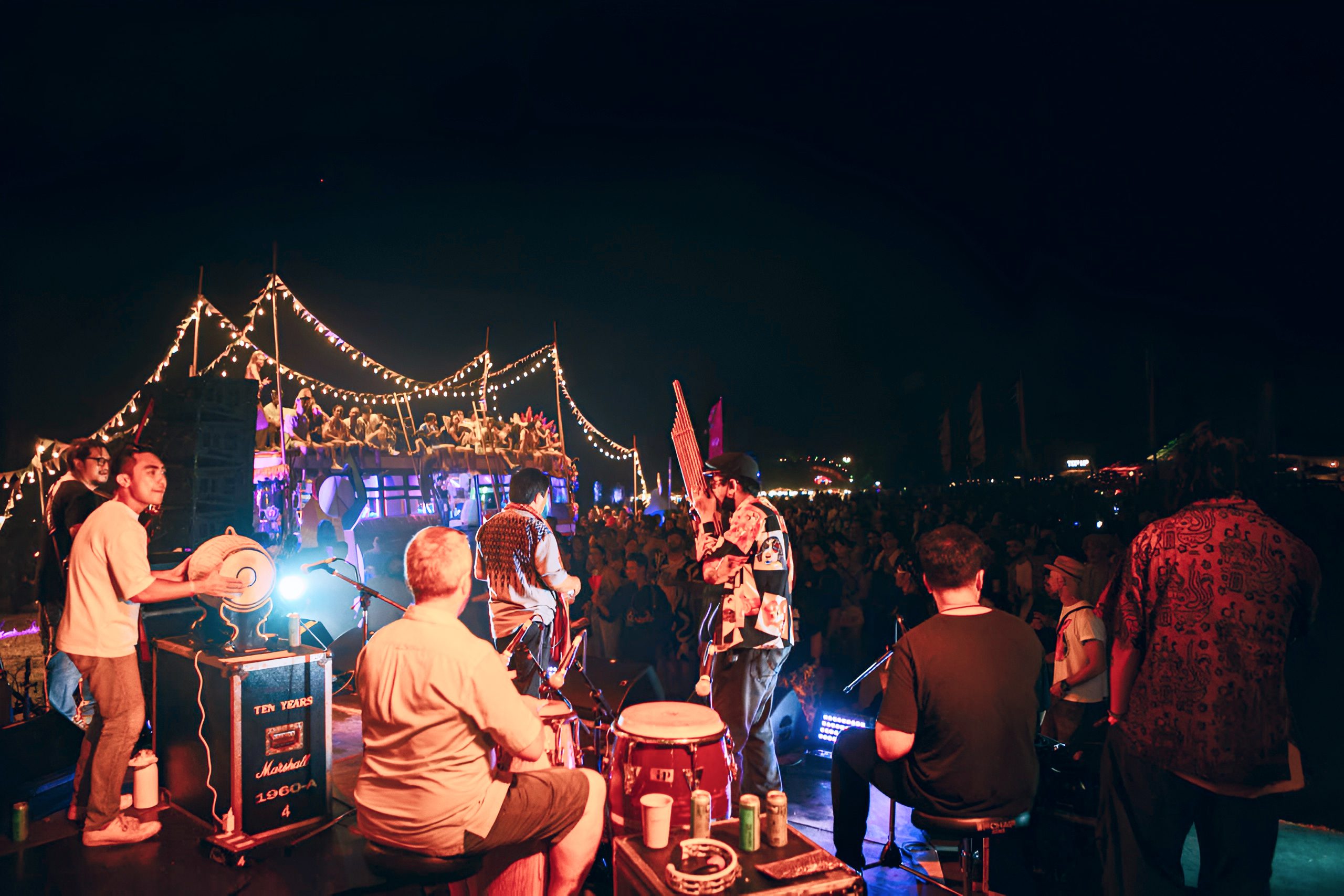
Music, food, and storytelling are woven together naturally. Elder residents recount memories triggered by familiar songs, while younger participants record, photograph, and reinterpret these moments. Tradition here is not performed at people, but shared among them, shaped by conversation as much as choreography.
EDON Youth Festival: Tradition Without Nostalgia
The EDON Youth Festival demonstrates that folk culture does not need to compete with modern expression. Contemporary music stages exist alongside dedicated folk spaces, allowing different cultural languages to coexist.
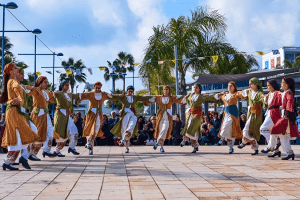
What makes this festival distinctive is youth leadership. Young organisers curate programs, manage logistics, and decide how tradition is presented. Folk dance and music are not imposed as heritage obligations, but chosen as meaningful expressions within a broader cultural landscape.
Rural Festivals: Where Tradition Is Densest
If cities amplify tradition, villages preserve their texture.
In the Troodos region, agricultural festivals remain closely tied to seasonal rhythms. Grape harvest celebrations, almond blossom festivals, and rose gatherings are not abstract cultural events. They reflect the cycles that once governed survival and still shape rural memory.
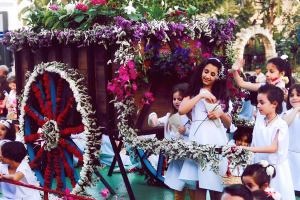
Preparation often begins weeks in advance. Young people help decorate spaces, prepare food, and rehearse performances, learning not through instruction but by involvement. These festivals are informal, often free, and deeply communal, which makes participation both accessible and sincere.
Instruments, Dances, and Skills Kept Alive Through Repetition
Festivals succeed because they protect details, not summaries.
Traditional Cypriot music depends on instruments such as the violin, laouto, and pithkiavli, a reed flute historically played by shepherds. Dances including Syrtos, Sousta, Tatsia, and Kouza demand coordination, endurance, and improvisation.
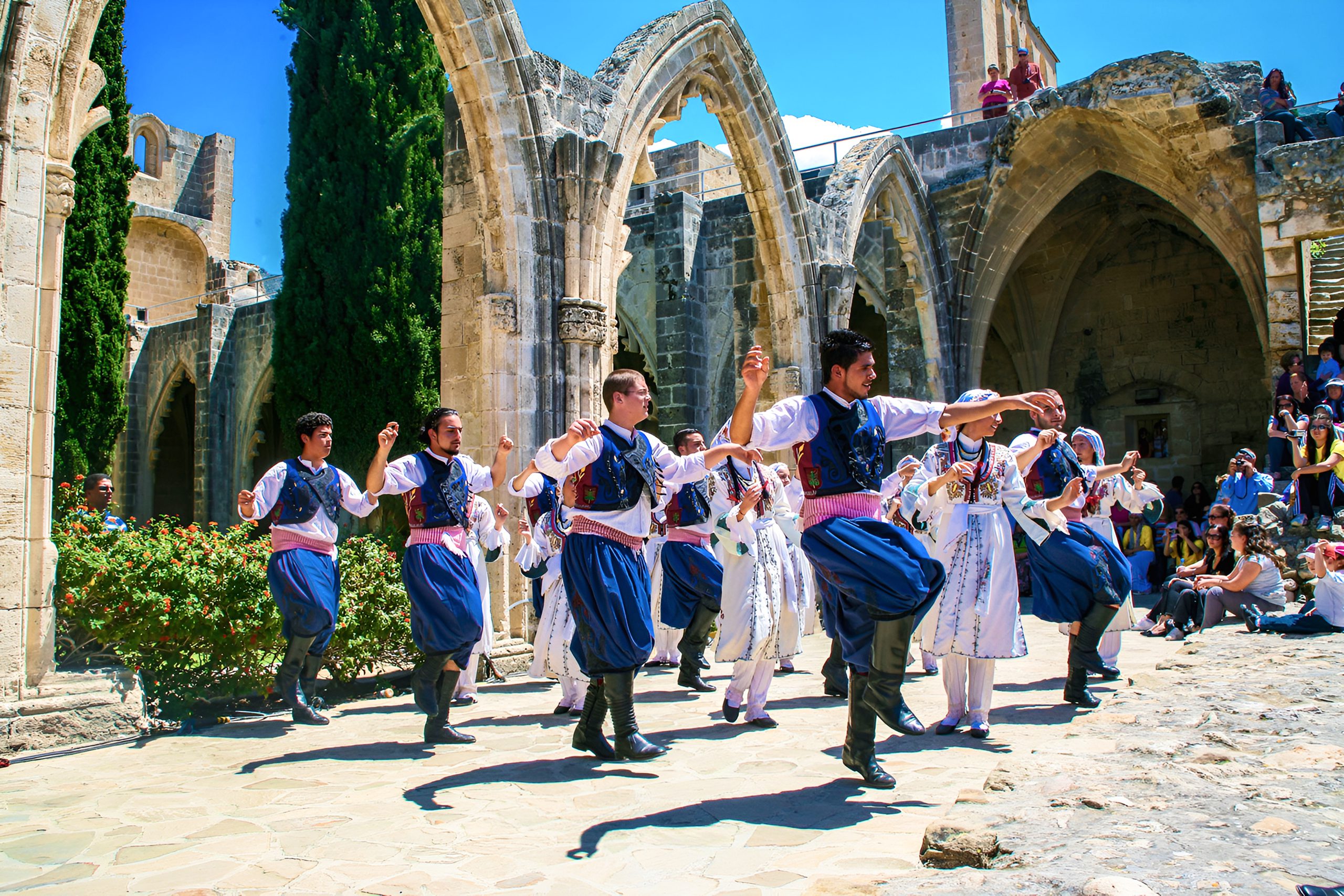
These are not skills that survive on paper. They require repeated practice in public spaces, guided by experienced performers and corrected in real time. Festivals provide the environment where this repetition remains natural rather than forced.
How Youth Inherit Tradition Rather Than Observe It
A defining strength of Cypriot festivals is structured youth inclusion.
Children’s dance groups, school choirs, workshops, and volunteer roles place young people inside the workings of cultural life. Government-supported initiatives and local cultural funding help sustain this involvement by reducing financial and logistical barriers.
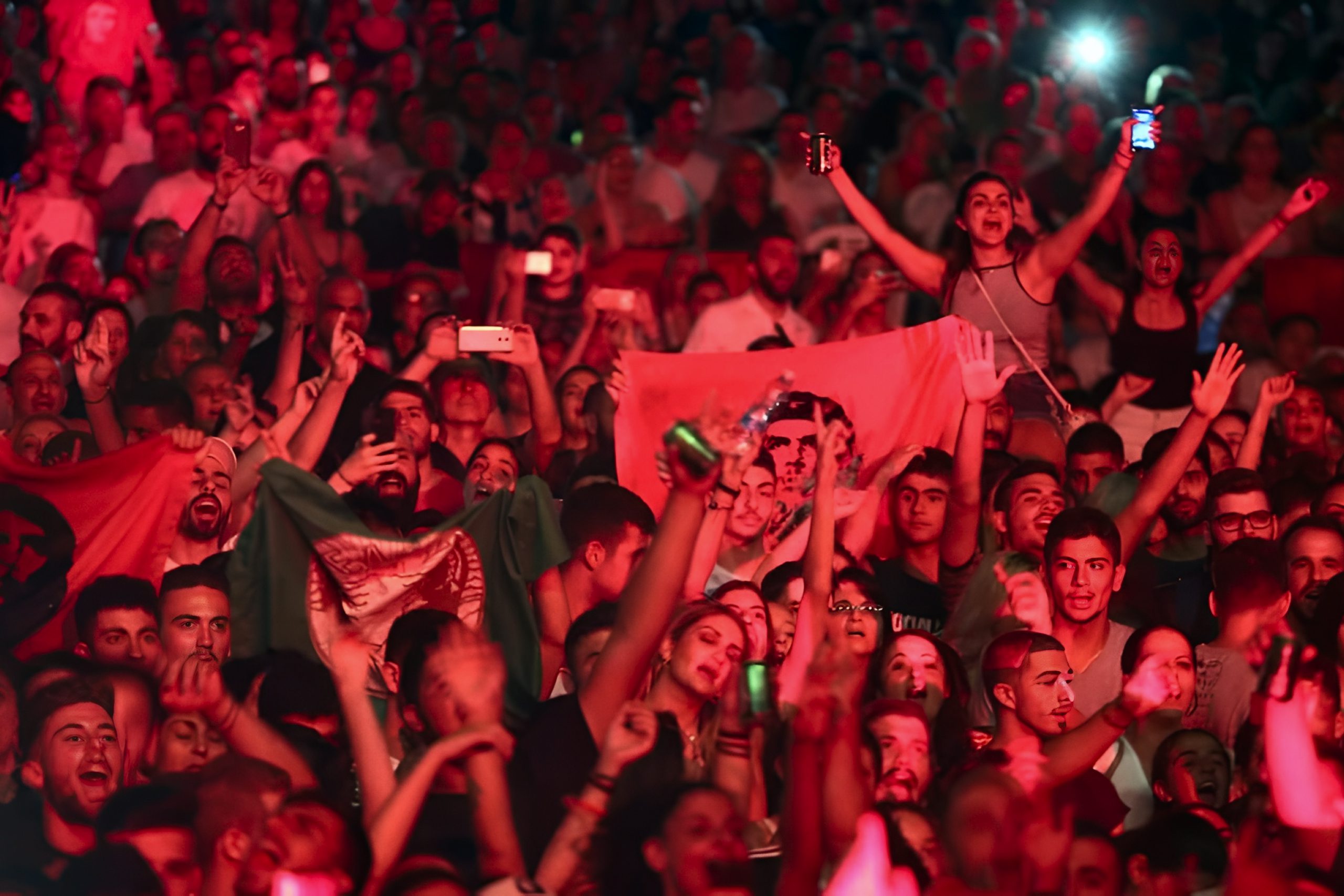
As a result, tradition remains flexible without becoming fragile. Forms evolve, interpretations shift, but continuity is preserved through participation rather than preservation alone.
Why Festivals Remain Cyprus’s Cultural Backbone
Cyprus has always absorbed influence. Ancient Greek foundations, Byzantine ritual, Venetian spectacle, Ottoman musical elements, and modern European frameworks all coexist within the island’s cultural landscape.
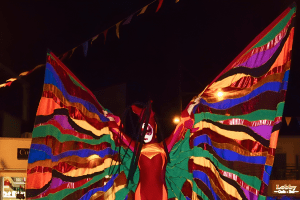
Festivals provide a space where these layers are not flattened, but activated. They transform memory into sound, movement, and shared experience. In doing so, they ensure that tradition remains usable, not frozen.
In a world of rapid change, Cypriot festivals continue to offer something rare. A living system where culture is not displayed, but practised.