Famagusta sits on the eastern coast of Cyprus, surrounded by two miles of massive stone walls built when Venice controlled the Mediterranean. The old town contains ruins of over 300 churches from an era when the city rivaled Constantinople in wealth. During the Middle Ages, this port served as the gateway between Europe and the Levant, where merchants traded silks and spices in multiple languages. The deepest harbor in Cyprus made Famagusta essential for naval powers across eight centuries of occupation by Crusaders, Venetians, Ottomans, and the British.
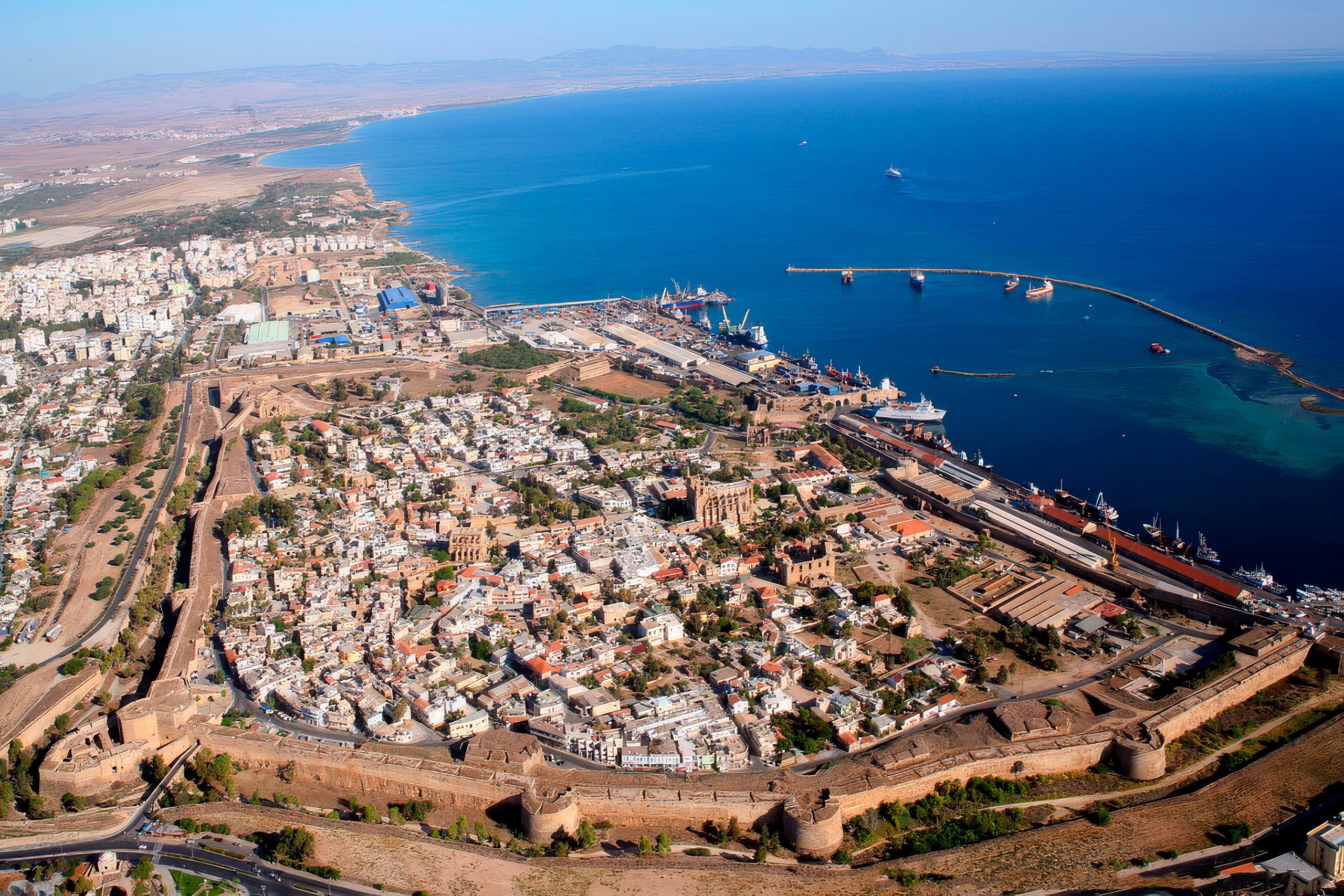
The city was founded around 274 BCE by Ptolemy II after an earthquake damaged nearby Salamis. Originally called Arsinoe after the Ptolemaic queen, the settlement grew from a small fishing village into a major commercial hub. By the 14th century, Famagusta had become one of the wealthiest cities in the known world. Today, the fortified old town preserves Gothic cathedrals, Venetian bastions, and Ottoman mosques within walls that still bear scars from a siege that lasted nearly a year.
Historical Background
Famagusta rose to prominence after the fall of Acre in 1291. When Crusaders lost their last stronghold in the Holy Land, merchants and nobles fled to Cyprus. The Lusignan Kingdom ruled the island, and Famagusta became its richest port. Ships carrying goods from Syria, Egypt, and Palestine anchored in the deep harbor. Merchants speaking Greek, Arabic, Italian, French, and Hebrew filled the markets. A 14th-century German traveler wrote that all ships and all wares must first come to Famagusta.
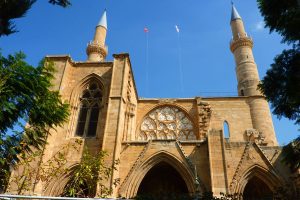
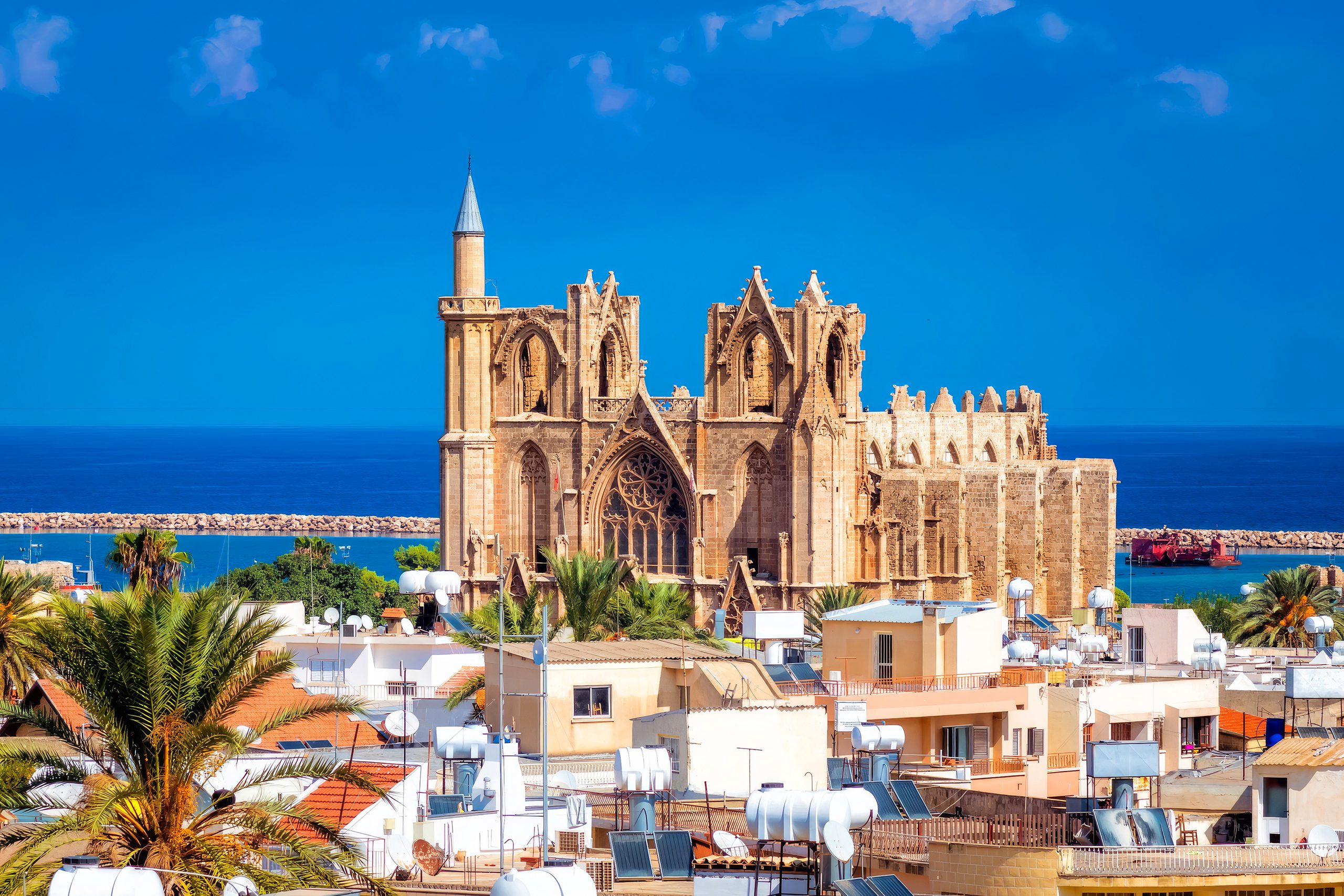
The Cathedral of Saint Nicholas stood in the main square, built in pure Gothic style between 1298 and 1326. Crusader kings of Jerusalem received their crowns here after Acre fell. The cathedral measured 55 meters long with three naves and flying buttresses typical of French Gothic architecture. Its twin towers dominated the skyline. Inside, stone carvings and stained glass windows demonstrated the wealth flowing through the city’s port.
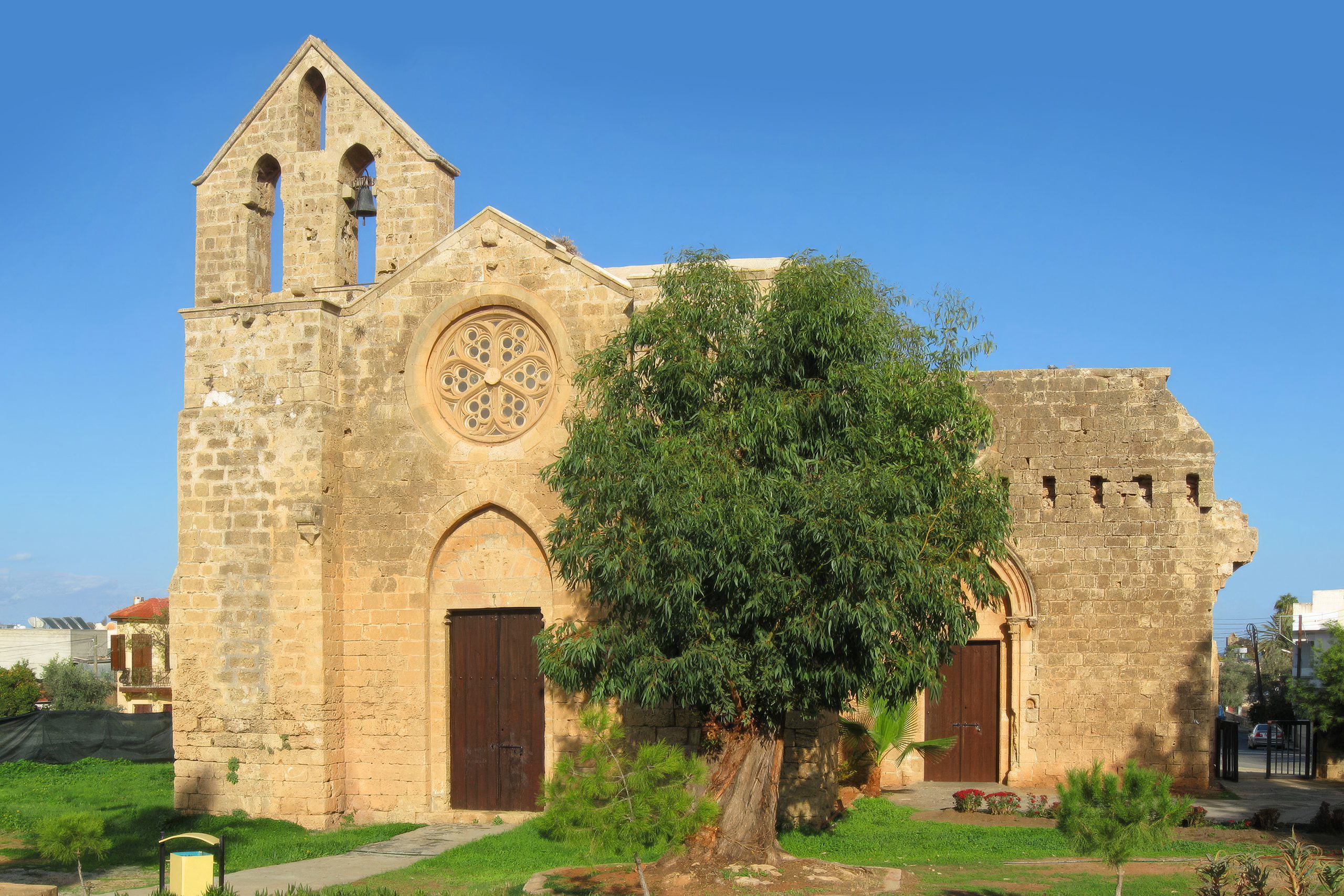
By the mid-14th century, Famagusta supposedly had the richest citizens in the world. The legend claims the city built 365 churches, one for every day of the year. While this number is exaggerated, over 300 church ruins survive within the walls. The Nestorian Church, built around 1360 by two Syrian merchants known for their immense wealth, exemplifies the cosmopolitan nature of medieval Famagusta. Armenian, Greek Orthodox, Syrian, and Latin congregations all maintained churches in distinct quarters.
Genoese Conquest Changed the Balance
In 1373, Genoese forces seized Famagusta by surprise. The Lusignan kings had expanded into Lesser Armenia on the mainland, but without their main port they could not support these overseas territories. The Mamelukes conquered the Kingdom of Lesser Armenia in 1375, ending Lusignan expansion. Genoa controlled Famagusta for over a century, using it as a naval base and trading post.
The Genoese period saw economic changes. A 15th-century observer noted that a malignant devil had become jealous of Famagusta, referencing the decline from its earlier peak. Trade patterns shifted as Genoa directed commerce toward its own interests. Church construction slowed dramatically. The cosmopolitan atmosphere persisted but without the explosive growth of the Lusignan era.
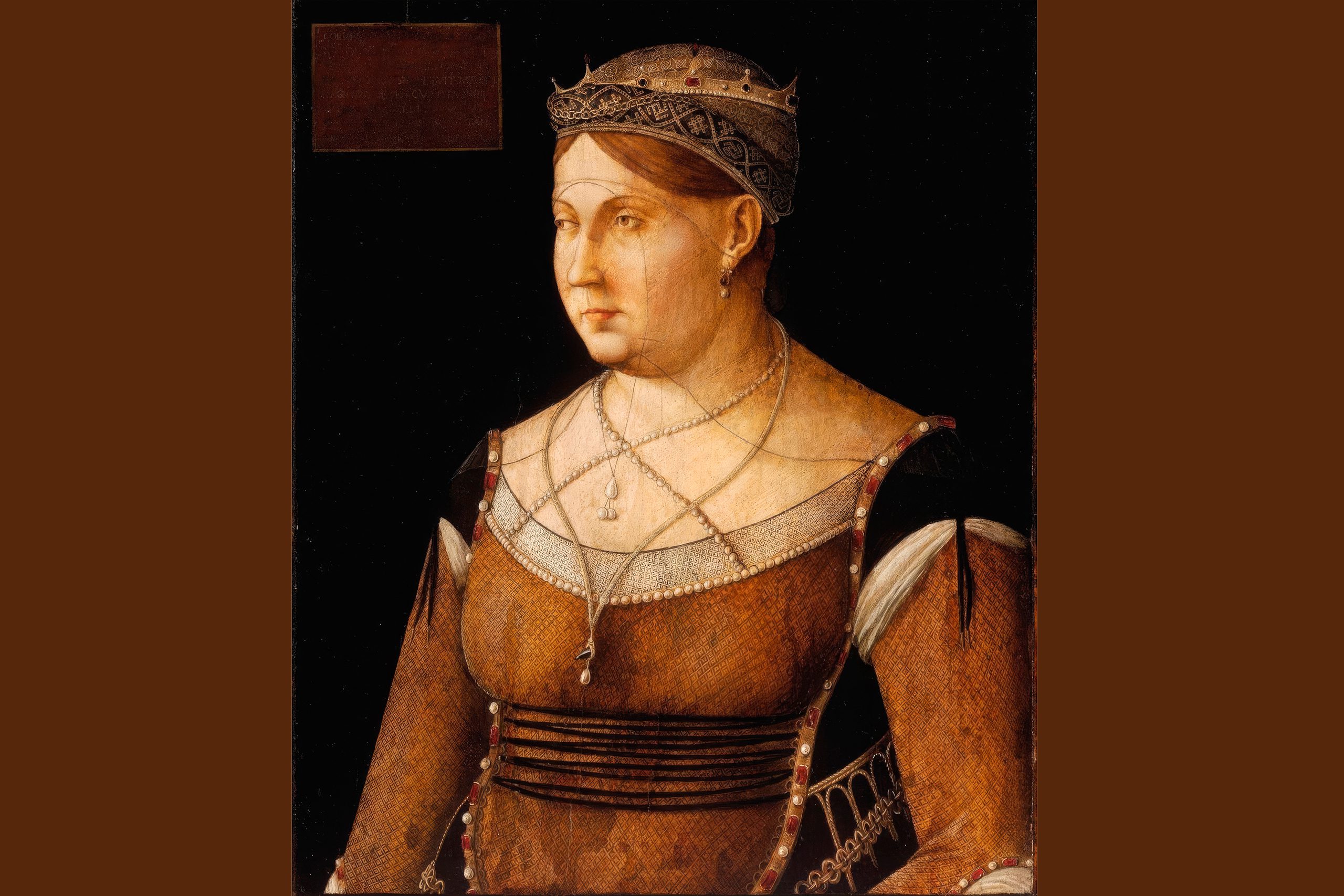
In 1489, Catherine Cornaro, the last Lusignan ruler, was forced to cede Cyprus to the Republic of Venice. Her husband James II had died in 1473, and Venice sent its fleet to protect the pregnant widow. She reigned first for her infant son James III and then in her own right after his death. The Venetian Republic pressured her family until she agreed to bequeath her kingdom to Venice. She returned to Italy, where she established a court at Asolo.
Venice Built Walls That Still Stand Today
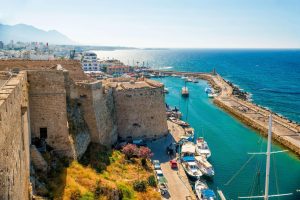
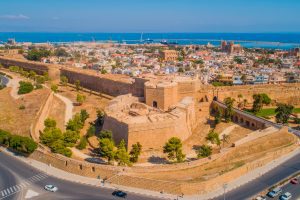
The Venetians recognized Famagusta as essential for maintaining their Eastern Mediterranean empire. They transformed the entire city into a state-of-the-art fortress. The original medieval walls were replaced with massive fortifications designed to withstand cannon fire. Military engineers including Michele Sanmicheli and his nephew Giovanni Girolamo Sanmicheli planned the new defenses. The younger Sanmicheli arrived around 1550 and designed the Martinengo Bastion, which became a prototype for fortifications across Europe and America.
The walls form a roughly rectangular circuit with 14 bastions named after Venetian families. Each bastion projects outward from the wall, creating overlapping fields of fire. Walls reach up to six meters thick in places, built to absorb the impact of cannonballs. A rock-hewn ditch surrounds the landward sides, 80 feet wide and 25 feet deep. The harbor protected the seaward approach. Two gates provided access: the Land Gate in the southwest and the Sea Gate by the port.
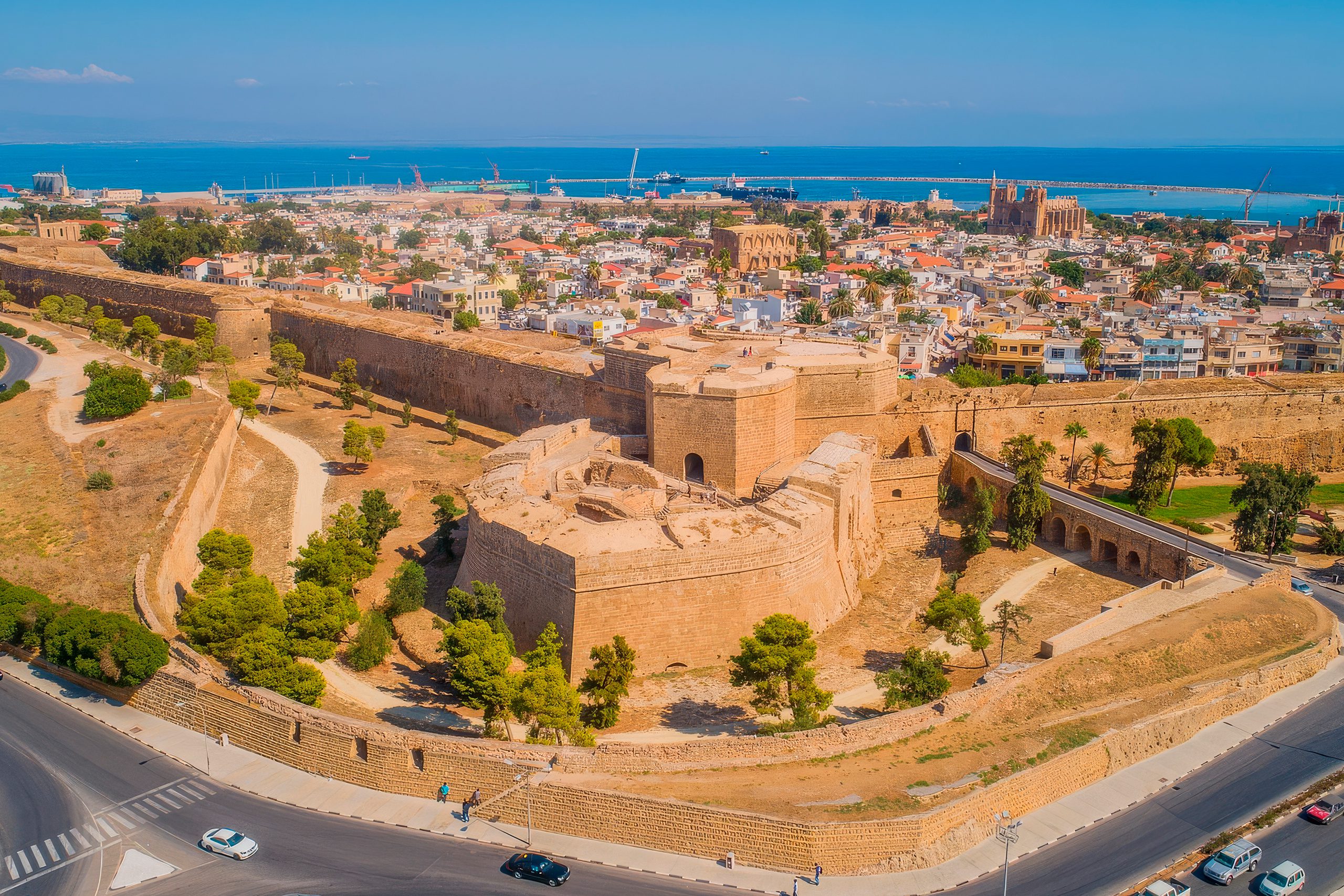
The fortifications show the transition from medieval to early modern military architecture. Like the walls of Rhodes built by the Knights Hospitaller, Famagusta’s defenses combine features from both periods. Round bastions replaced the rectangular towers of medieval castles because cylindrical structures better resisted cannon fire. Square towers could have corners knocked off by artillery, but round towers deflected shots.
Giovanni Girolamo Sanmicheli died in Famagusta in 1559 while construction continued. The fortifications remained unfinished when war broke out in 1570. Despite incomplete sections, the walls proved remarkably effective during the siege that followed. Modern visitors can walk vast sections of the fortifications, which remain in relatively good condition after 450 years.
Othello Castle Guards the Harbor Entrance
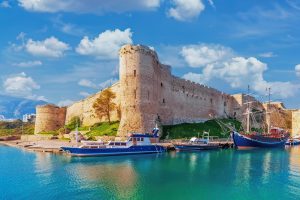
Othello Castle stands at the harbor entrance, built by the Lusignans in the 14th century to protect the port. The fortress originally served as the main entrance to Famagusta. It was called the impenetrable fortress due to very deep ditches that made attack nearly impossible. When the Venetians took control, they modified the structure to accommodate modern artillery, replacing square towers with circular ones.
In 1492, Venetian Captain Nicolo Foscarini directed alterations to the castle. Above the main entrance, sculptors carved a relief of the winged Lion of Saint Mark, symbol of Venice. The front paws rest on land, representing Venetian land power, while the rear paws stand in the sea, representing maritime empire. An inscription near the lion credits Foscarini with the renovation and includes the date. Leonardo da Vinci reportedly advised on the refurbishment in 1481.
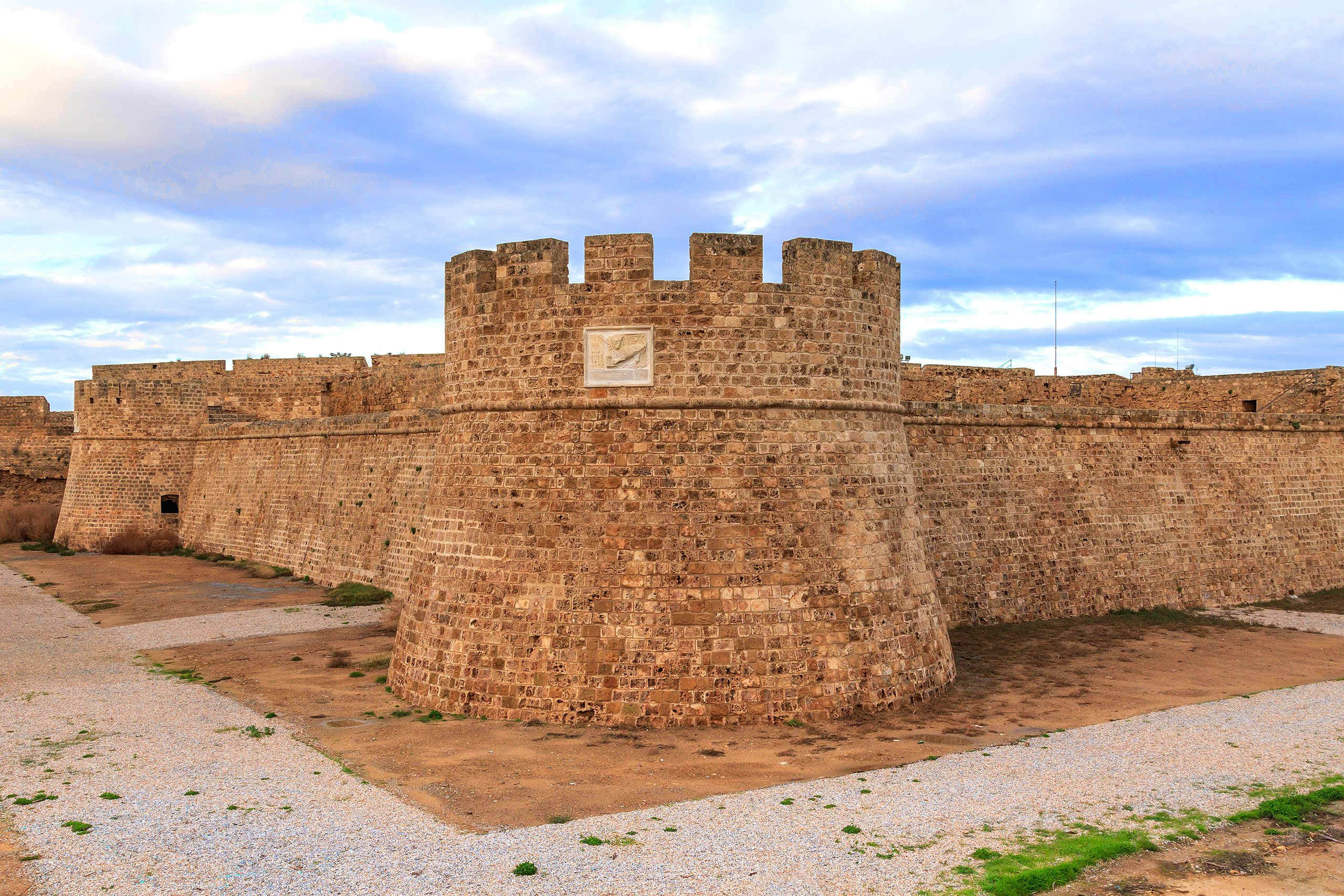
The name Othello Castle comes from Shakespeare’s play written in 1603. The tragedy is set in a harbor town in Cyprus, and a stage direction mentions the citadel. Some scholars suggest Shakespeare based his character on Cristoforo Moro, a Venetian governor who served in Cyprus in 1506. However, Shakespeare never visited Cyprus and wrote the play more than 30 years after the Ottoman conquest ended Venetian rule.
Inside the castle, the Great Hall measures 92 feet by 25 feet, comparable in size to the refectory at Bellapais Abbey. Gothic arches support a vaulted roof. The hall dates to around 1300 and was massively constructed with walls thick enough to support defensive positions above. Four circular towers contain corridors leading to artillery chambers. Gun ports and smoke holes remain clearly visible. The castle also served as a prison in 1566.
Ottoman Rule Transformed the Cityscape
The Ottomans reorganized Famagusta after the conquest. They divided luxury homes among military leaders and resettled the walled city to address population decline. Latin commercial interests were removed, and Greek Cypriots were expelled from the old town. The conquerors brought in Turkish settlers to maintain the urban population.
Churches underwent conversion to mosques. The Cathedral of Saint Nicholas became the Lala Mustafa Pasha Mosque, named after the Ottoman commander. A minaret was added above the Gothic buttresses, creating the distinctive silhouette visible today. The Nestorian Church became a stable for camels, with worship allowed only one day per year on the Feast of Saint George the Exiler. Many smaller churches were left to decay, their Gothic windows and pointed arches slowly crumbling.
The Ottomans modernized infrastructure in their own style. They built fountains throughout the city to improve the water supply. Public baths followed Ottoman designs. The harbor continued operating for commercial shipping, though trade volumes declined from medieval peaks. By the 19th century, only a handful of residents remained, many living in shacks attached to deteriorating churches. Scottish photographer John Thomson called Famagusta a city of the dead in 1878.
Current Status and Conservation Challenges
The old walled city of Famagusta contains approximately 200 buildings reflecting Byzantine, French Gothic, and Italian Renaissance styles. Many stand in serious disrepair. A 2010 Global Heritage Fund report listed Famagusta among 12 sites most on the verge of irreparable loss, citing insufficient management and development pressures. The walls still bear pockmarks from Ottoman cannonballs that litter the ground below.
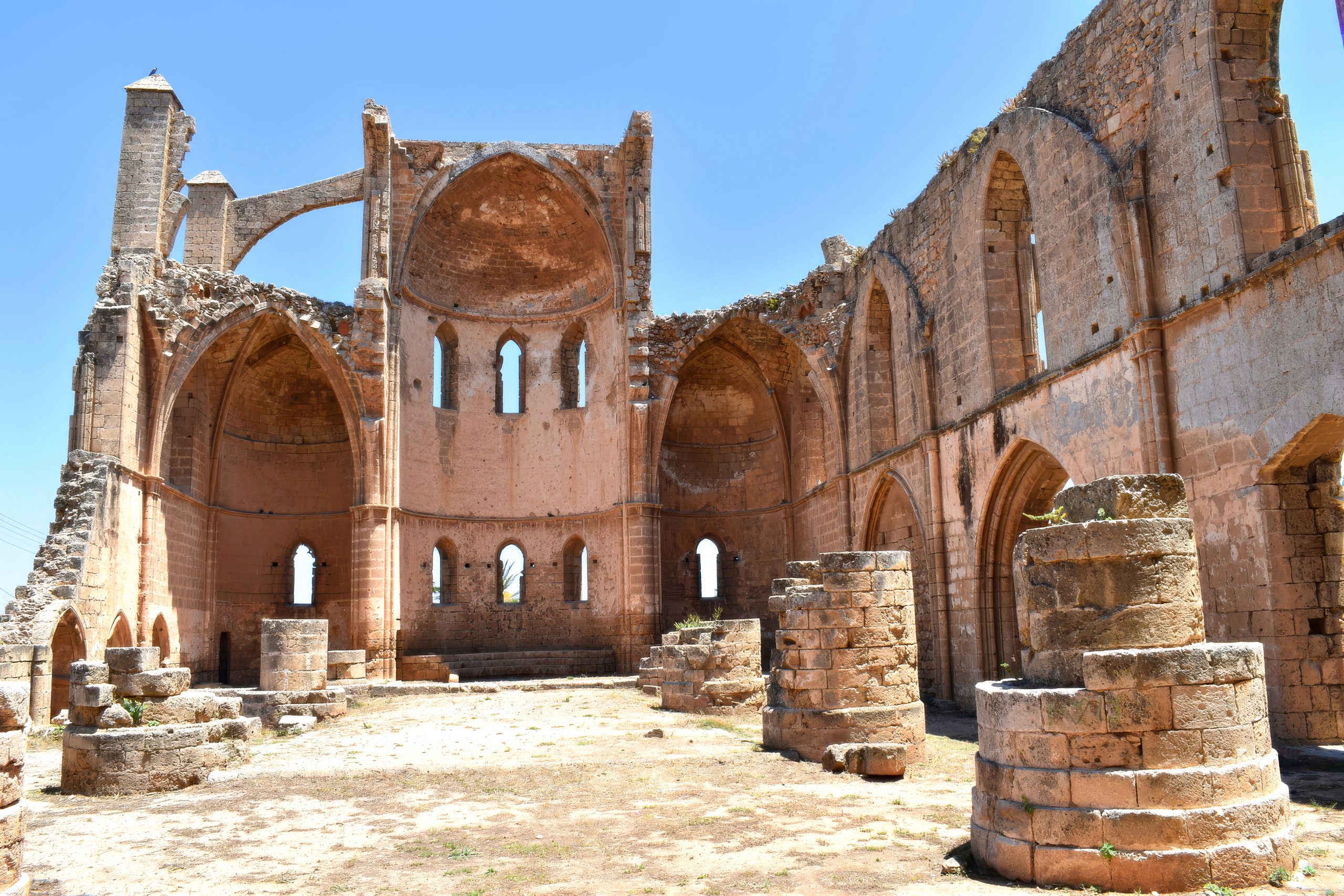
Church frescoes face particularly grave threats. Exposed paintings on the walls of Saint George of the Greeks have been washed by rain, disturbed by earthquakes, and bleached by sun for decades. Without protection from the elements, these medieval artworks deteriorate rapidly. Domes, arches, and ribbed vaults not already collapsed remain on the verge of failure. Experts warn that the next seismic event may destroy structures that survived eight centuries.
Some restoration has occurred despite political complications. The Bi-Communal Technical Committee on Cultural Heritage restored Othello Castle between 2014 and 2015. The castle reopened on July 3, 2015. A performance of Othello was held inside with Greek-Cypriot and Turkish-Cypriot actors, attended by the respective community leaders. This event represented a rare moment of cooperation in a divided city.
Modern Famagusta
Modern Famagusta has grown outside the walls to a population of about 35,000. The city serves as an important commercial hub with a 115-acre free port. Tourism, education, construction, and industrial production drive the economy. Eastern Mediterranean University attracts students from across the region. Historical sites including the walled city, nearby Salamis ruins, Othello Castle, and Saint Barnabas Monastery draw visitors interested in medieval and ancient history.
Famagusta’s story spans over two millennia from its founding as Ptolemaic Arsinoe through its transformation into one of medieval Europe’s wealthiest cities. The Lusignan golden age produced hundreds of churches and attracted merchants from across the Mediterranean. Venetian military engineers created fortifications so formidable they withstood an 11-month Ottoman siege that cost 50,000 lives. The walls they built in the 1550s still define the old city today. Ottoman rule brought cultural transformation as Gothic cathedrals became mosques and Christian symbols gave way to Islamic ones. British occupation initiated archaeological investigation and beachfront development.
The 1974 division created a frozen moment in time where medieval ruins coexist with abandoned modern resort hotels. Today, Famagusta presents a unique combination of Gothic architecture, Venetian military engineering, and Ottoman adaptations preserved within two miles of Renaissance walls. The challenge remains protecting these irreplaceable monuments from natural decay and urban pressure while political complexities complicate conservation efforts. The stones that witnessed Crusader coronations, survived Venetian sieges, and adapted to Ottoman occupation now await decisions that will determine whether future generations can continue reading this architectural chronicle of Mediterranean history.