There is an animal on Cyprus that has been blamed for stolen chickens, celebrated in folktales, painted as the ultimate villain of the farmyard and yet, science tells us a very different story. The Cyprus fox, a unique island subspecies found nowhere else on Earth, is one of the most misunderstood creatures in the Eastern Mediterranean. Once you learn the truth about it, you may never look at a pair of amber eyes at dusk in quite the same way again.
- From the Family of Clever Ones
- What's in a Name – and What a Name It Is
- How Did a Fox End Up on an Island?
- What Does the Cyprus Fox Actually Look Like?
- Fun Facts Worth Sharing
- The Island Ecosystem's Silent Balancer
- The Villain That Wasn't – History and Folklore
- The Fox in Today's Cyprus
- Where to Catch a Glimpse
- A Small Fox, A Big Story
From the Family of Clever Ones
The Cyprus fox belongs to the family Canidae the great clan that includes wolves, jackals, wild dogs, and domestic dogs. Within this family sits the genus Vulpes, the “true foxes,” a group of about twelve species spread across the globe, from the tiny big-eared fennec fox of the Sahara to the ghost-white Arctic fox of the frozen north.
Our island’s fox is a member of Vulpes vulpes the red fox which is arguably the most successful and widespread wild carnivore on the planet, ranging from the Arctic Circle all the way down to North Africa, across Eurasia, and into North America. But the fox living in Cyprus is not simply a red fox that wandered over. It is a distinct island subspecies, formally described in 1907 by the American naturalist Gerrit Smith Miller, and given the name Vulpes vulpes indutus the Cyprus red fox. It is found only here, on this island, and nowhere else in the world.
What’s in a Name – and What a Name It Is
In everyday Greek, the fox is called αλεπού (alepoú), and on Cyprus, you will still often hear the older, distinctly Cypriot form: αλουπού (aloupou). These are not simply regional variations in pronunciation – they carry the full weight of linguistic history.
The word traces back to the Ancient Greek ἀλώπηξ (alṓpēx), which itself derives from Proto-Indo-European roots connected to words for “fox” across a wide family of languages including Old Armenian ałuēs, Lithuanian lãpė, and Sanskrit lopāśá. The same ancient root also gave rise to the Latin vulpēs, from which comes the fox’s scientific genus name Vulpes – meaning that the creature’s everyday Cypriot nickname and its formal scientific title are, at their very deepest roots, distant cousins of the same ancient word.
There is also a beautiful hidden meaning within the ancient Greek form. The ancient adjective ἀλωπός (alōpós) meant simply “cunning” and it is closely related to ἀλώπηξ, the word for fox. In other words, the ancient Greeks did not merely name the animal and then decide it was cunning – the word for fox and the word for cunning were, from the very beginning, one and the same idea. Language itself encoded the fox’s reputation long before the first folktale was ever told.
There is one more linguistic gem tucked away in this story. The English word alopecia meaning hair loss – also comes from the ancient Greek alṓpēx, because foxes were observed to shed their coat dramatically twice a year, or were noted to suffer from mange. So the next time someone mentions that medical term, they are, quite unknowingly, speaking about a fox.
Locally, Cypriot hunters and farmers historically also used the expression η αλεπού simply to mean a sly or untrustworthy person a testament to how deeply this animal’s name had fused with the concept of clever deception in the Cypriot cultural imagination.
How Did a Fox End Up on an Island?
The red fox originated from smaller-sized ancestors from Eurasia during the Middle Villafranchian period. In those ancient times, sea levels were dramatically different from today. Cyprus, like many Mediterranean islands, was periodically connected to or within reach of the mainland by much shallower seas and exposed land bridges, making natural colonisation by land mammals not only possible but likely over geological timescales.
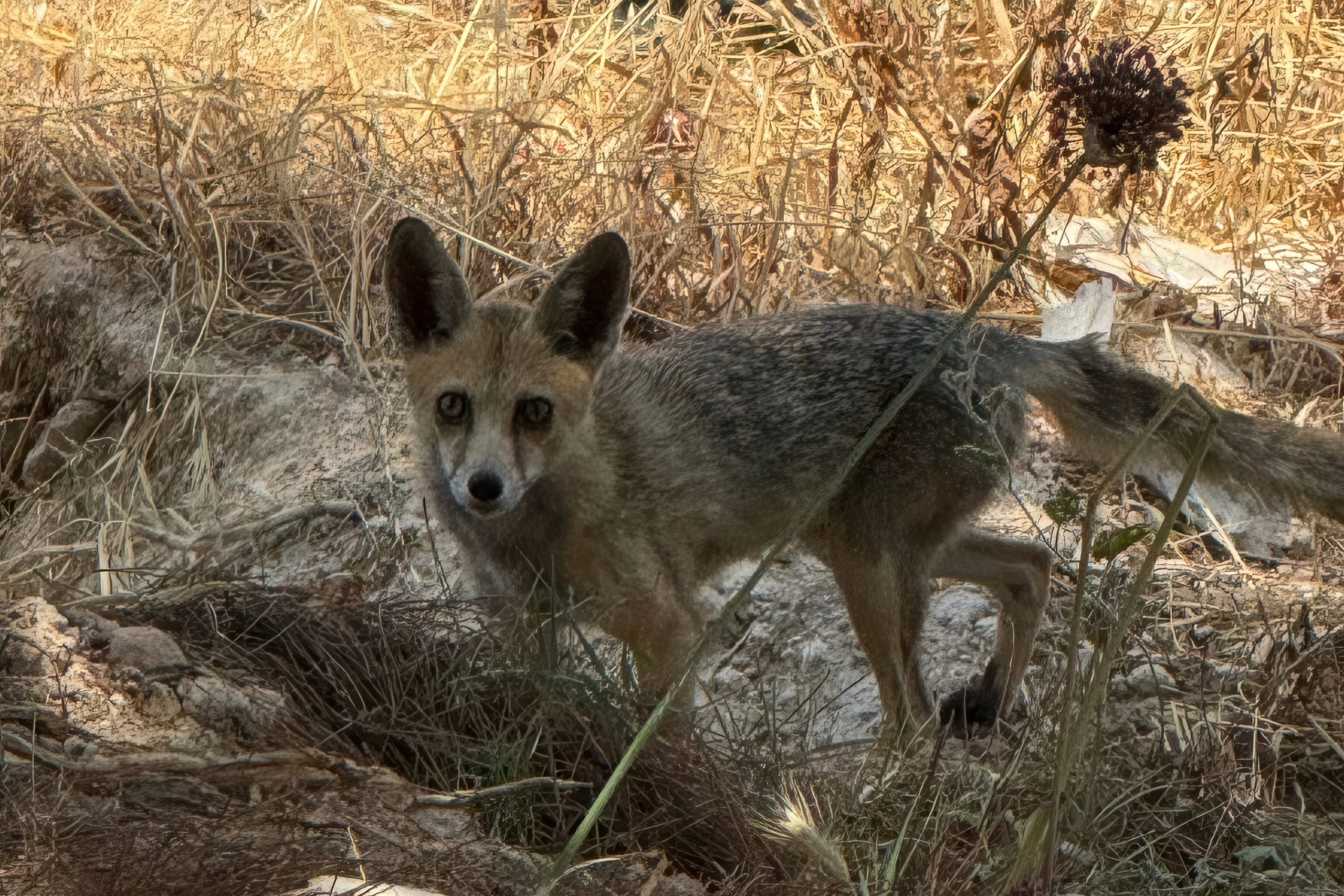
Once a population of red foxes reached Cyprus whether by land bridge, shallow water crossing, or even accidental rafting on flood debris – they were effectively isolated from the rest of their species. With no way to exchange genes with mainland populations, and in the face of a uniquely warm, dry, and rugged Mediterranean environment, Cyprus foxes gradually developed their own characteristics over thousands of years. The result, after perhaps tens of thousands of years of island evolution, was a distinct subspecies – smaller in build than many of its northern cousins, perfectly adapted to the scrublands, forests, and rocky hillsides of Cyprus.
This pattern of island isolation producing unique subspecies is one of nature’s most enduring stories, and it plays out beautifully here in the Eastern Mediterranean.
What Does the Cyprus Fox Actually Look Like?
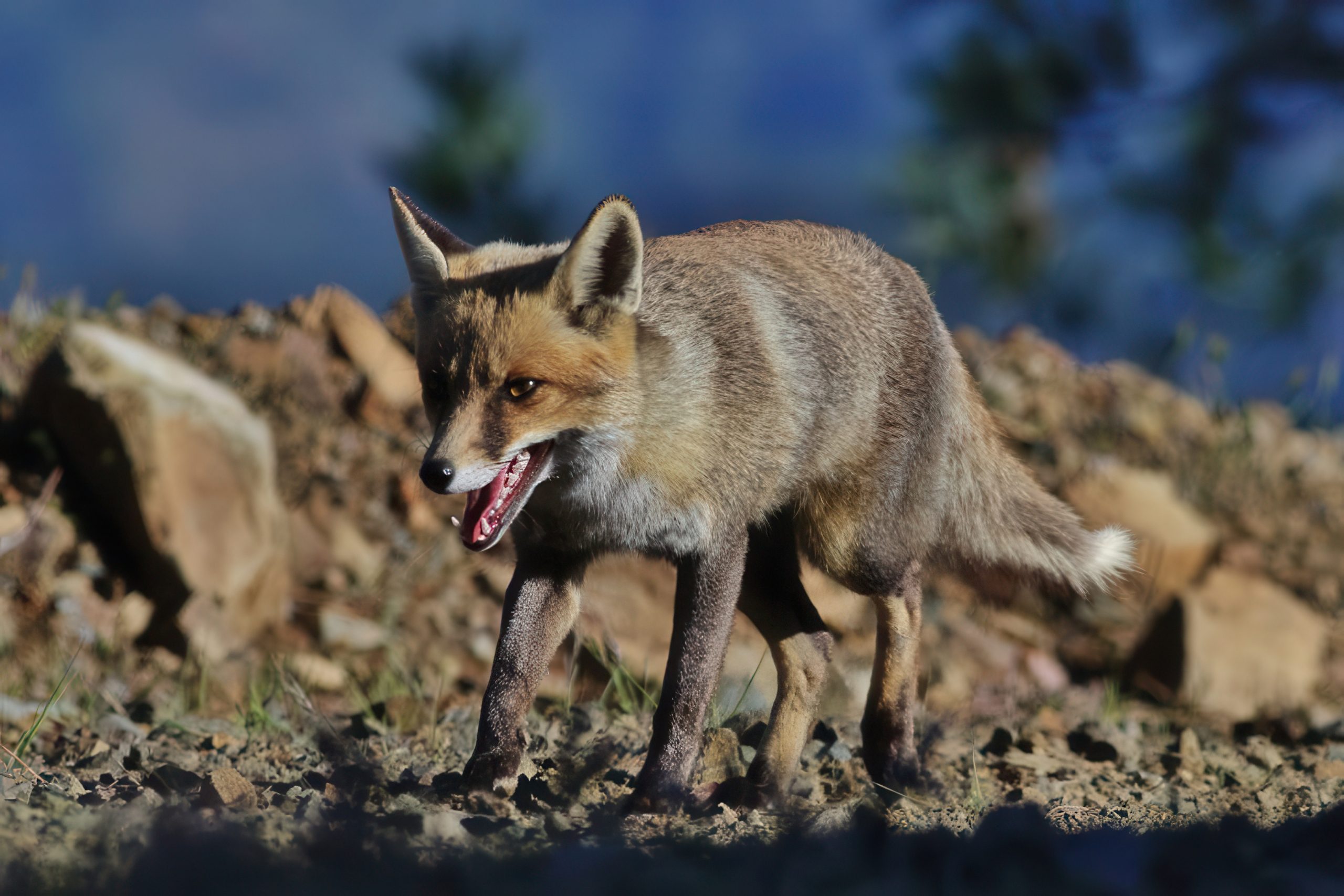
The red fox is the largest species of all fox species, weighing between 2 and 10 kilograms. Its body length ranges between 50 and 90 centimetres, and its tail adds a further 30 to 55 centimetres. That glorious, bushy tail – always tipped in white – is one of the most recognisable features of any fox, and the Cyprus fox wears it with pride.
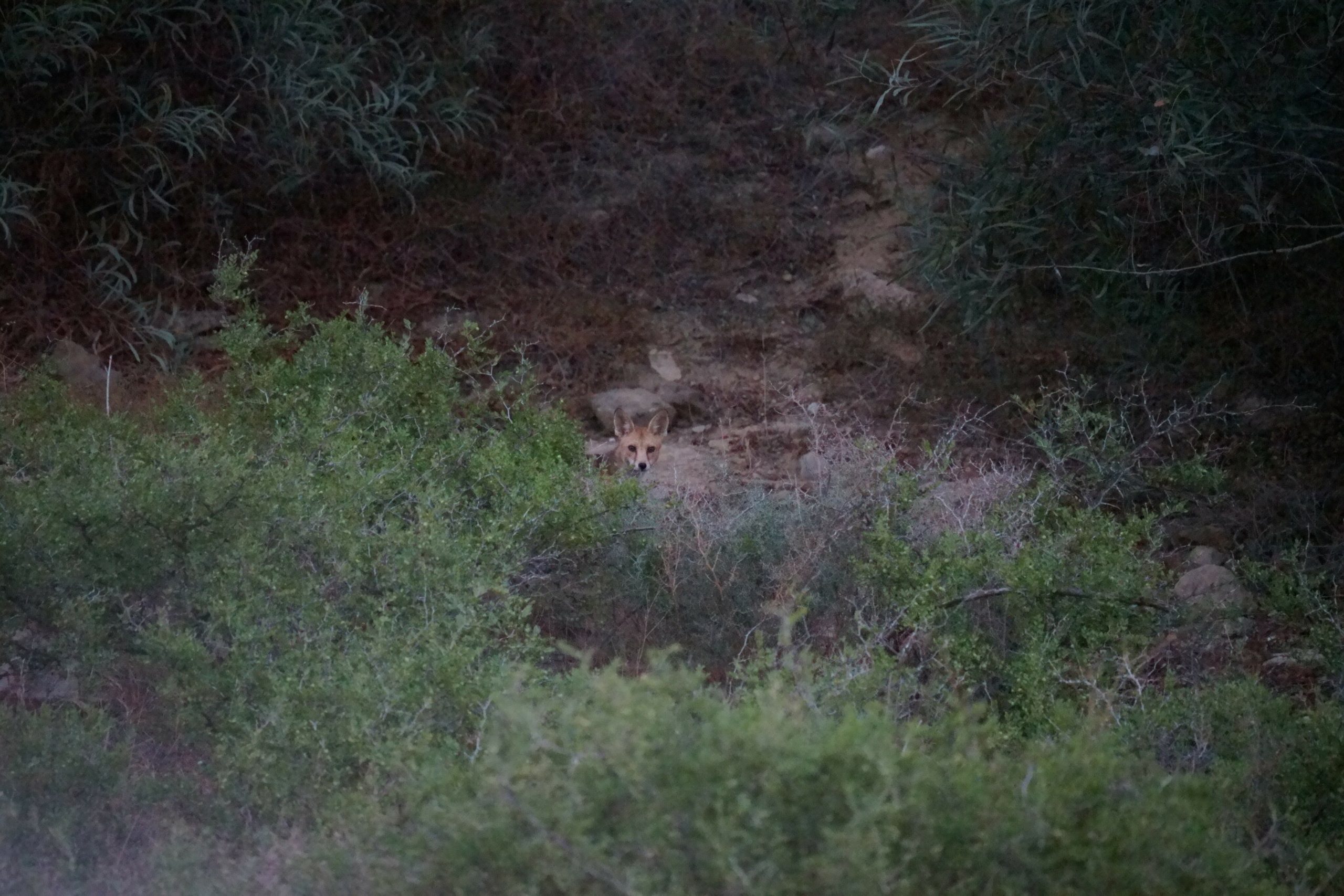
The tip of the tail is always white, while the backs of the ears and the fronts of the legs are typically dark or black. The face is long and pointed, with large, upright, triangular ears that catch the faintest rustle of a mouse in dry grass. The eyes are a striking amber-gold – wide and sharp, perfectly suited to hunting in low light.
The coat is typically the warm rusty-red that gives the species its common name, though individuals can vary considerably. Despite its name, the species often produces individuals with other colourings, including albinos and melanists. The belly and chin are usually pale cream or white, creating an elegant contrast with the red of the back and flanks.
The Cyprus fox is considered the largest of all fox species – a bold claim that speaks to the impressive physical presence this animal can carry in island conditions where it has no large predators to worry about.
Fun Facts Worth Sharing
• The Cyprus fox is the only carnivorous land mammal native to the island. There are no wolves, no lynx, no bears. The fox holds the entire top predator role for terrestrial mammals entirely on its own a remarkable ecological position.
• A fox pair is for life. The fox remains with the same mate for life, and both parents are actively involved in raising their young. This level of parental dedication is unusual among wild carnivores and makes the fox family unit surprisingly similar to our own ideas of partnership.
• Fox cubs are born blind and grey. Young foxes open their eyes at around 11 to 14 days of age and are weaned between 6 and 12 weeks. Those tiny grey bundles look nothing like the glamorous russet adults they will become.
• Foxes have a built-in calendar. On cold nights, a fox’s movements are reduced, while hot and humid nights are ideal conditions for excursions and hunting. They are exquisitely tuned to their environment.
• There are over 45 recognised subspecies of red fox worldwide, from the Japanese fox to the Sardinian fox, the Sierra Nevada fox to the Palestinian fox. The Cyprus fox, indutus, sits proudly in this global family as one of the southernmost and most island-specific of them all.
The Island Ecosystem’s Silent Balancer
The fox is an omnivorous animal and feeds on a variety of foods. Its diet includes fruits, seeds, various plant species, rodents, hares, rabbits, birds, insects, reptiles, and eggs.
This dietary flexibility is precisely what makes the fox so important ecologically. By keeping rodent populations in check, the Cyprus fox effectively protects crops and reduces the spread of rodent-carried diseases. By eating fruits and dispersing seeds in its droppings, it acts as an unwitting gardener for the island’s native plant life. By preying on weak or sick animals, it helps maintain healthy wildlife populations.
Due to its great ability to adapt to any type of habitat, the fox is found throughout the island: in mountainous, lowland and coastal areas, in dense forests, shrubs, parks and even near residential areas depending on the availability of food. It is equally at home in the pine forests of Troodos, the vineyards of the Limassol hills, the scrublands of Akamas, and even on the outskirts of Nicosia.
The Villain That Wasn’t – History and Folklore
In Cypriot folk culture, the fox has always been a star but not always a sympathetic one. It appears constantly in proverbs and stories as a cunning, scheming female figure, always outwitting the simple and the trusting. In Cyprus folk stories, the fox always appears as a cunning female figure or as a destructive looter and thief, features attributed to its incredible ability to enter farms unnoticed to obtain food.
One beloved Cypriot folktale tells of two children fighting over a jar of halloumi, who call upon a passing fox to be their judge. Using a pair of scales, she offers to balance the portions – but of course keeps eating from whichever side is heavier, until nothing is left for either child. It is a perfect parable of cunning dressed as fairness – and a fox proverb lives in it: “Don’t let the fox guard the chickens.”
Yet as the old Cypriot saying wisely notes: “The fox has the name, but someone else is eating the chickens.” Even in folklore, there is an acknowledgment that the fox’s bad reputation may be, at least in part, undeserved.
Historically, this reputation had very real and damaging consequences. The fox was considered harmful to livestock and prey, and was hunted mercilessly for decades, resulting in a significant reduction in its population.
The Fox in Today’s Cyprus
Today, many scientific studies show that the fox has a very small effect on poultry and livestock populations, while also having a beneficial role in natural ecosystems and agriculture, as it helps reduce the populations of harmful rodents.
The Cyprus fox is now protected under European legislation, and awareness campaigns have gradually helped shift public perception. Thanks to its fast breeding and to awareness-raising efforts, fox numbers are increasing and foxes now peacefully coexist with people.
Still, old prejudices die hard. The fox continues to be viewed with suspicion in some rural communities, and accidental road mortality remains a significant threat. Urbanisation, habitat fragmentation, and the increasing use of rodenticides – which poison foxes through the prey they eat – are modern challenges that the Cyprus fox must navigate with the same sharp wit its very name promised from the beginning.
In recent years, citizen science platforms such as iNaturalist have helped document the fox’s distribution across the island, with confirmed observations from Nicosia and Limassol to Paphos and the Akamas peninsula, demonstrating just how widely this resilient animal still roams its island home.
Where to Catch a Glimpse
If you wish to meet this charming island resident, patience and timing are everything. It is highly unlikely that you will see a fox while walking in the forest during the day, as they will be sleeping somewhere well hidden, away from people. However, when night falls, foxes come out looking for prey.
Your best chances come at dusk and dawn, particularly in quieter rural areas – mountain roads around Troodos, the edges of vineyards in the Limassol hills, forest tracks in the Paphos Forest, and coastal scrubland around Akamas. Drive slowly at dusk on country roads, and watch the verges. Those amber eyes catching the headlights, that brief curious glance before vanishing into the dark – it is one of the small, perfect gifts Cyprus’s wild nature offers to those who look for it.
A Small Fox, A Big Story
The Cyprus fox is far more than a farmyard nuisance of folk legend. It is a living testament to the power of island evolution – a creature shaped over thousands of years by this specific landscape, this specific climate, these specific conditions. It is the island’s only native carnivore, its secret pest-controller, its quiet seed-disperser, and one of its most charismatic wild residents.
And its very name – αλουπού – carries three thousand years of human recognition within it: that this creature, sharp-eyed and swift, is not merely an animal that lives on the island. It is woven into the island’s language, its stories, its proverbs, and its soul.
To encounter the Cyprus fox is to meet something irreplaceably Cypriot – as old as the word for cunning itself.