On a warm spring night in a Cypriot village, a small shape moves through the shadows of a lemon grove shuffling, sniffing, pausing to listen. Two enormous ears swivel like satellite dishes. This is the Cyprus Long-eared Hedgehog, Hemiechinus auritus dorotheae, one of the island’s most charming and least-known residents.
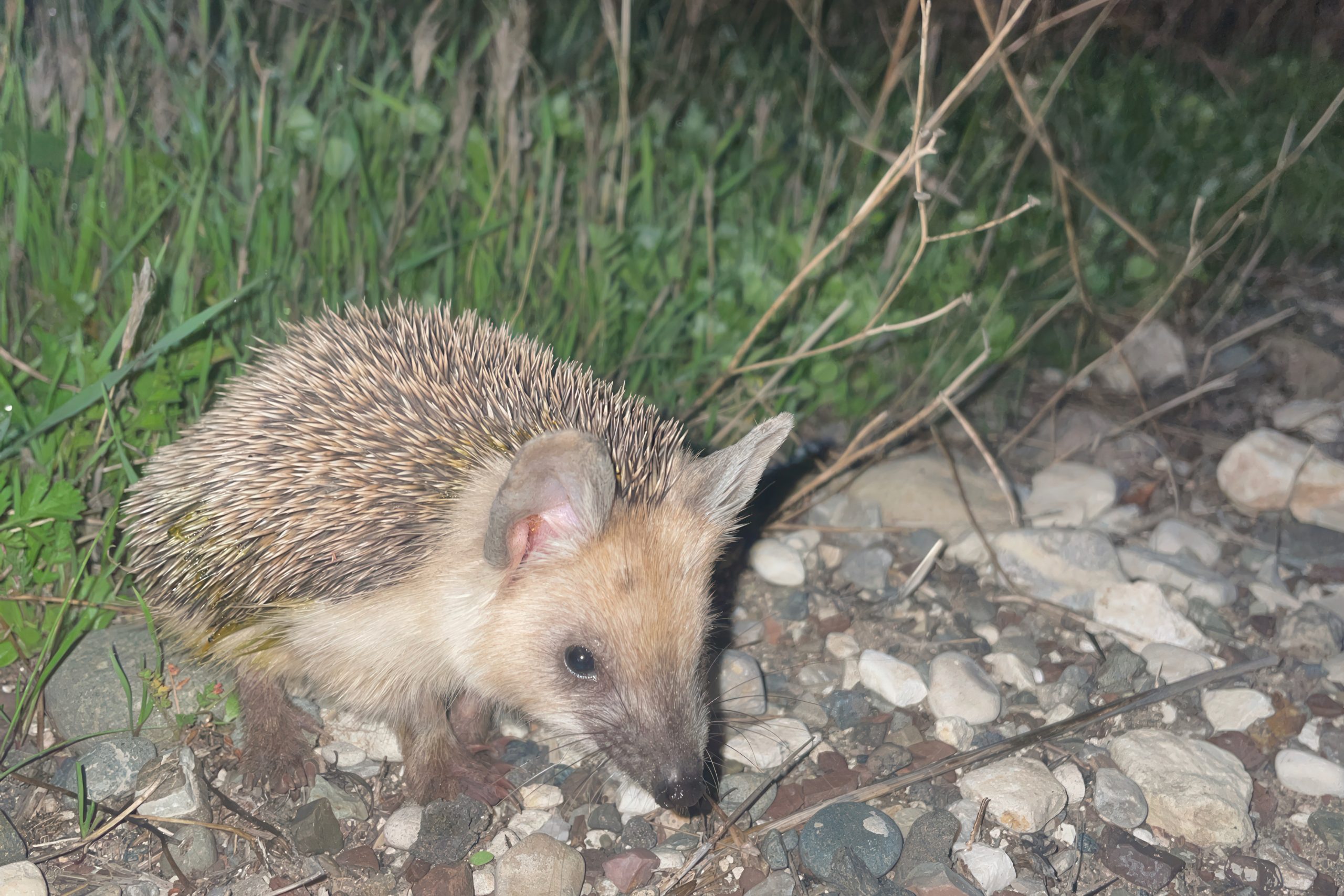
Most people who encounter it simply call it a skantzohoiros the Greek word for hedgehog and smile. But behind that endearing shuffle lies an extraordinary story of ancient seas, human migrations, island biology, and remarkable survival. And if you look closely enough, you will notice something quite unusual about this hedgehog: those ears are astonishingly, almost comically large.
What Exactly Is a Hedgehog?
Hedgehogs belong to the family Erinaceidae, one of the oldest surviving mammal families on Earth. They are part of the order Eulipotyphla a word meaning ‘truly blind and deaf’, though in practice these animals have perfectly functional senses. This group includes moles and shrews, and its members were among the earliest placental mammals to appear on Earth, with relatives tracing back over 50 million years.
Hedgehogs themselves are insectivores at heart animals whose primary food has always been invertebrates. They are equipped with a coat of hardened spines on their back (actually modified hairs made of keratin) and a soft, furry belly. When threatened, they roll into a tight ball, presenting nothing to the outside world but a sphere of sharp points. It is one of nature’s cleverest defensive strategies, and it has been working for millions of years.
There are seventeen species of hedgehog across the world, spread from Europe to Africa, the Middle East, and Central Asia. Cyprus is home to just one: the long-eared hedgehog, represented here by its own exclusive island subspecies, found nowhere else on the planet.
Brought by Ancient Hands
Here is a remarkable thing: there is no fossil record of hedgehogs in Cyprus from the Pleistocene era or from prehistoric times. Unlike the dwarf hippopotamus and miniature elephant that roamed the island thousands of years ago and eventually went extinct, the hedgehog left no ancient bones behind. It simply was not here.
Scientists believe that the Cyprus Long-eared Hedgehog was most likely introduced to the island by ancient humans, probably arriving from the Levantine coast what is today Lebanon, Syria or Israel sometime in historical times. This was not an unusual practice: early seafarers and settlers regularly transported animals, whether intentionally as a food source or companions, or accidentally as stowaways.
This story closely mirrors that of the Cyprus white-toothed shrew (Crocidura suaveolens cypria), another small mammal believed to have made the same journey at the hands of Neolithic or Bronze Age settlers. For thousands of years, the hedgehog has lived alongside Cypriots, navigating their orchards and village walls long before there were roads to cross or pesticides to worry about.
Portrait of a Prickled Islander
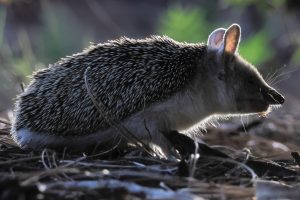
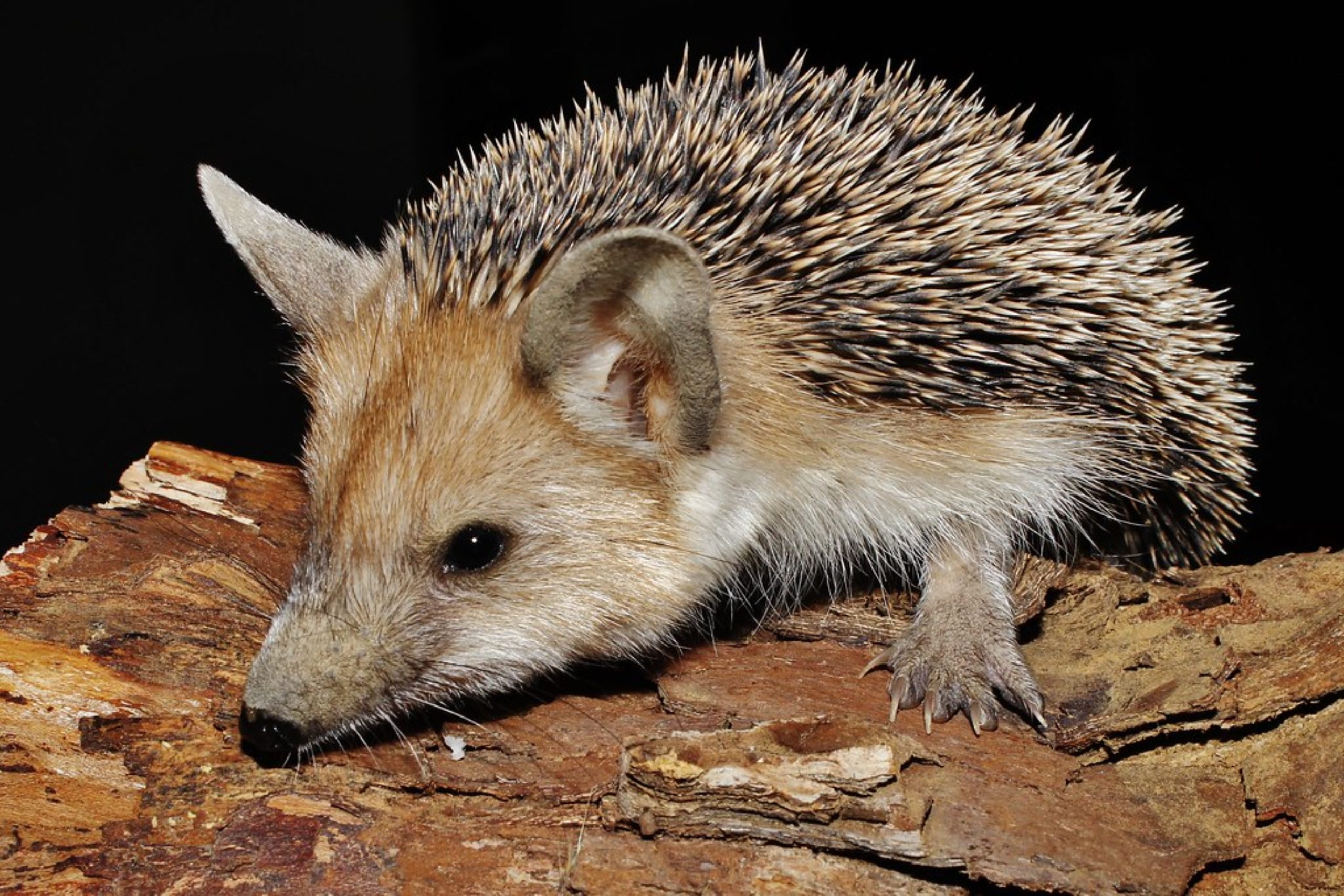
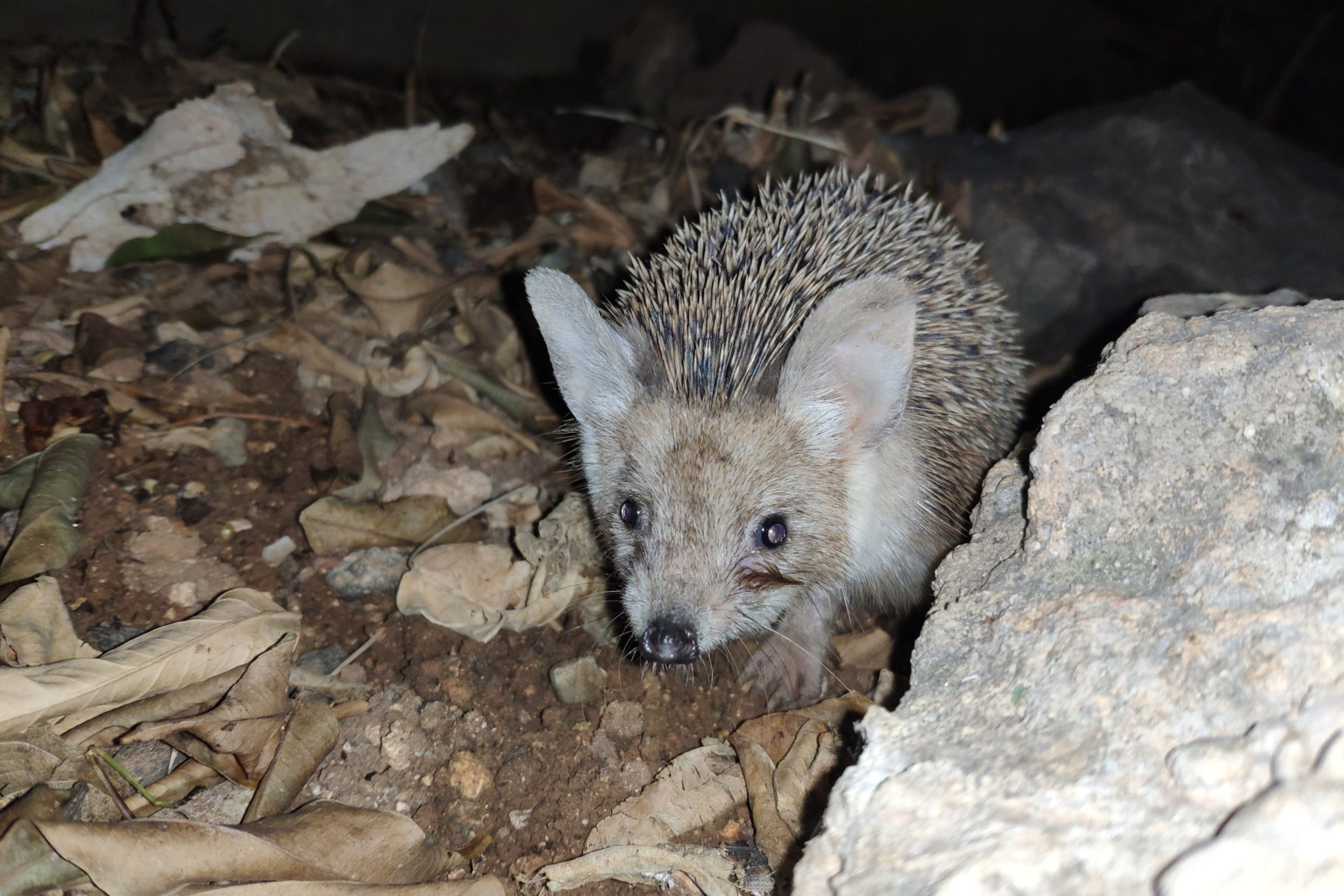
The Cyprus Long-eared Hedgehog is a compact, rounded animal, typically around 15 to 17 centimetres in body length roughly the size of a large apple. But it is the ears that dominate first impressions. Measuring over 3.5 centimetres in length and standing bolt upright on either side of its head, they give the animal a perpetually alert, somewhat startled expression. These remarkable ears are not merely decorative: in warm climates, large ears help radiate excess heat, acting as a biological radiator system. They also serve as precision sound-gathering instruments, helping the hedgehog locate prey moving beneath leaf litter and loose soil.
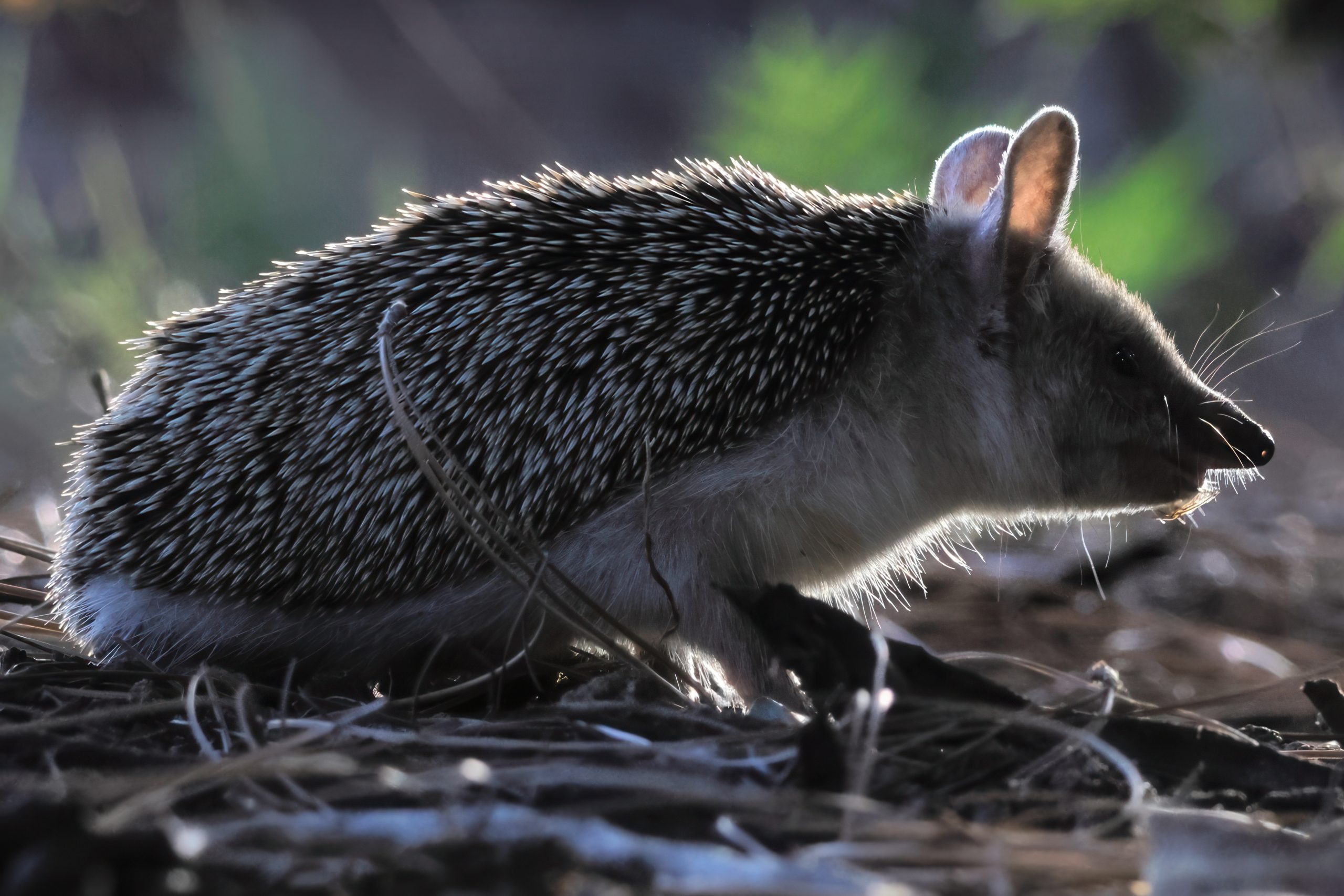
The spines covering the back of a Cyprus hedgehog are banded in alternating stripes of brown and white a visual pattern that breaks up the animal’s outline and helps it blend into dappled light. The belly is covered in soft white fur, and the face is pale. What makes the Cyprus subspecies particularly interesting, however, is a trait found quite frequently in this population: white or unpigmented tips on the ears. In many individuals, the very points of the ears fade to pale cream or white a subtle but distinctive feature rarely seen in mainland relatives.
Compared to its closest relatives in Egypt, Israel, and Syria (subspecies H. a. aegyptius), the Cyprus hedgehog has a surprisingly large skull and broader, heavier molars. In fact, its skull measurements are closer to hedgehogs from Kazakhstan thousands of kilometres away than to those from the nearby Levant coast. This is one of nature’s quiet puzzles, a reminder that island evolution does not always follow the most obvious path.
Things Worth Sharing Over Coffee
• It eats scorpions A Cyprus hedgehog will tackle a live scorpion, biting it on the head to disable it before consuming the body. Far from fearing the sting, it appears entirely unbothered by venom that would cause serious harm to most animals.
• The biggest ears in the family Its ears are proportionally larger than those of any European hedgehog species. In the long-eared hedgehog, the ears are longer than half the length of its own head.
• A marathon walker Each night, a hedgehog may travel up to 9 kilometres in search of food the equivalent of a human casually jogging from one end of Nicosia to the other.
• Island teeth Due to generations of isolation on a small island with a limited gene pool, Cyprus hedgehogs show unusually high rates of dental variation. Missing teeth, fused roots, and unusual tooth arrangements appear more frequently here than in any mainland population.
• A vineyard pest (to some) Some Cypriot farmers have historically considered the hedgehog an unwelcome visitor, as it has a fondness for low-hanging grapes. A small price to pay, perhaps, for the insects and pests it removes.
• People ate them According to historical records, Cyprus villagers once roasted hedgehogs wrapped in clay a tradition shared with Roma communities across Europe and the Middle East. The clay, when cracked open, would pull the spines away with it.
• Two kinds of sleep The Cyprus hedgehog undergoes both winter dormancy near the coast (when temperatures drop) and aestivation a summer sleep during extreme heat or food scarcity. It essentially has two different seasons of rest.
A Life in the Shadows
The Cyprus hedgehog is strictly nocturnal, emerging at dusk to begin its slow, methodical search for food. It relies on a combination of acute hearing and a keen sense of smell pivoting its head from side to side and pausing frequently to listen. Its diet is varied and opportunistic: insects make up the great majority of its food, particularly beetles and caterpillars, but it will also take earthworms, lizards, bird eggs, small mice, and even fruit and kitchen scraps near human habitation.
During the day, it rests in a shallow burrow, often dug beneath a shrub or tucked into a dry stone wall the kind of habitat that has been part of the Cypriot countryside for thousands of years. Its range on Cyprus extends across the entire island within the Mediterranean climate zone, from coastal gardens and citrus groves up to around 900 metres in elevation roughly the altitude at which olive trees cease to grow. Higher up, in the pine and cedar forests, it is rarely if ever seen.
Young hedgehogs are born in June, typically in litters of two to four. At birth they are tiny and blind, their spines hidden beneath a membrane of skin to protect the mother. By their third week of life, their eyes open. By the sixth week they are independent, heading out alone into the Cypriot summer night.
The hedgehog plays an unexpectedly important role in the ecology of agricultural land. As a consumer of termites, beetles, and other invertebrates that damage crops, it acts as a natural pest controller. In this sense, it has been quietly serving Cypriot farmers for centuries largely without recognition.
The Road Ahead is Dangerous
Today, the Cyprus Long-eared Hedgehog faces challenges that its ancient ancestors never encountered. Road mortality is among the most visible threats: the hedgehog’s instinctive response to danger is to curl into a ball and stay still, a strategy that works perfectly against foxes and birds of prey but is catastrophically inadequate against a car travelling at 80 kilometres per hour. Thousands are killed on Cyprus’s roads every year, and the peak danger period runs through April and May, when the animals are most active after their winter dormancy.
Agricultural intensification presents a quieter but equally serious problem. The widespread use of pesticides eliminates the insects and invertebrates that hedgehogs depend on, while the replacement of traditional mixed farmland with its stone walls, hedgerows, and rough borders by monocultures and paved surfaces removes the shelter and foraging habitat the animal has relied upon for millennia.
Climate change adds another layer of pressure. Hotter, drier summers affect the availability of insects; disrupted seasons interfere with the timing of dormancy and reproduction. A creature whose biology evolved around the rhythms of the Mediterranean year is now finding those rhythms increasingly unreliable.
And yet there is reason for cautious optimism. The hedgehog is adaptable and widely distributed across Cyprus. It continues to thrive in village gardens, orchards, and the margins of the island’s towns, where it is generally regarded with affection. Conservation organisations and citizen science platforms particularly iNaturalist are actively tracking populations, building a clearer picture of where hedgehogs are found, how their numbers are faring, and which habitats are most critical to protect.
Meeting One Face to Face
• Best Time: From late March through October, just after sunset. The peak period is April to June. In winter, the hedgehog is largely dormant near the coast and entirely absent from the hills.
• Best Habitats: Traditional village gardens, citrus and carob orchards, the edges of vineyards, phrygana scrubland, and dry stone wall terraces essentially, anywhere that retains a connection to traditional Cypriot agricultural landscape.
• What You Will Experience: Walking slowly with a dim torch after dark, listening for the characteristic rustling and shuffling in leaf litter. If you find one, stand still. After a minute it will unfurl and continue its search for food, apparently unconcerned by your presence as long as you remain quiet.
• Citizen Science: If you see a hedgehog, please record it on iNaturalist (inaturalist.org). Every sighting contributes to our understanding of how this endemic subspecies is faring. A photograph and GPS location is all that is needed.
• If You Find an Injured Hedgehog: Contact the Game and Fauna Service of Cyprus or local wildlife rescue organisations. A hedgehog found on a road in daylight is almost certainly in distress and needs help.
Why This Small Animal Matters
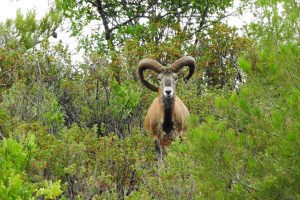
It would be easy to overlook the hedgehog small, nocturnal, hidden in shadows, absent from the grand narratives of Cypriot wildlife. The mouflon has its forests and its mythology. The sea turtle has its beaches and its international campaigns. But the hedgehog has been here, in every village garden, every lemon grove, every rough terrace of an island farm, for perhaps four thousand years shuffling quietly through human history without fanfare.
It arrived here with people, adapted here, evolved here into something uniquely its own. And it is now, like so much of Cyprus’s extraordinary natural heritage, finding the world around it changing faster than at any point in that long history.
To protect the hedgehog is to protect the fabric of the traditional Cypriot countryside: the stone walls, the unsprayed orchards, the rough verges and quiet village lanes where it has always lived. It asks for very little: a patch of rough ground, a few beetles, and the freedom to cross a road in peace. The next time you hear a rustling in a Cypriot garden at night, pause for a moment. Two enormous ears are listening back.