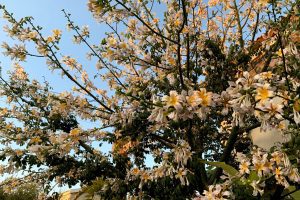
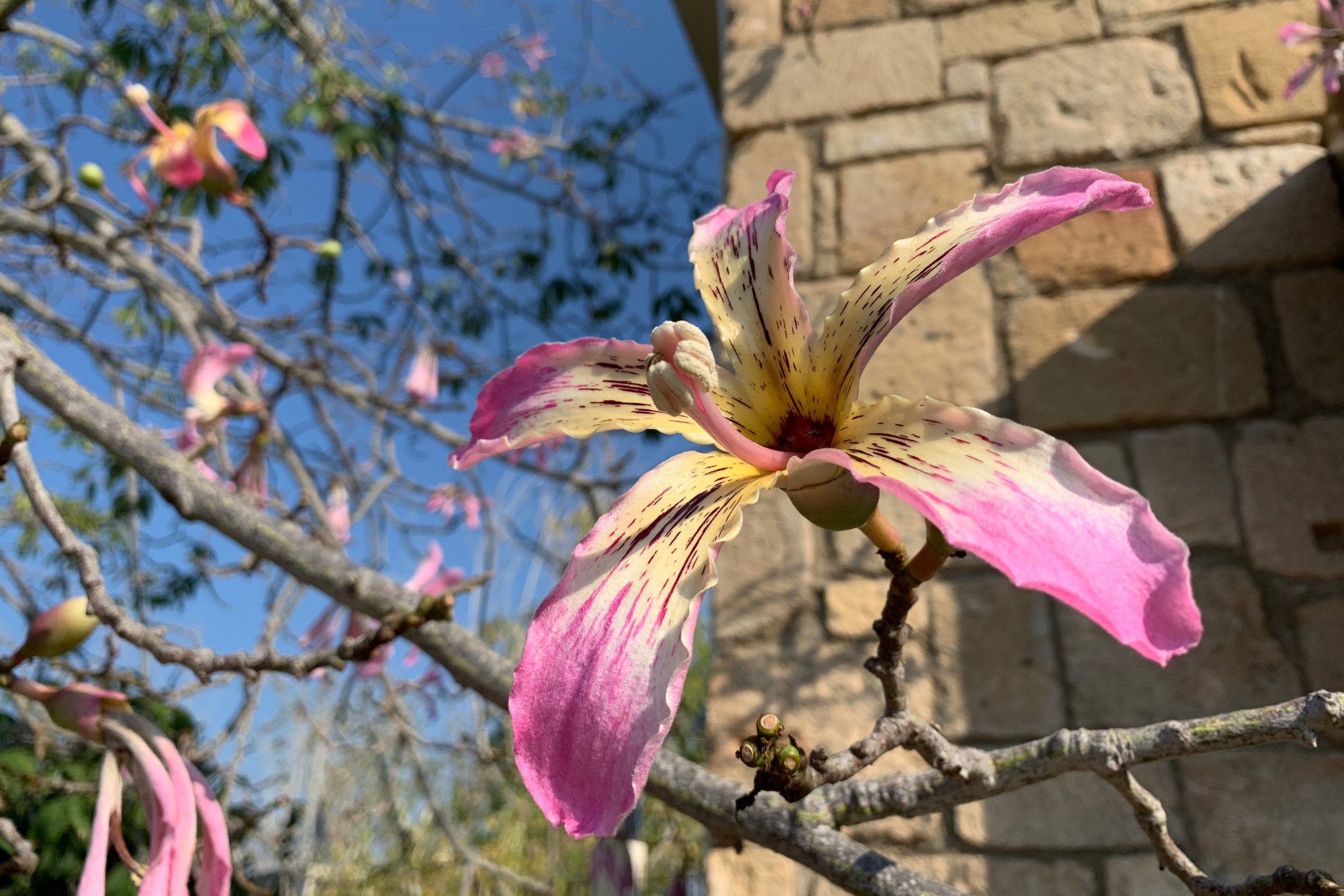
Imagine walking through a sunny park in Nicosia or Limassol when a tree catches your eye with its trunk covered in sharp thorns and branches bursting with pink flowers like fluffy cotton candy. Perhaps one of the most bizarre trees you’ll encounter is the floss silk tree this South American visitor that’s found a home in Cyprus, hiding surprises in its spiky exterior that make you wonder what other secrets it holds.
Getting to Know This Exotic Guest
The floss silk tree is a large, deciduous tree known for its striking appearance and fluffy seeds. It’s part of the broader world of flowering plants, fitting into the Malvaceae family alongside everyday wonders like cotton and hibiscus, all sharing a love for warm climates and showy blooms.
A Journey from Rainforests to Island Parks
Native to the lush tropical forests of South America, where ancient peoples used its fibers for ropes and padding, this tree crossed oceans during the age of exploration. In Cyprus, it likely arrived in the early 20th century under British influence, planted as an ornamental to add flair to gardens and streets, much like other far-flung arrivals that helped shape our island’s green landscape over the last century.
Spikes, Blooms, and Fluffy Surprises
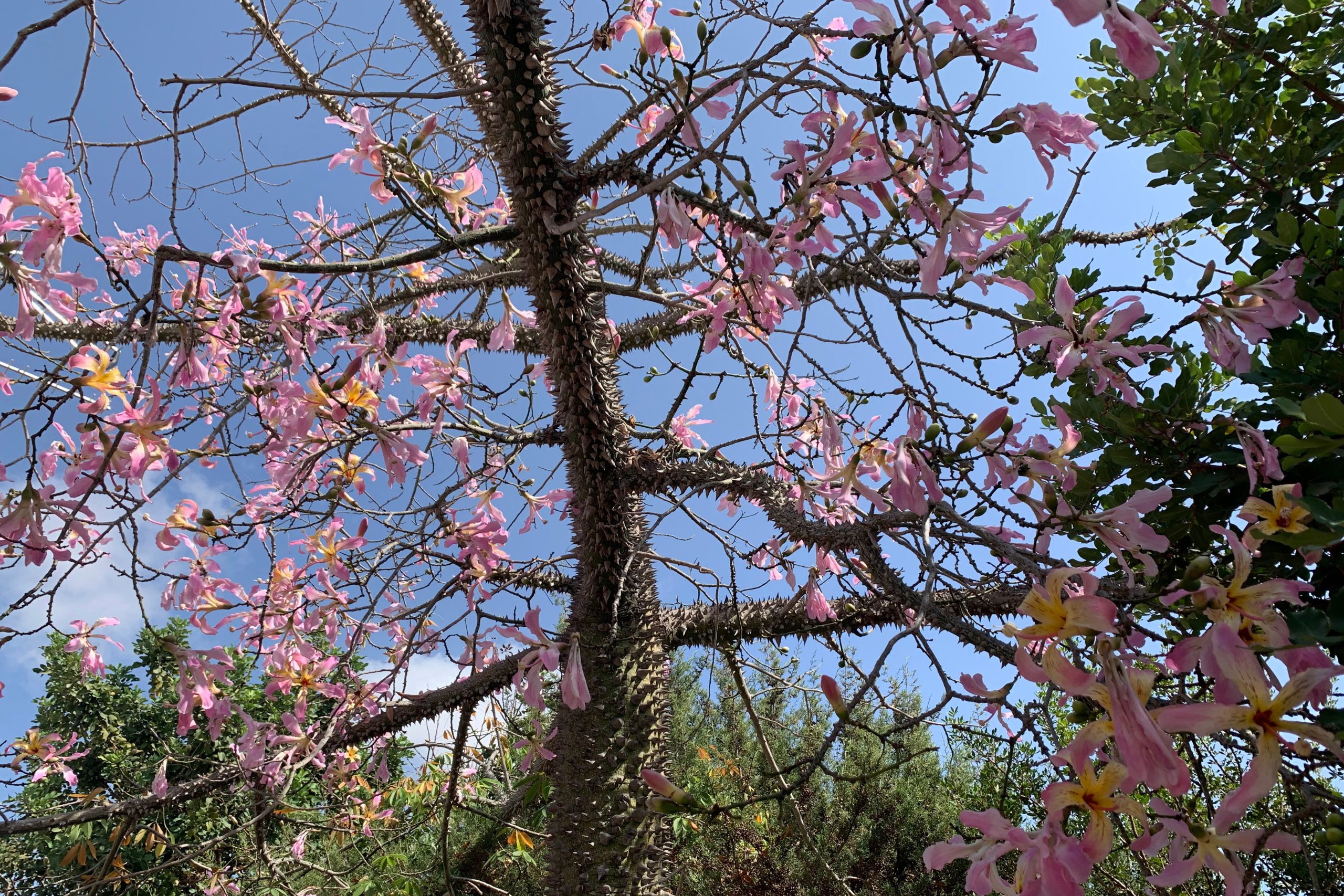
What stands out most is its swollen, bottle-shaped trunk armored with large, conical thorns that deter climbers and protect against animals. In its native lands, blooming aligns with the rainy season for best pollination by hummingbirds and insects. Here in Cyprus, our Mediterranean weather – hot summers and wet winters – fits this to autumn, typically from September to November, when cooler days signal the start. As part of the bombax family, broader cousins to cotton plants, it uses this timing to scatter seeds wrapped in silky floss, carried by winds like tiny parachutes.
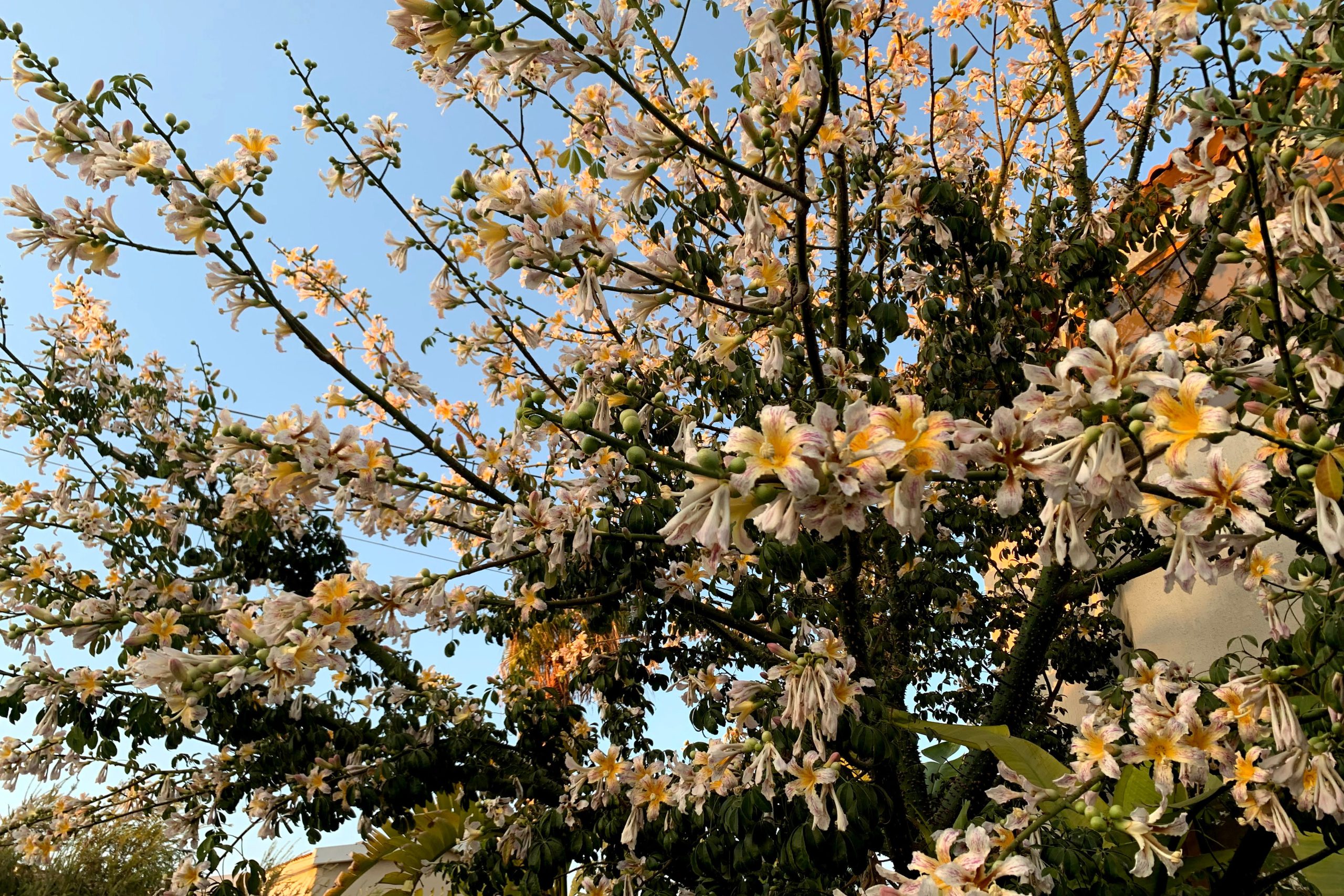
The leaves are palmate, like a hand with fingers spread wide, turning yellow before falling in spring.
Delightful Discoveries
- The trunk’s thorns can grow up to 15 cm long, earning it the nickname “drunken stick” in Spanish (palo borracho) because mature trees sometimes lean as if tipsy!
- The fluffy seed covering is so soft it was once used to stuff pillows and life jackets, giving it the fun name “floss silk tree.”
- Bees and butterflies flock to its nectar-rich flowers, turning the tree into a buzzing party spot during bloom time.
- In its homeland, indigenous groups roasted the seeds as a snack, tasting a bit like peanuts – though the thorny harvest makes it an adventure!
- Young trunks are green and photosynthesize like leaves, helping the tree grow fast even in tough spots.
A Bit More Beneath the Bark
Belonging to the Ceiba genus, which includes sacred trees in Mayan lore symbolizing the connection between earth and sky, this species stores water in its trunk to survive dry spells. In Cyprus, it’s not native but adapts well, with no major pests bothering it here, and it’s assessed as Least Concern by the IUCN, thriving widely in cultivation.
Part of Our Island Tapestry Today
In modern Cyprus, the floss silk tree brightens urban areas with its shade and color, helping combat heat in cities as we face warmer climates. It fits into efforts like the LIFE-ArgOassis project, where resilient plants restore degraded lands, showing how introduced species can support our push for greener, more sustainable surroundings.
Spotting the Spectacle
You can find these trees in parks like those along Byronos Avenue in Nicosia or near the sea in Larnaca, where their thorny trunks stand guard. One noble example greets visitors of the Paphos Zoo. Visiting during bloom feels like discovering a hidden festival – the air fills with a sweet scent, and the pink petals create a soft carpet for a relaxing walk or picnic, blending tropical charm with our Mediterranean breeze.
Why This Tree Touches the Heart
The floss silk tree reminds us that Cyprus’s wildlife is a beautiful mix of local roots and global travelers, each adding resilience and wonder to our shores. Knowing about it deepens our appreciation for the island’s living history, where even a spiky stranger can bloom into a symbol of enduring beauty and adaptation.