The acropolis of Amathus stands as evidence of the city’s transformation during the Hellenistic period. When the kingdom fell to Ptolemaic rule around 312–311 BC, the focus of urban life shifted from the hilltop to the lower town, but this transition brought new construction that reshaped the ancient fortress into something different.
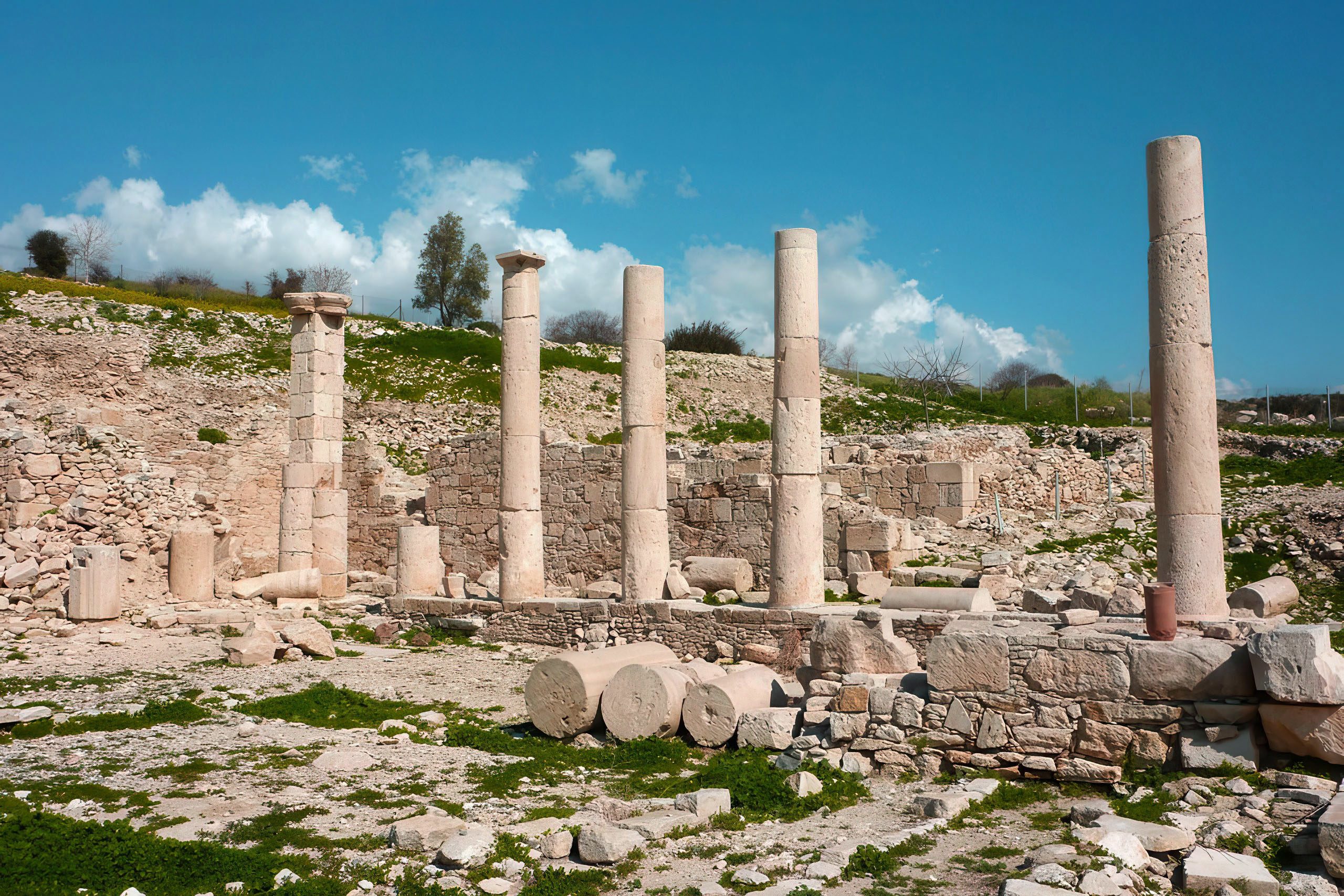
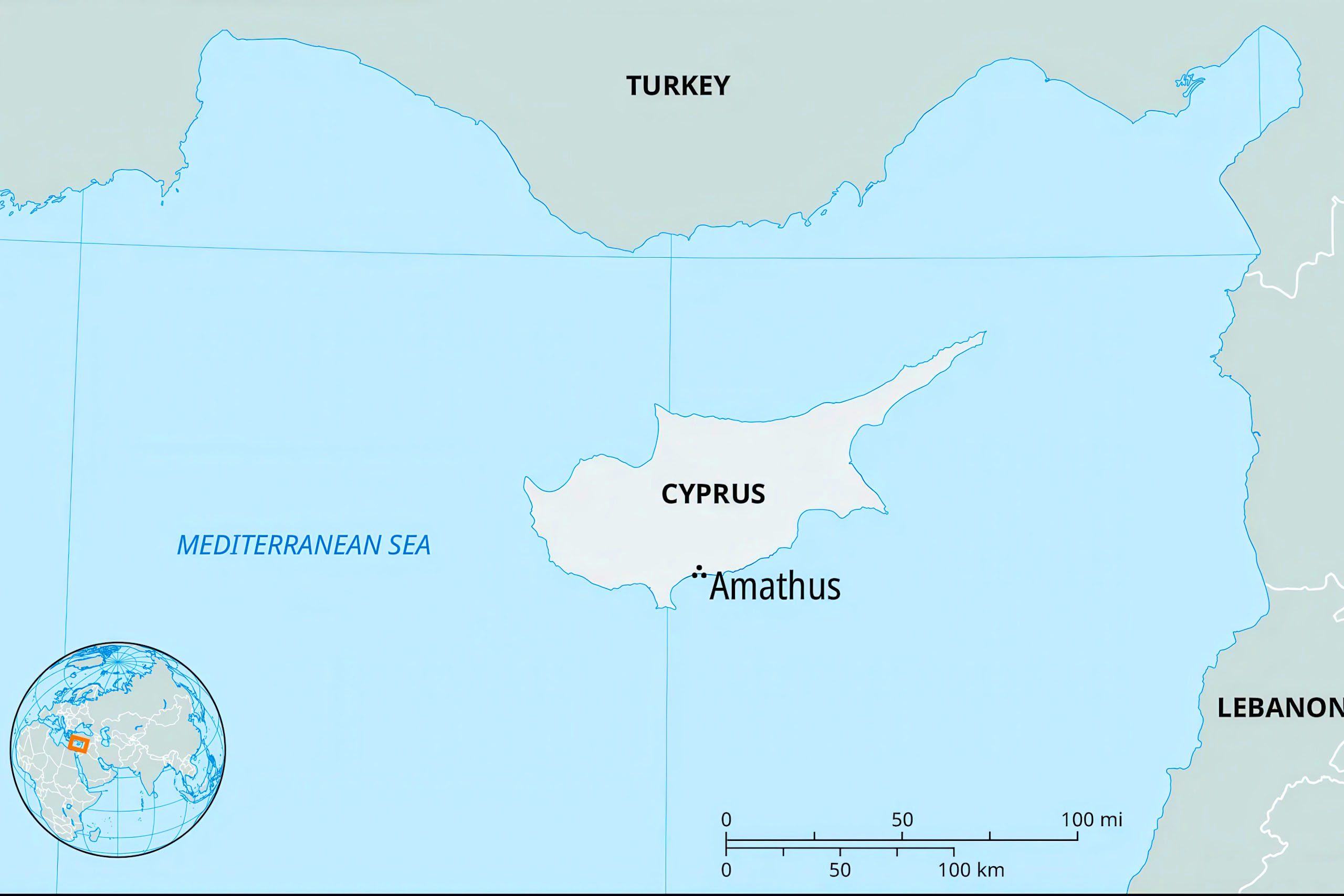
Amathus was one of Cyprus’s ancient royal city-kingdoms, established around 1100 BC on the southern coast. The site lies about 11 kilometers east of modern Limassol. For centuries, the acropolis served as both a natural fortress and a religious center, dominated by the sanctuary of Aphrodite. Archaeological evidence shows the city prospered through copper trade and maintained a unique cultural identity that blended Greek, Phoenician, and indigenous Cypriot traditions.
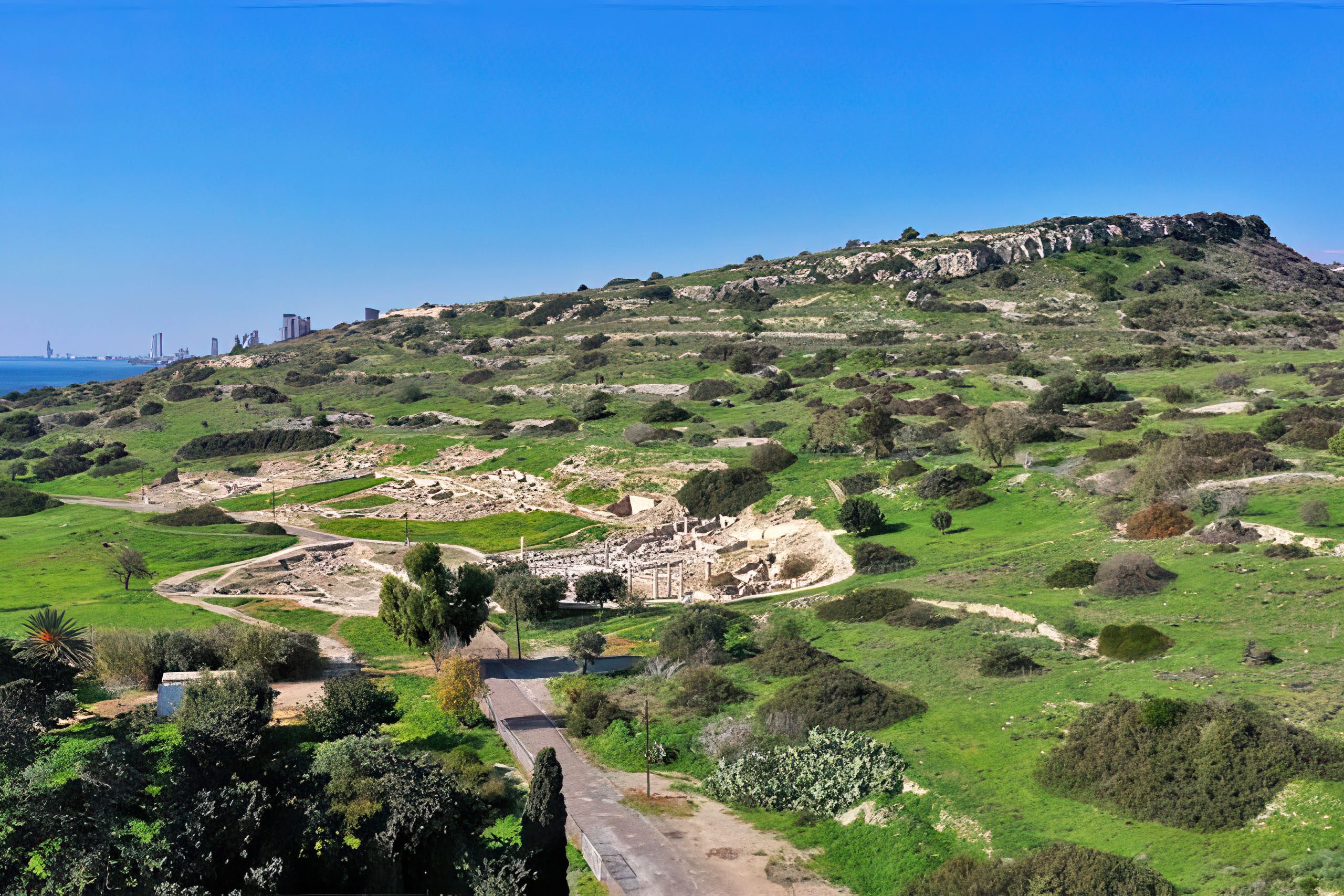
The acropolis itself rises approximately 80 meters above sea level. Its elevated position provided defensive advantages and made it the natural location for the city’s most important buildings, including the royal palace and the main sanctuary.
Historical Background
When Ptolemaic Egypt absorbed Cyprus in the early Hellenistic period, Amathus lost its status as an independent kingdom. Historical accounts suggest the acropolis was largely abandoned as administrative functions moved to the lower town. However, archaeological evidence tells a more complex story.
Despite claims of decline, excavations have revealed substantial new construction during the Hellenistic period. The acropolis received fresh fortifications, including a new defensive tower. A gymnasium was built, along with a bath complex (balneion). These additions suggest the hilltop remained important even after losing its political role.
The timing is significant. The Ptolemaic period, despite its political changes, saw continued investment in Amathus’s infrastructure. The port actually gained traffic compared to Paphos during this era, indicating the city maintained economic importance.
Key Hellenistic Structures
The fortifications represent the most visible Hellenistic additions to the acropolis. The walls were strengthened with new defensive works. The north gate shows clear Syro-Anatolian influences in its chambered design, similar to defensive structures found in the Levant. These fortifications used the Attic foot as their reference measurement, a detail that helps archaeologists identify Hellenistic construction phases.
The new tower added to the acropolis defenses demonstrates military architecture of the period. Its construction coincided with broader improvements to the city’s walls, which were reinforced during both the Archaic and Hellenistic periods.
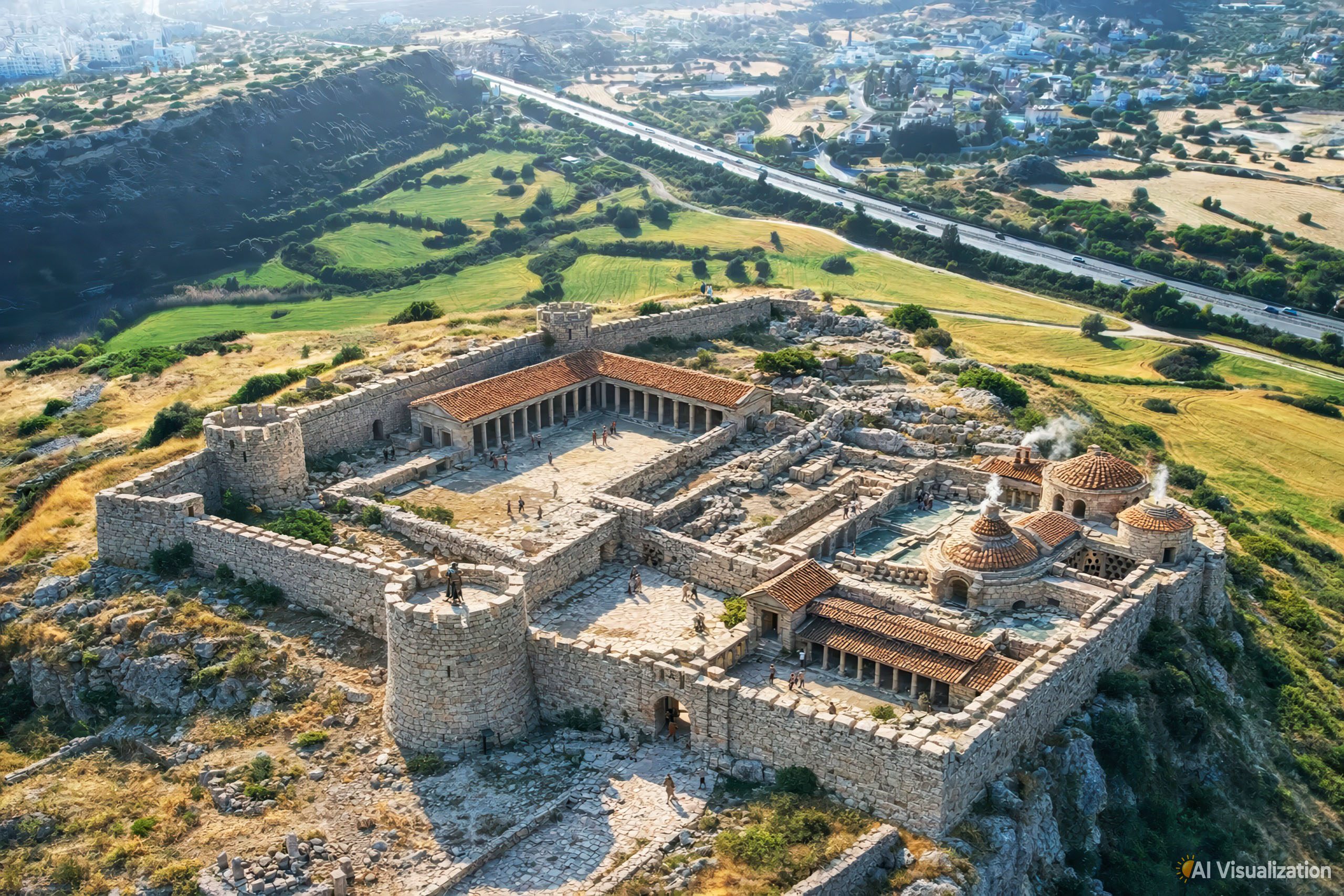
The gymnasium and bath facilities reveal social priorities. A gymnasium wasn’t just a place for physical exercise. It functioned as an educational and social center where citizens gathered, competed, and discussed philosophy and politics. The presence of a gymnasium at Amathus indicates the city adopted Greek cultural practices even as it maintained its distinctive local character.
The balneion, or public bath, followed Hellenistic architectural standards. These baths required sophisticated water management and heating systems, showing technical expertise in their construction.
Interesting Facts
The name “Amathusia” became synonymous with “Cypriot” in Roman times, showing how important the city’s religious facilities remained even after political power shifted elsewhere.
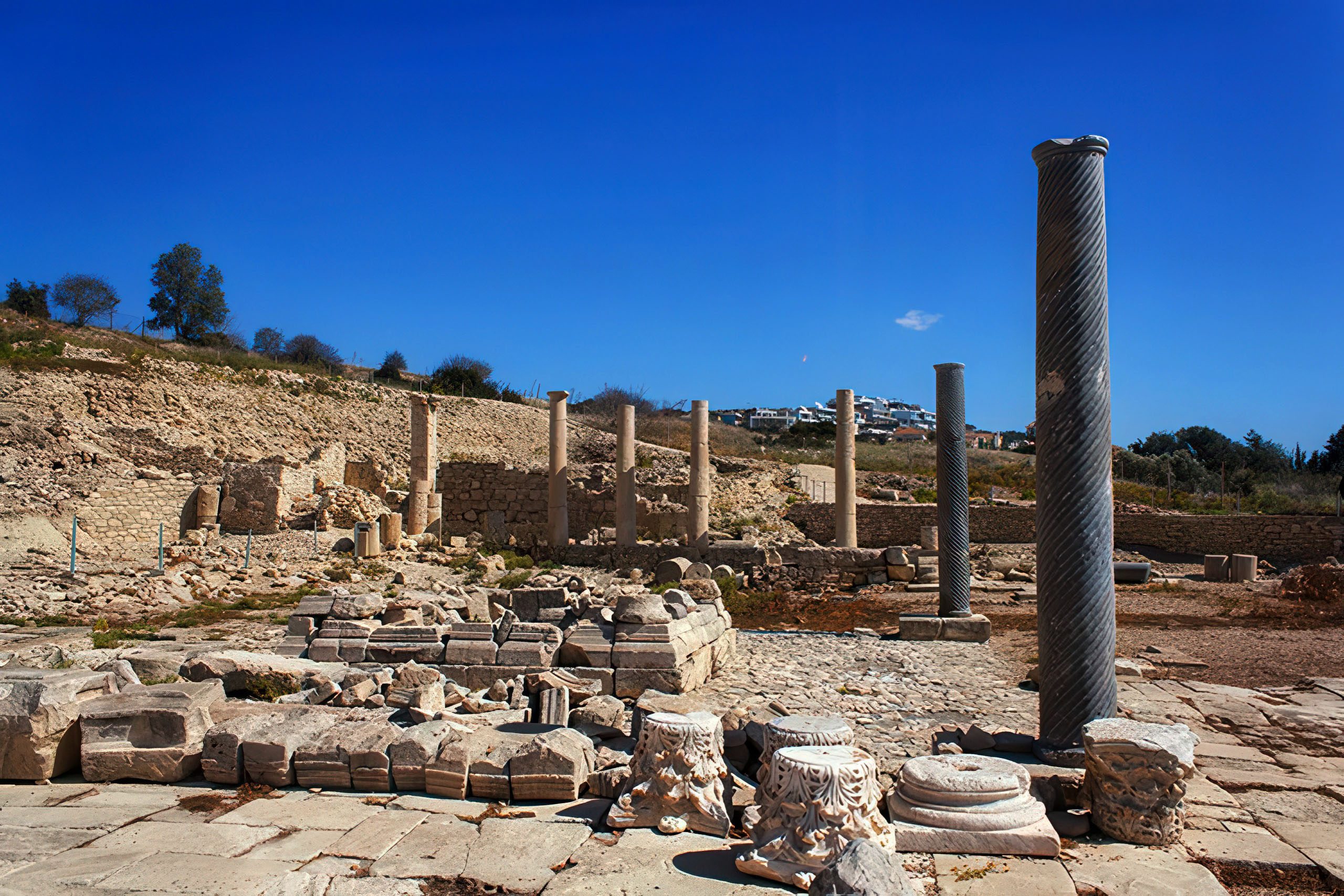
The Hellenistic bath in the lower town’s agora was one of the first structures built in that area. It featured an enclosed circular bathing space that used rainwater as its source. The large rectangular hall attached to the bath has been identified as either an exercise court (palaestra) or a race course (dromos).
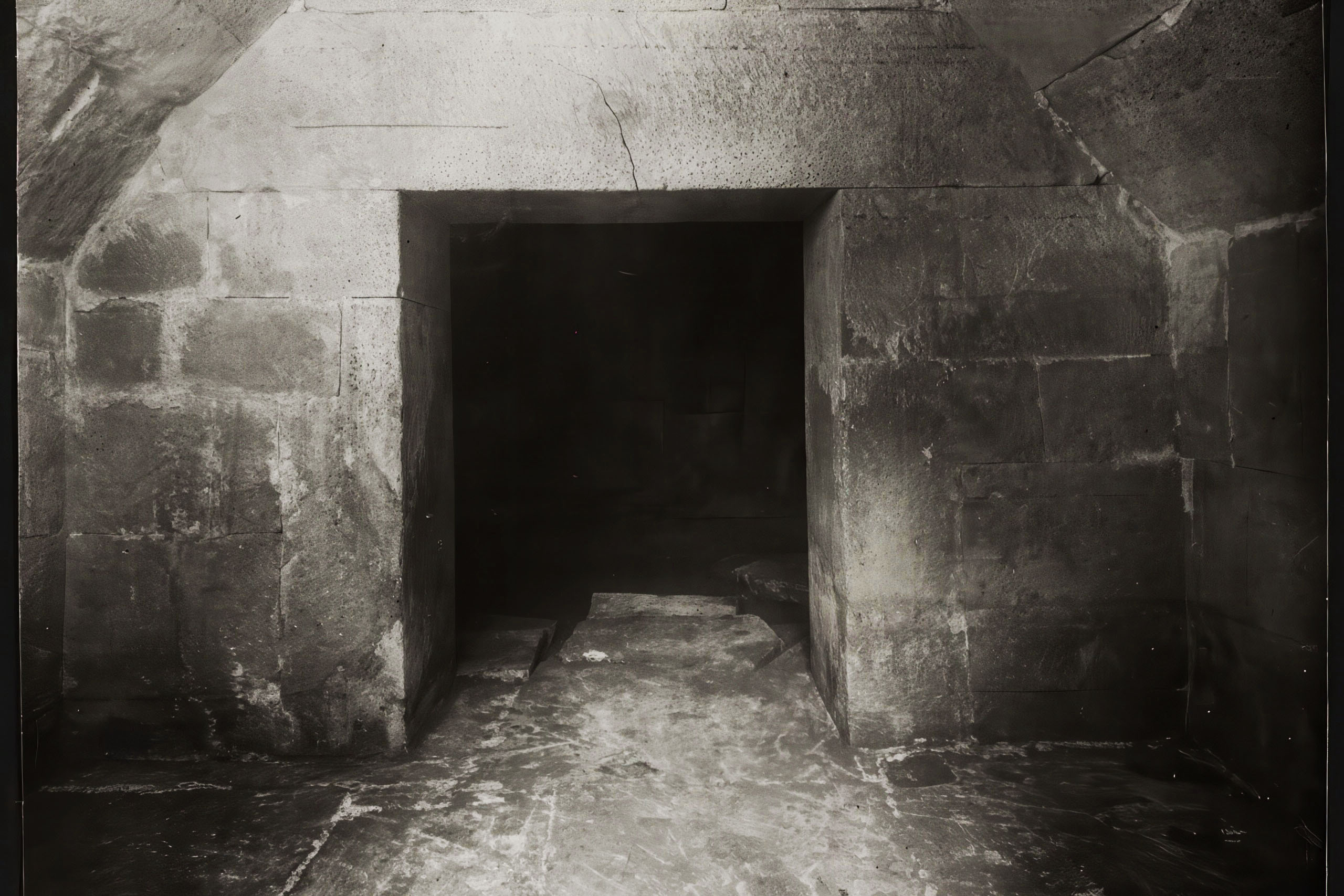
Archaeological evidence found in tombs suggests a Ptolemaic official may have died in Amathus and been buried according to foreign customs. Tomb 26 contained a stone pithos with an alabastron holding a burnt skeleton, with a wreath of gilded myrtle leaves placed around the rim.
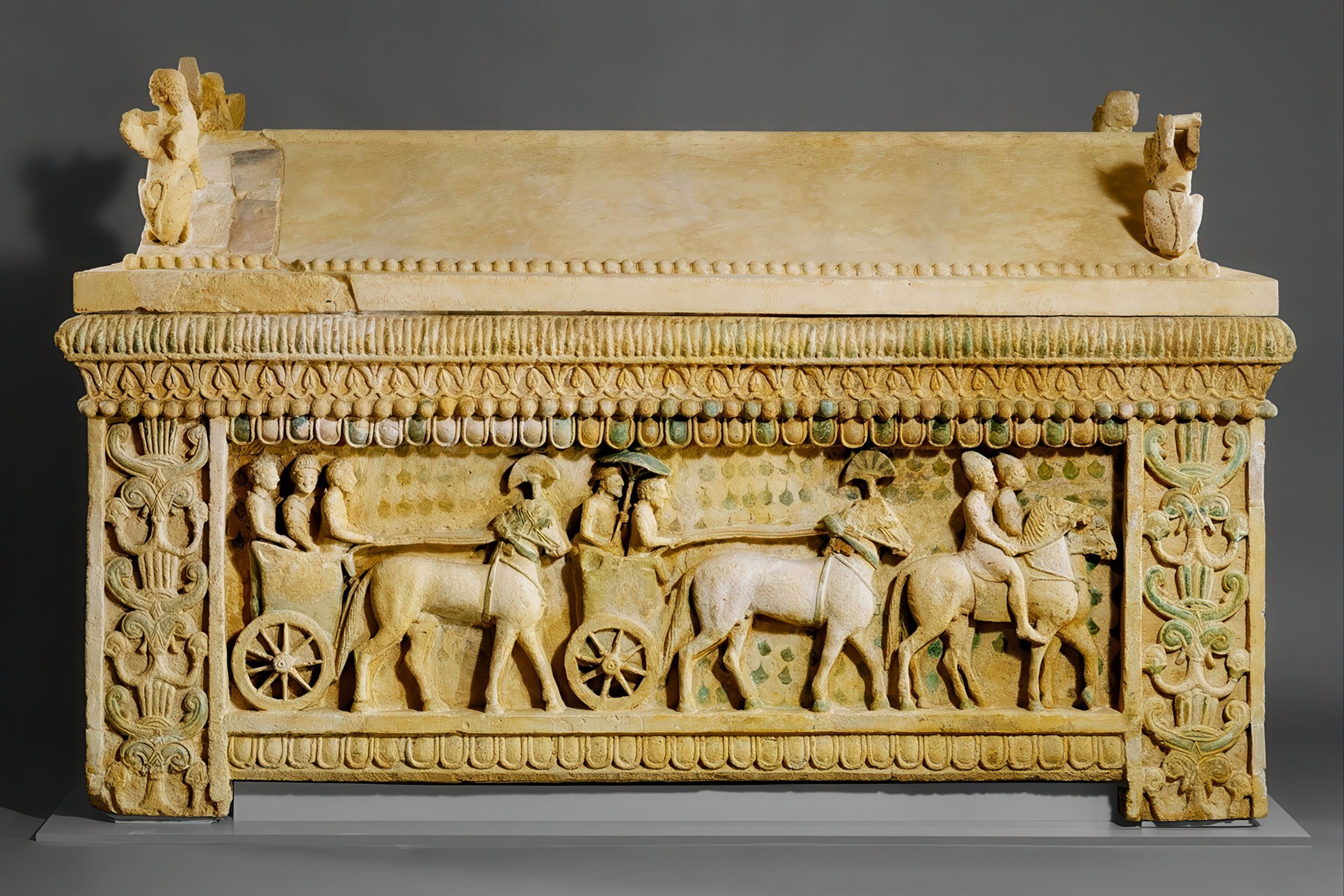
The chambered north gate’s design connects Amathus to broader Mediterranean architectural traditions. Similar defensive structures appear at sites like Tell el-Qedah in the Levant.
The Underwater Military Harbor
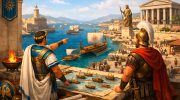
Perhaps the most remarkable Hellenistic construction at Amathus wasn’t on the acropolis at all, but just offshore. Between 1984 and 1986, French archaeologists conducted underwater excavations that revealed an imposing military harbor from the early Hellenistic period.
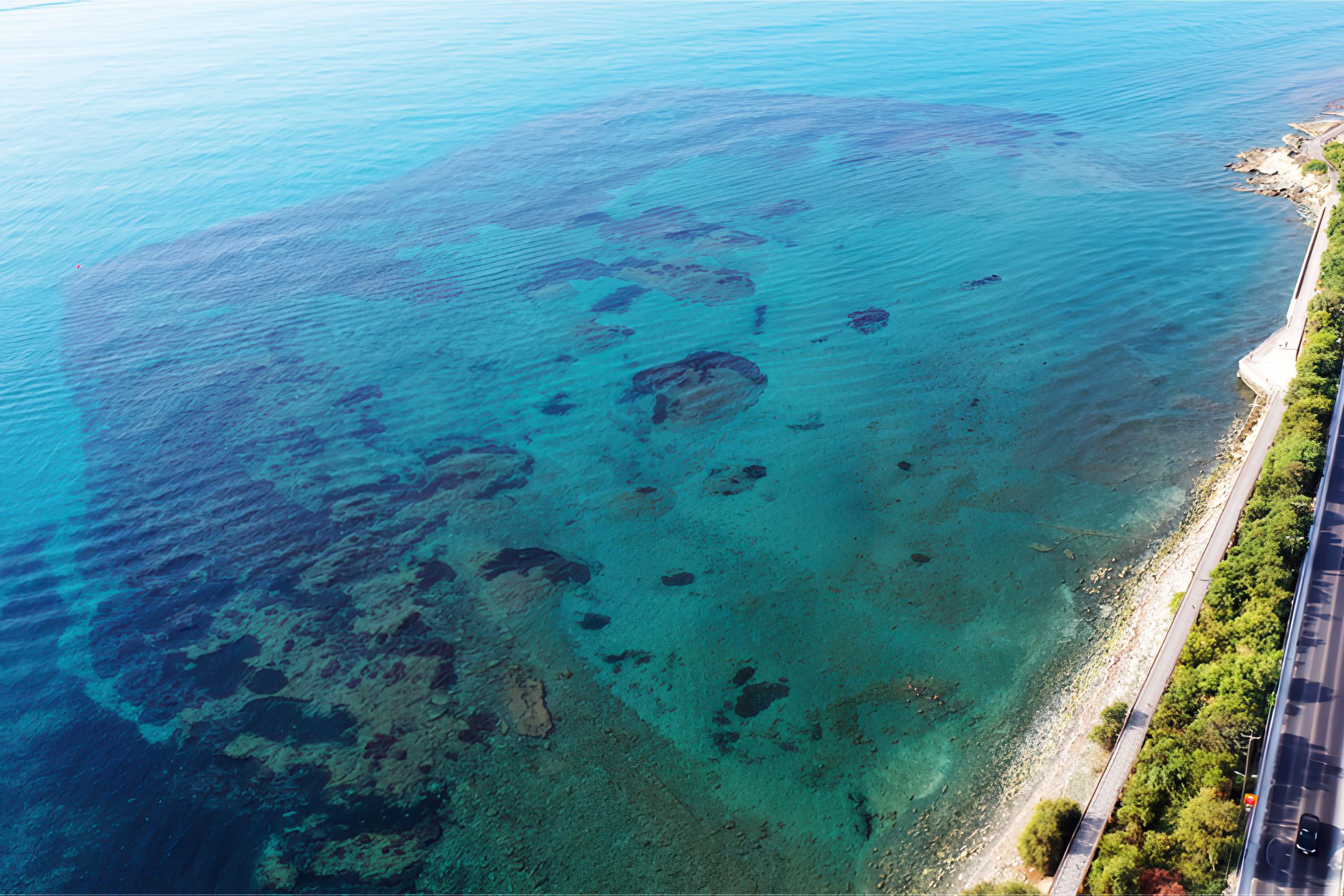
The harbor was built around 306 BC by Demetrius Poliorcetes following his naval victory at Salamis. Coins and pottery found at the site confirm this dating. The construction represents exceptional military architecture, with three moles (breakwaters) built from massive limestone blocks. Each block was carefully cut from nearby quarries, and special bosses (projections) allowed them to be hoisted and placed using vertical boom cranes.
The harbor was designed primarily to accommodate warships, with a narrow 20-meter entrance. However, excavations revealed something unexpected: the pristine condition of the blocks suggests the harbor may never have been completed or used. When Ptolemy I reconquered Cyprus in 294 BC, the harbor was abandoned, possibly before ever seeing naval service.
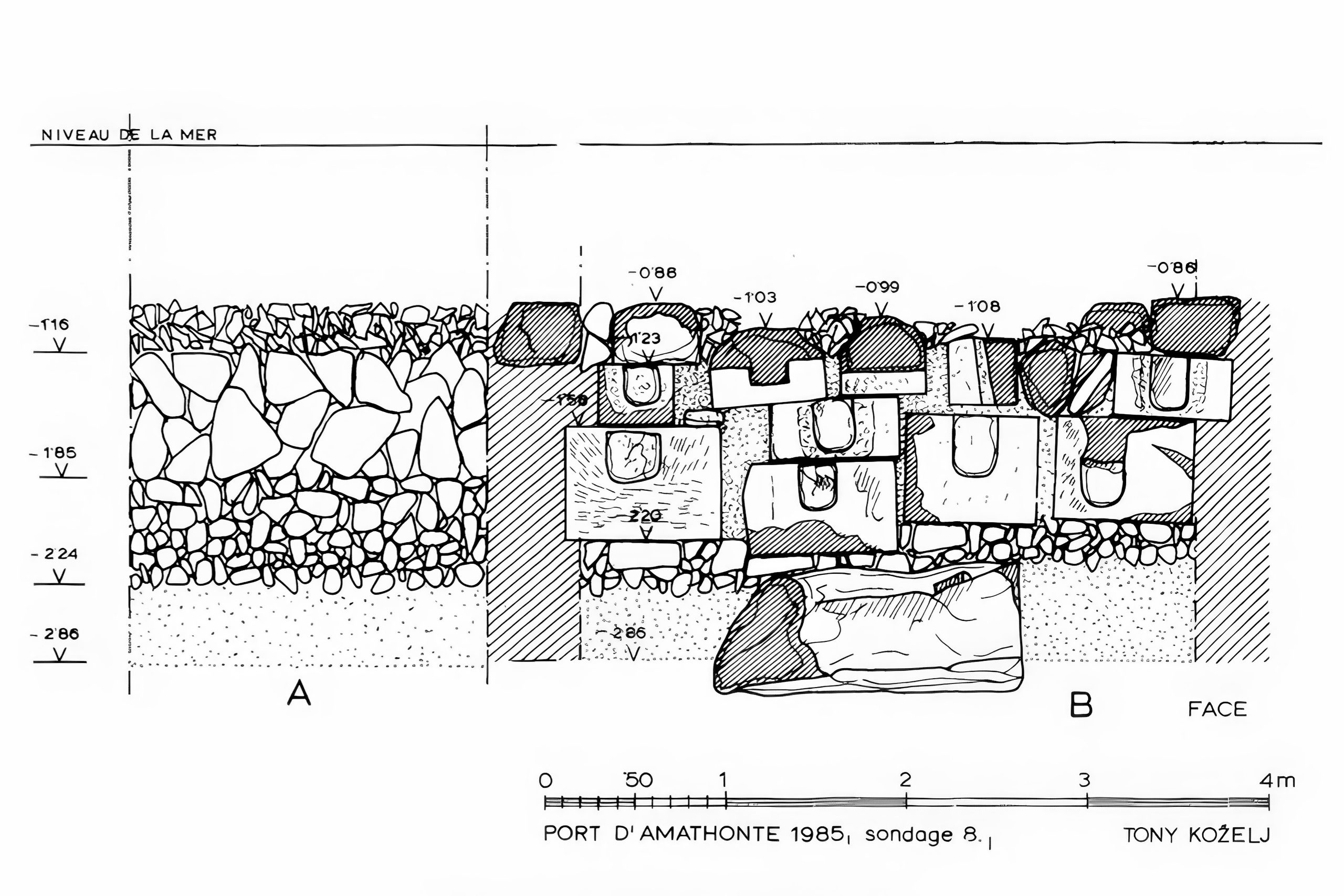
Today the harbor remains submerged at depths of 1 to 4 meters. It has become Cyprus’s first underwater archaeological park, allowing divers and snorkelers to explore its remarkably preserved structures.
Connection to Modern Cyprus
Amathus continues to serve as a major archaeological site in the Limassol district. Since 1975, a French archaeological mission has worked alongside the Cyprus Department of Antiquities to excavate and study the ruins. These ongoing excavations regularly reveal new information about Hellenistic Cyprus.
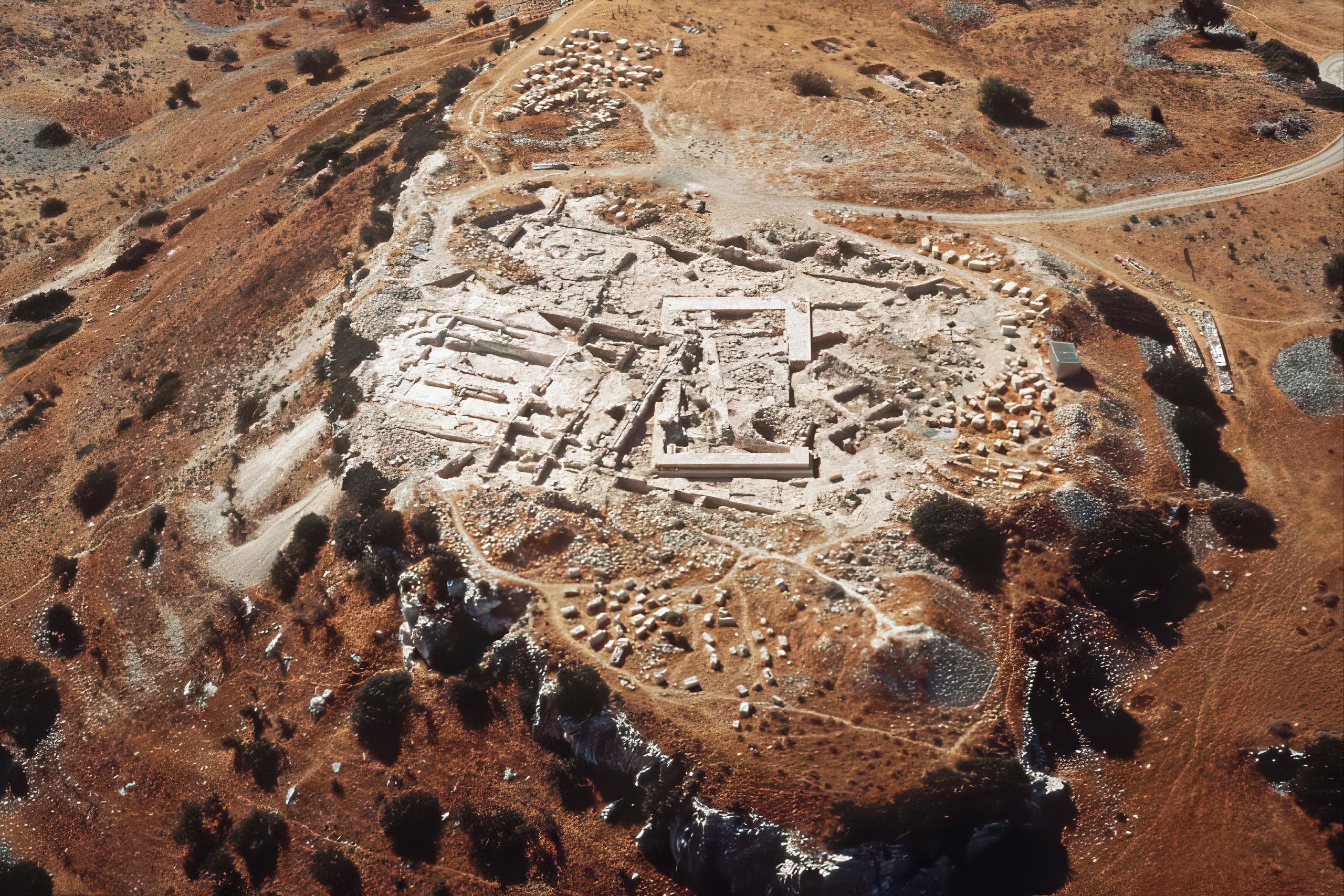
The site attracts both scholars and tourists interested in ancient history. The combination of land-based ruins and the underwater harbor creates a unique archaeological resource. The coastal walkway from Amathus to Limassol city center allows visitors to connect the ancient site with modern urban life.
Many finds from Amathus are displayed in the Limassol Archaeological Museum and the Cyprus Museum in Nicosia, making the city’s material culture accessible to researchers and the public.
Visiting Amathus
The archaeological site is open year-round, with seasonal hours varying from 8:00 AM to 5:00 PM in winter and 8:00 AM to 7:30 PM in summer. The entrance fee is €2.50. The site offers partial wheelchair accessibility.
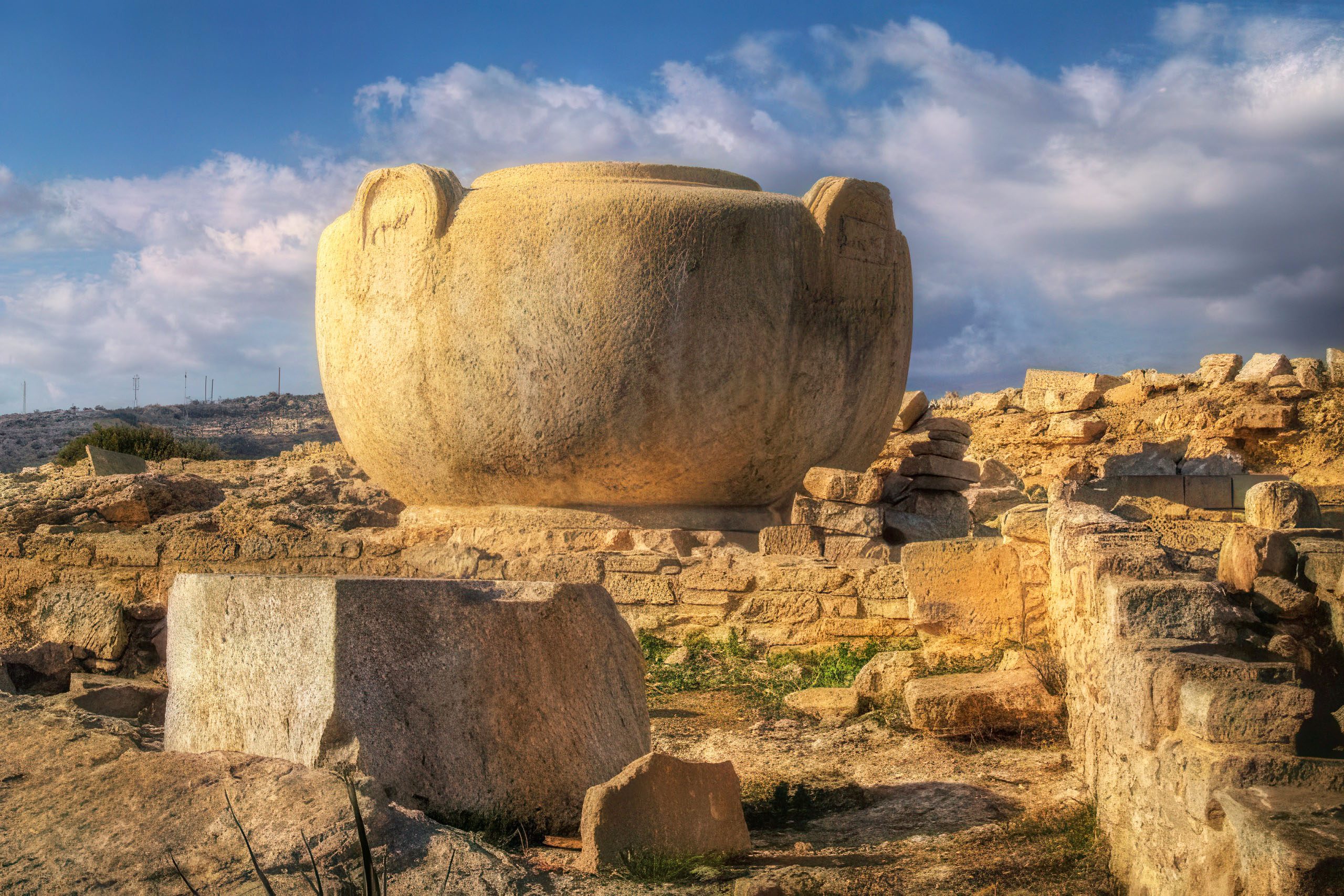
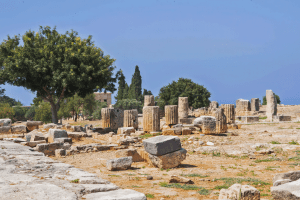
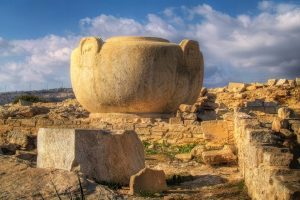
The acropolis itself requires some walking up the hill, but the views of the Mediterranean and the sprawling ruins reward the effort. Visitors can see the foundations of the Aphrodite temple, sections of the fortification walls, and the massive stone pithos that remains in situ.
Why Amathus Matters
The Hellenistic structures at Amathus reveal how ancient cities adapted to changing political circumstances. When the kingdom fell, the city didn’t simply decline. Instead, it transformed, building new facilities that served different purposes while maintaining its cultural and religious significance.
The underwater harbor represents one of the best-preserved examples of Hellenistic military architecture in the eastern Mediterranean. Its abandonment before completion offers a unique window into ancient construction methods and the volatile politics of the era.
Amathus bridges multiple periods of Cypriot history, from its mysterious origins through the Archaic, Classical, Hellenistic, Roman, and Byzantine periods until its final abandonment in the 7th century AD. The Hellenistic structures on the acropolis mark a pivotal moment in this long story, when an ancient kingdom became part of a larger Mediterranean world while preserving its distinctive character.