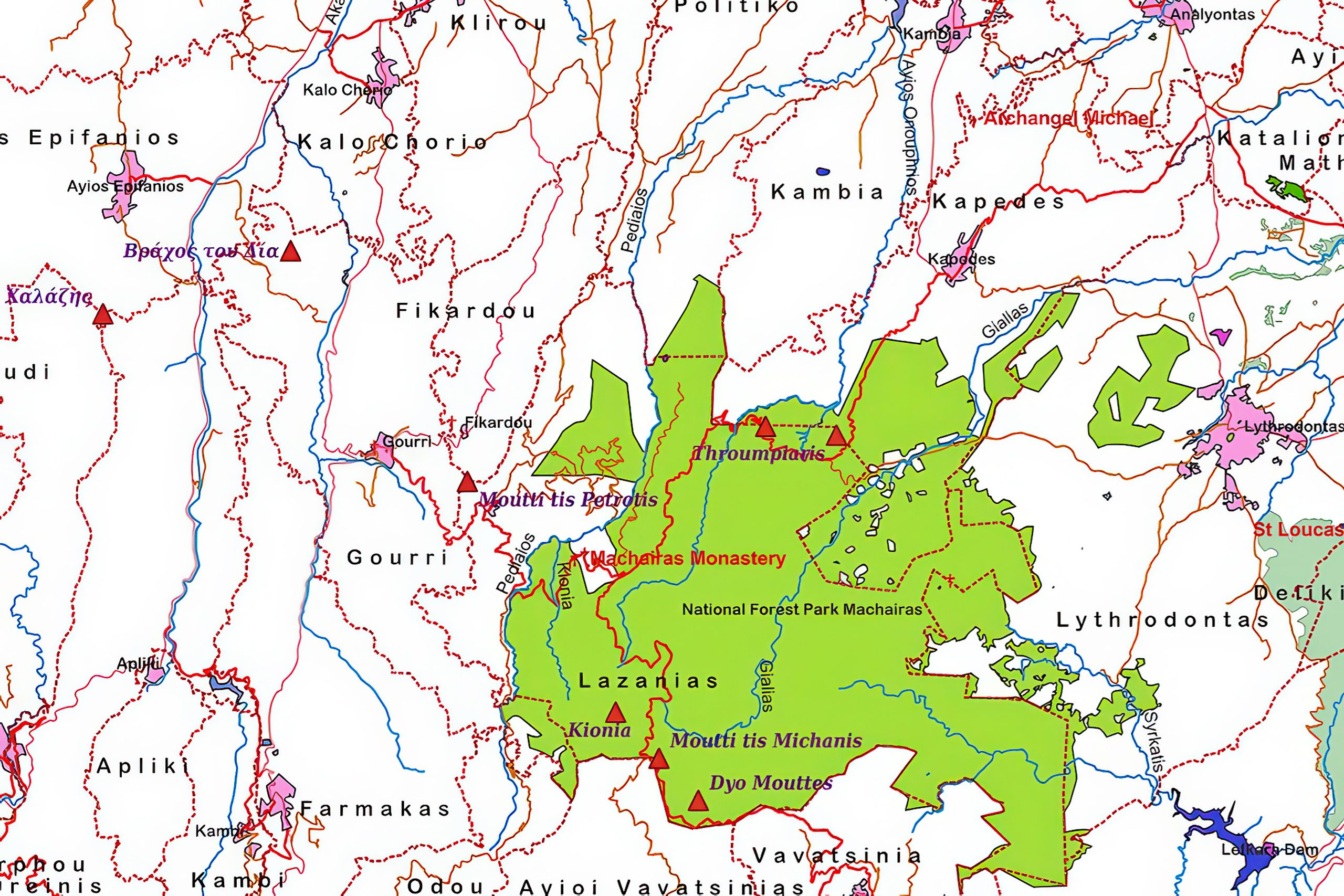
Machairas Forest Reserve represents one of Cyprus’s most ecologically valuable protected areas. The forest has an extent of 6,057 hectares or 60.6 square kilometers, making it a significant natural asset for the island.
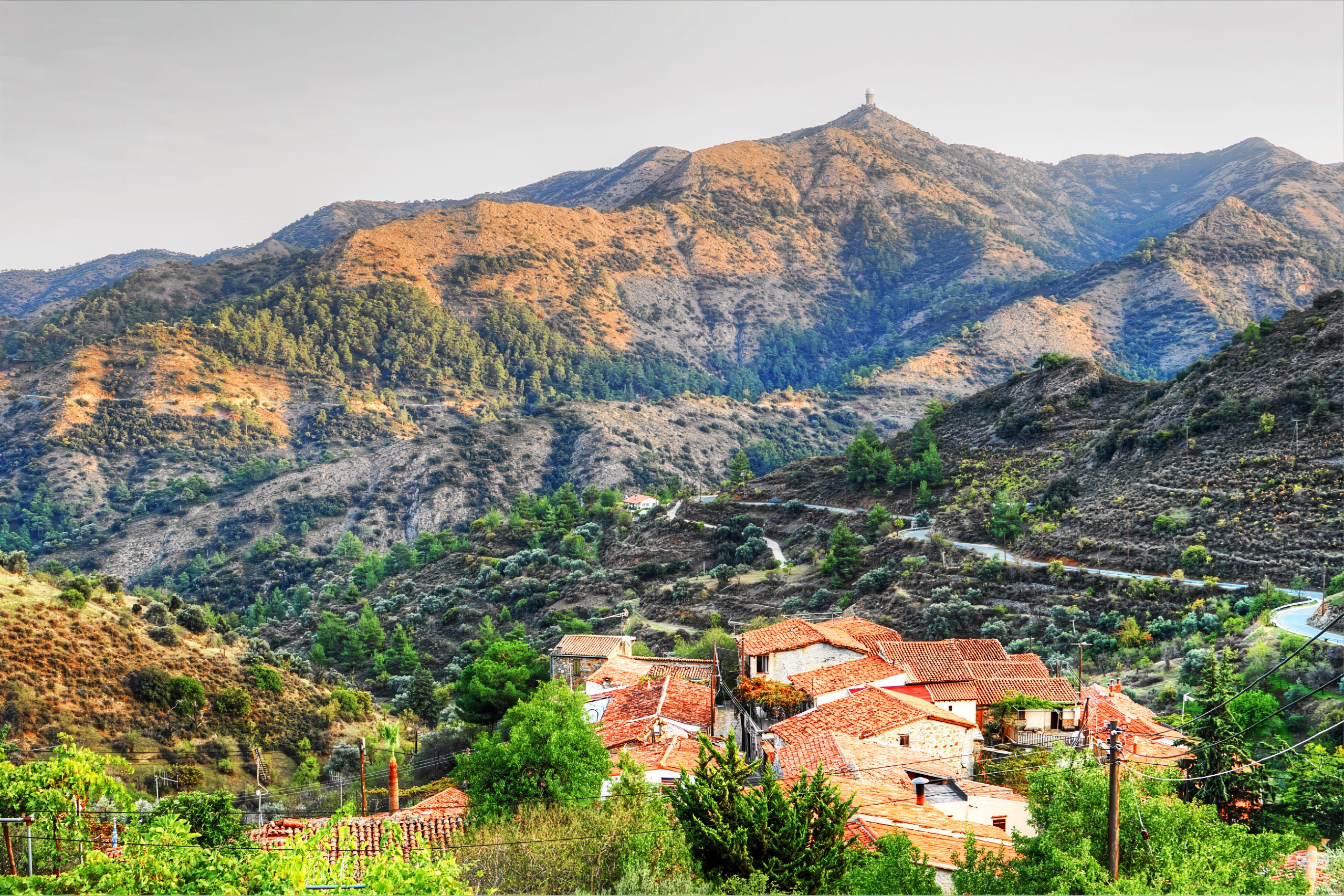
Located in the central mountain range between the Nicosia and Larnaca districts, the forest extends from an altitude of 300 meters at its lowest point to 1,423 meters at Kionia peak. The reserve was designated as a national forest to protect its exceptional biodiversity and watershed functions. More than 600 plant species have been recorded in the park, with 27 indigenous to Cyprus.
The terrain consists of dense pine forests, golden oak groves, and Mediterranean scrubland that shelters numerous endemic species found nowhere else on Earth. Two of Cyprus’s most important rivers, the Pediaios and Yialias, originate within the forest boundaries, providing critical water resources to surrounding regions.
Historical Context
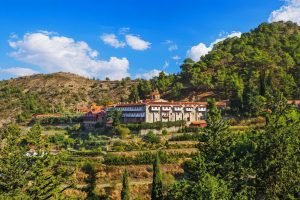
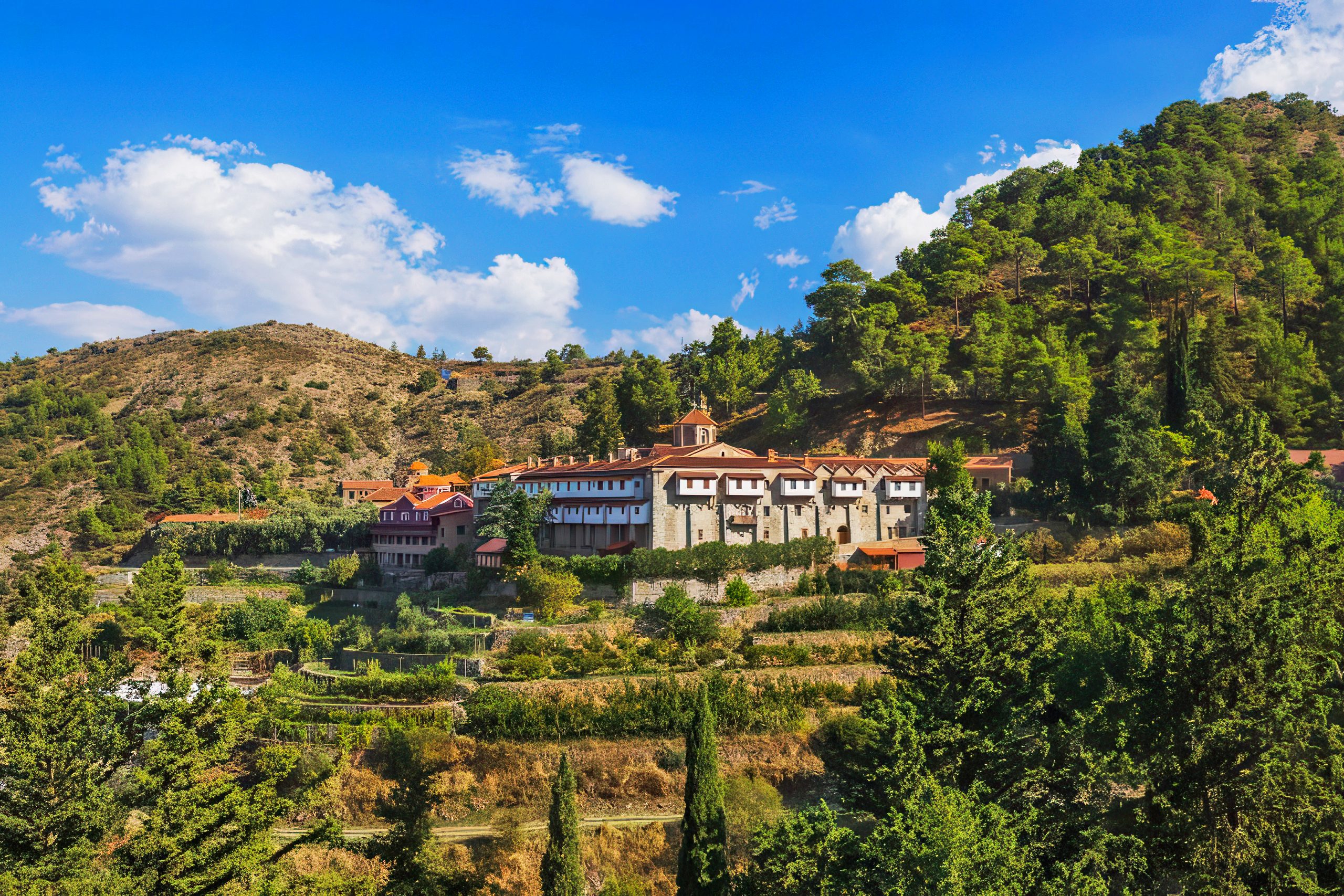
The Machairas region holds deep historical significance, stretching back centuries. The area takes its name from the Machairas Monastery, founded in 1148 by two monks who reportedly discovered a miraculous icon of the Virgin Mary in a nearby cave.
The monastery became an important spiritual center and landowner in medieval Cyprus. Throughout the Byzantine, Lusignan, and Ottoman periods, the surrounding forest provided timber, game, and grazing land for local communities.
By the early 20th century, British colonial authorities recognized the need to protect what remained of Cyprus’s natural forests. The establishment of formal forest reserves began during this period, though protection measures remained limited. Following independence in 1960, the Republic of Cyprus expanded conservation efforts.
The Forest Department assumed management responsibility and implemented systematic protection measures. Fire control became a priority concern, with Kionia Peak serving as a fire observation station during high-risk summer months.
The forest suffered significant damage from wildfires over the decades, particularly during the dry summer months. In recent years, the designation of portions of Machairas as Special Protection Areas under European Union directives provided additional safeguards for vulnerable species and habitats.
Diverse Landscapes Across Mountain Slopes
The forest’s composition reflects its varied topography and elevation gradient. The dominant forest tree is the Calabrian pine, which creates beautiful forest landscapes either on its own or in combination with other trees such as the endemic golden oak.
These pines establish pure stands across much of the reserve, forming dense canopies that provide shade and habitat structure. The golden oak, known locally as latzia, appears primarily at mid-elevations. This endemic species develops thick, bushy growth patterns, particularly visible in areas like Dyo Mouttes, twin peaks covered entirely in golden oak vegetation.
Rocky outcrops and cliff faces interrupt the forest cover, creating microhabitats for specialized plant species. Annual rainfall reaches 700 millimeters in the Kionia-Machairas peak area, with temperatures during summer not exceeding 32-33 degrees Celsius, while winters are colder with temperatures reaching negative 5 degrees Celsius, along with snow.
The lower elevations transition to scrubland dominated by aromatic herbs, cistus shrubs, and scattered carob trees. Stream valleys support riparian vegetation, including willows, plane trees, and moisture-loving plants.
Surprising Facts About Mountain Wildlife
The forest harbors several endemic bird species found only in Cyprus. Endemic species include the Cyprus Warbler, Cyprus Wheatear, Coal Tit, Scops Owl, and Jay. The Cyprus Warbler lives year-round in dense scrubland and forest edges, where its distinctive call echoes through the vegetation.
The Cyprus Wheatear prefers rocky areas and cliff faces, establishing territories among boulders and outcrops. Both species have evolved distinct characteristics that separate them from their mainland relatives.
The forest supports a healthy population of Bonelli’s Eagle, Cyprus’s only breeding eagle species. The current Bonelli’s eagle population in Cyprus is estimated at 31-39 breeding pairs, with 70 percent of nests built on large Calabrian pine trees at an average altitude of 625 meters.
These magnificent raptors build massive stick nests in the tallest pines, returning to the same sites year after year.
Protected endemic plant species include Crocus hartmannianus and Crocus cyprius.
Crocus hartmannianus is found in just four mountain localities, where it grows at 600-900 meter altitude on stony hillsides in scrub or under sparse coniferous woodland. This rare crocus blooms in January, producing pale lilac or white flowers with distinctive deep violet markings.
Endemic Species That Make Machairas Special
The golden oak stands as one of Machairas’s most significant endemic organisms. This small tree rarely exceeds five meters in height but forms extensive colonies on rocky slopes throughout the reserve.
Its leaves display a distinctive golden underside created by dense hair coverings, an adaptation to reduce water loss in harsh mountain conditions. The species plays a crucial role in preventing soil erosion on steep slopes.
Among endemic flowering plants, several rare species maintain their strongholds within the forest.
Pterocephalus multiflorus, a small evergreen shrub with pale pink flowers, grows in rocky clearings. Ptilostemon chamaepeuce, a shrubby knapweed, thrives on stony hillsides. Arabis purpurea, the purple rock cress, colonizes cliff faces and rocky outcrops.
These plants have evolved specialized adaptations to survive in nutrient-poor soils and extreme temperature fluctuations.
The fauna includes several endemic mammals. Main mammal species are the Cyprus fox, European hare, and the endemic Cyprus hedgehog.
The Cyprus fox represents a distinct subspecies that developed unique characteristics during thousands of years of isolation.
Endemic butterfly species flutter through forest clearings during spring and summer months, though specific population data remains limited. Reptiles include several endemic snake and lizard species adapted to forest conditions.
A Critical Refuge in Modern Cyprus
Machairas Forest Reserve serves multiple conservation functions in contemporary Cyprus. The forest provides essential habitat for species that have disappeared from lowland areas due to development and agriculture. Many birds, mammals, and plants survive only because protected forests like Machairas offer refuge from human pressures.
The watershed protection function cannot be overstated. The two most important streams of Cyprus, Pediaios and Yialias, spring from the park as well as the streams of Pentaschinos and Maroni.
These waterways supply communities across central Cyprus, making forest health directly relevant to water security.
Climate change presents new challenges for forest ecosystems. Rising temperatures and changing precipitation patterns stress tree populations and alter habitat conditions. Endemic species with limited ranges face particular vulnerability. Conservation efforts now incorporate climate adaptation strategies.
The forest also maintains cultural significance. The Machairas Monastery continues to function as an active religious site, attracting pilgrims and visitors. The hideout of Gregoris Afxentiou, a hero of the 1955-1959 independence struggle, lies within the forest near the monastery. This site receives thousands of visitors annually who come to pay respects to this historical figure.
Exploring the Mountain Forest Reserve
Machairas Forest Reserve offers accessible recreational opportunities for visitors. Three picnic areas exist in the park with tables, drinking water, parking places, toilets, and children’s playgrounds, with a total capacity of approximately 2,200 people.
These sites provide pleasant spots for family outings, particularly during spring and autumn when temperatures remain comfortable.
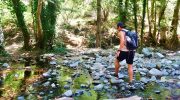
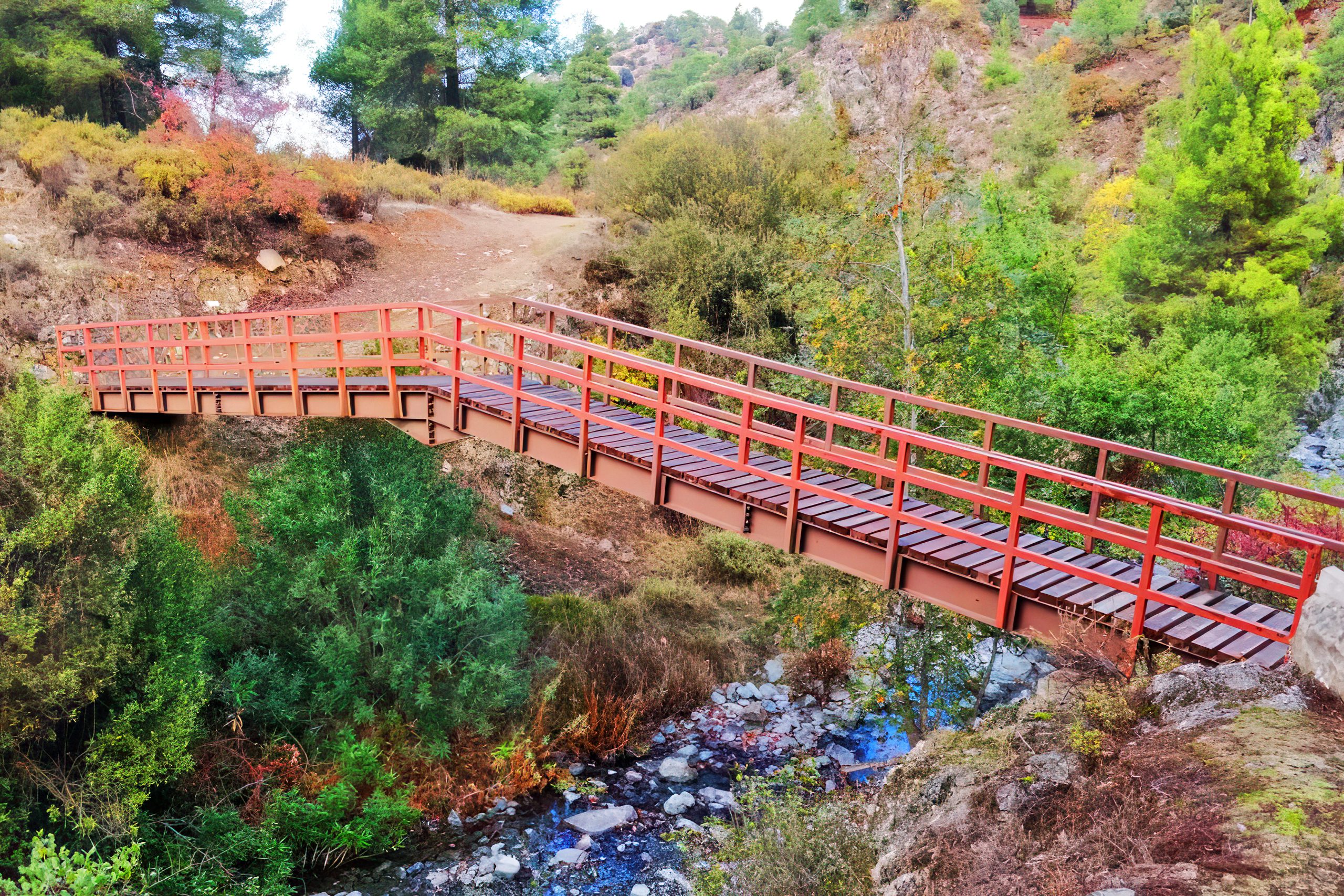
Five nature trails run along a total route of 19 kilometers, with one trail designed for wheelchair users.
All trails feature information signs explaining points of ecological and historical interest. The trails vary in difficulty from easy walks suitable for families to more challenging routes requiring good fitness levels.
Mountain biking has become increasingly popular, with forest roads and firebreaks providing extensive cycling opportunities.
The drive from Nicosia takes approximately one hour, while access from Larnaca requires roughly the same time. All main access roads maintain paved surfaces year-round.
The forest remains open to visitors throughout the year, though summer fire restrictions may limit access during extreme conditions.
Winter brings occasional snowfall to higher elevations, transforming the landscape and creating opportunities for snow-based activities.
Spring offers the best conditions for observing wildflowers and migratory birds.
The Kionia viewpoint provides panoramic vistas across central Cyprus, extending to distant mountains and coastal plains on clear days.
Why This Forest Reserve Matters
Machairas Forest Reserve protects irreplaceable natural heritage that extends beyond its boundaries. The endemic species living here exist nowhere else on the planet. Their loss from this forest would mean global extinction, erasing millions of years of evolutionary history.
The forest demonstrates that conservation investments produce tangible results when properly implemented and maintained over time.
For Cyprus as a whole, Machairas represents a functioning mountain ecosystem that provides crucial services. The forest regulates water flow, prevents erosion, stores carbon, and maintains biodiversity. These functions benefit all Cypriots whether they visit the forest or not.
The reserve also offers educational opportunities. School groups, university researchers, and nature enthusiasts use the forest as an outdoor classroom for studying Mediterranean ecology, endemic species, and conservation challenges.
Knowledge gained here informs broader environmental policy and management decisions.
The forest’s existence proves that development and conservation need not be mutually exclusive. Cyprus has chosen to protect this landscape rather than exploit it for short-term economic gain, recognizing that some places deserve preservation for their intrinsic value and the services they provide to both nature and society.