On the eastern coast of Cyprus near today’s Famagusta, Enkomi was one of the most important Bronze Age cities in the Mediterranean. For over 600 years, this walled city controlled much of the region’s copper trade and acted as a key link between the Near East, Egypt, and the Aegean world.
Enkomi was a major Late Bronze Age settlement, occupied from around 1650 BCE to 1050 BCE. The city grew near a Mediterranean inlet, which has since filled with silt, leaving the ruins several kilometers from the sea. At its height, between 1340 and 1200 BCE, Enkomi was one of Cyprus’s main centers for copper production and export.
Historical Background
Enkomi was first settled in the Middle Bronze Age, around 2000 BCE, when Cyprus traded with Egypt’s Middle Kingdom. Activity at the site slowed during the 17th and 16th centuries BCE, possibly because Hyksos control in Egypt disrupted trade.
The city became important again after 1550 BCE, when Egypt’s Eighteenth Dynasty reunited the country and started importing copper again. This period marked the start of Enkomi’s rise as a major urban center. During the Late Bronze Age, Cyprus was part of a wider trade network across the eastern Mediterranean. Cities like Ugarit, Byblos, Sidon, and Tyre became regular trading partners, and by 1400 BCE, Mycenaean Greeks also developed strong commercial ties with Cypriot copper.
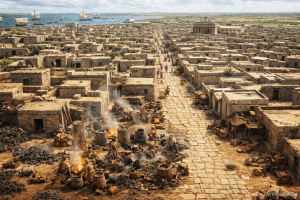
Around 1200 BCE, Enkomi was destroyed during the widespread troubles caused by the Sea Peoples, a group of raiders who attacked many civilizations in the eastern Mediterranean. After this, Mycenaean Greeks and people from Anatolia settled in the city. They rebuilt Enkomi using a grid-like street plan, showing advanced urban planning for that time.
The Copper Industry and Bronze Age Metallurgy
Enkomi’s wealth and importance came mainly from copper production and trade. Cyprus had large copper deposits in the northwestern Troodos Mountains. These mines were used from the Early Bronze Age until modern times. Although the mines are now empty, in the Bronze Age they supplied much of the eastern Mediterranean’s copper.
The ore was first collected and partly smelted near the mines, then sent to coastal cities like Enkomi for further processing. Archaeologists have found a lot of evidence of copper work at Enkomi, including furnaces, molds, crucibles, and tuyeres (metal tubes used to blow air into furnaces). Over a ton of copper slag and ore has been recovered, along with bronze objects ready for recycling. This shows how valuable metal was and how efficient the Bronze Age workers were.
After processing, copper was shaped into ingots for export. These ingots were 30–60 cm long, 20–45 cm wide, and 4–6 cm thick, weighing 10–37 kilograms each, with an average of about 30 kilograms. Their “oxhide” shape made them easy to handle and transport.
Oxhide ingots have been found across the Mediterranean, from Sardinia in the west to the Levant in the east, showing the wide reach of Cypriot copper trade. Scientific studies of lead isotopes and trace elements in these ingots confirm that many came from Cyprus.
Archaeological Discoveries and Religious Artifacts
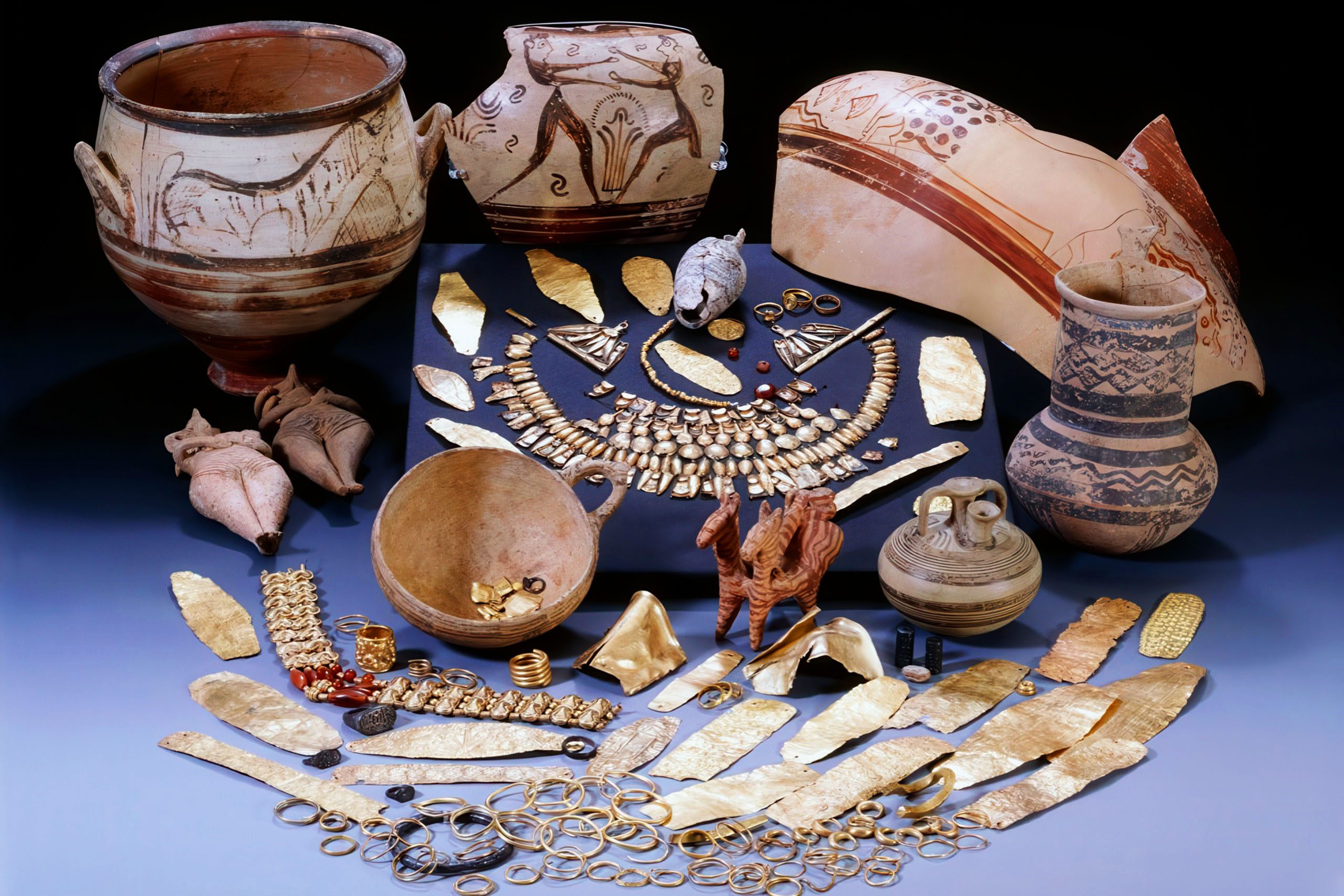
Enkomi has yielded extraordinary archaeological finds, particularly in metallurgy and religious practice. The site is known for hundreds of rich tombs excavated since the late 19th century. These tombs contained luxury goods including Egyptian jewelry, Mycenaean pottery, and fine metalwork.
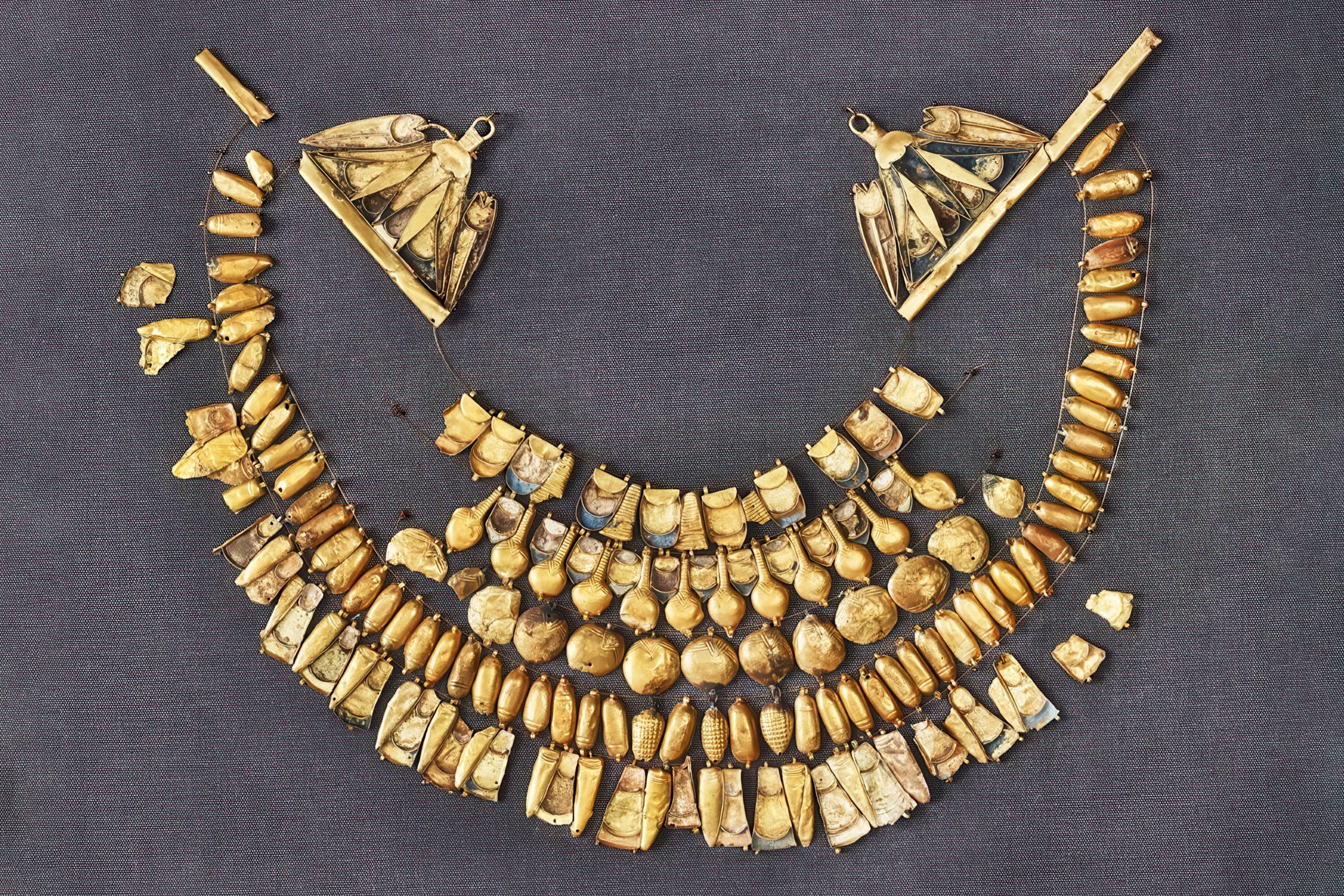
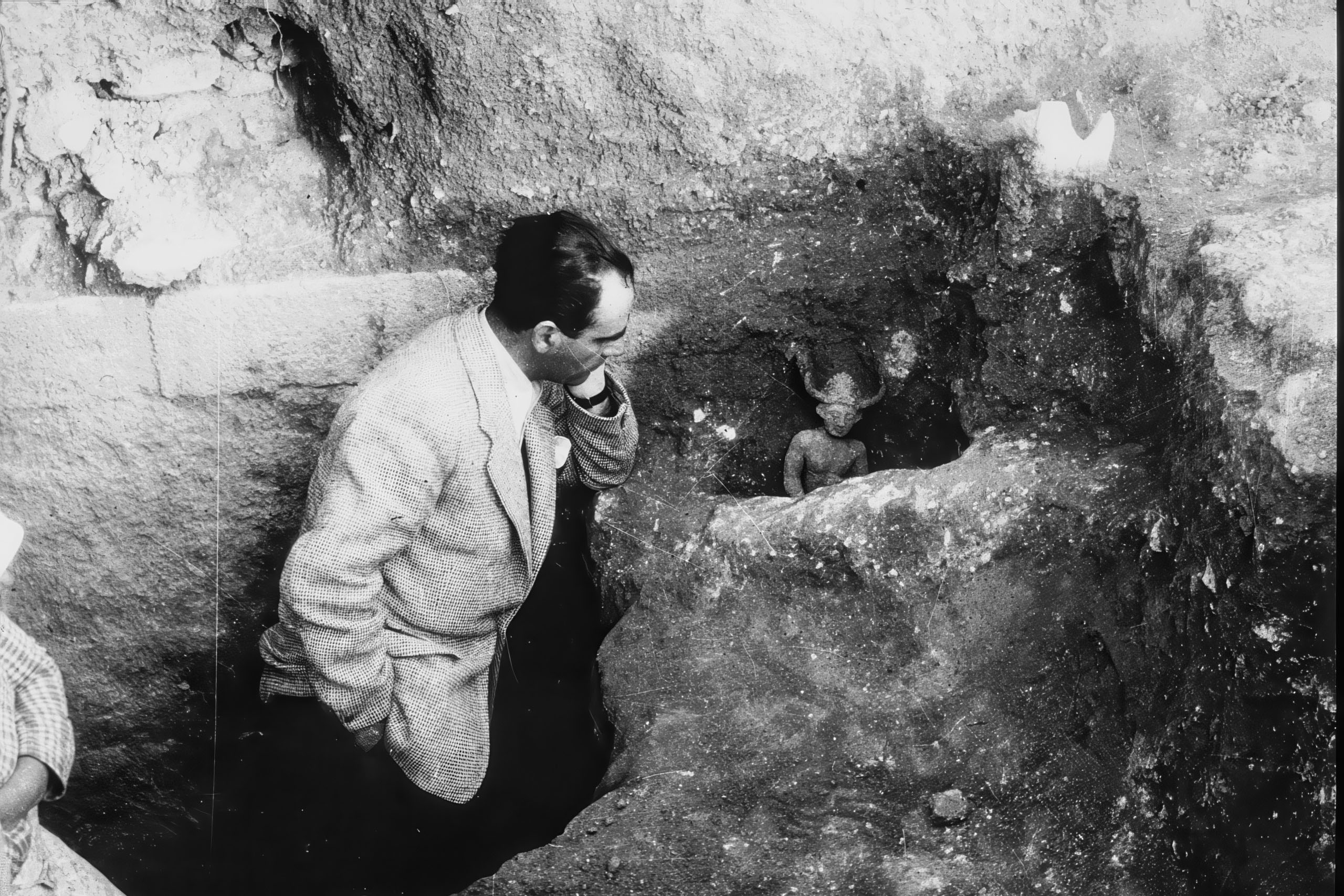
Two bronze statuettes discovered at Enkomi have become iconic representations of Bronze Age Cypriot culture. The Ingot God, found in 1963 in an early 12th century BCE sanctuary, is approximately 35 centimeters tall and depicts a bearded deity wearing a horned conical cap.
The figure holds a round shield and spear and stands on a base shaped like an oxhide ingot. X-ray analysis has revealed that the statue’s lower portion was modified to accommodate the addition of the ingot base. The Ingot God is interpreted as a protective deity of the copper industry.
Additional religious artifacts include sitting deities that appear more consistent with Near Eastern traditions, possibly representing the ancient supreme deity El. Small bronze bull figurines, a type well-known from the Levant, and “smiting god” figures that clearly imitate Syrian deities have also been recovered. These diverse religious objects demonstrate that Enkomi was a cultural crossroads where Greek, Near Eastern, and local Cypriot traditions mixed.
Fun Facts About Ancient Enkomi
● Enkomi is one of the earliest known cities in Cyprus to show clear evidence of organised urban planning, with straight streets arranged in a grid pattern.
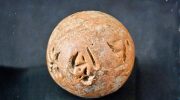
● The site has produced more examples of the Cypro-Minoan script than any other location on the island, although this writing system has not yet been deciphered.
● Copper ingots found at Enkomi were often shaped like animal hides, a standard form used in Bronze Age trade across the Mediterranean.
● Archaeologists uncovered both residential areas and industrial zones within the city, showing that metal production and daily life existed side by side.
● Several important artefacts from Enkomi, including bronze figurines and ceremonial objects, are now displayed in major museums such as the British Museum and the Cyprus Museum in Nicosia.
The Decline and Abandonment of Enkomi
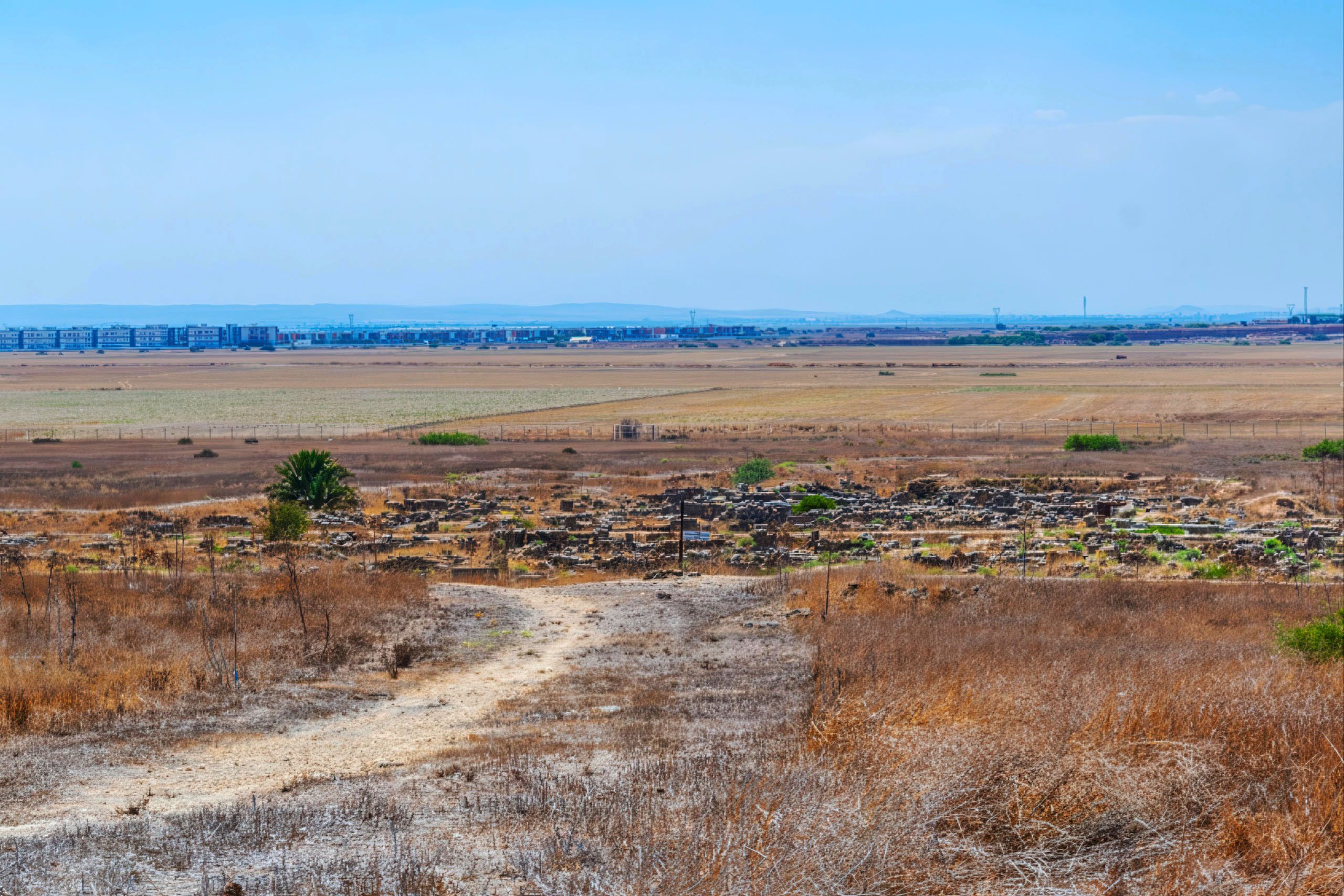
The Late Bronze Age collapse around 1200 BCE affected Enkomi severely. The city shows evidence of destruction, possibly caused by the Sea Peoples or by earthquakes. However, unlike many contemporary sites that were permanently abandoned, Enkomi was rebuilt and continued to function on a reduced scale.
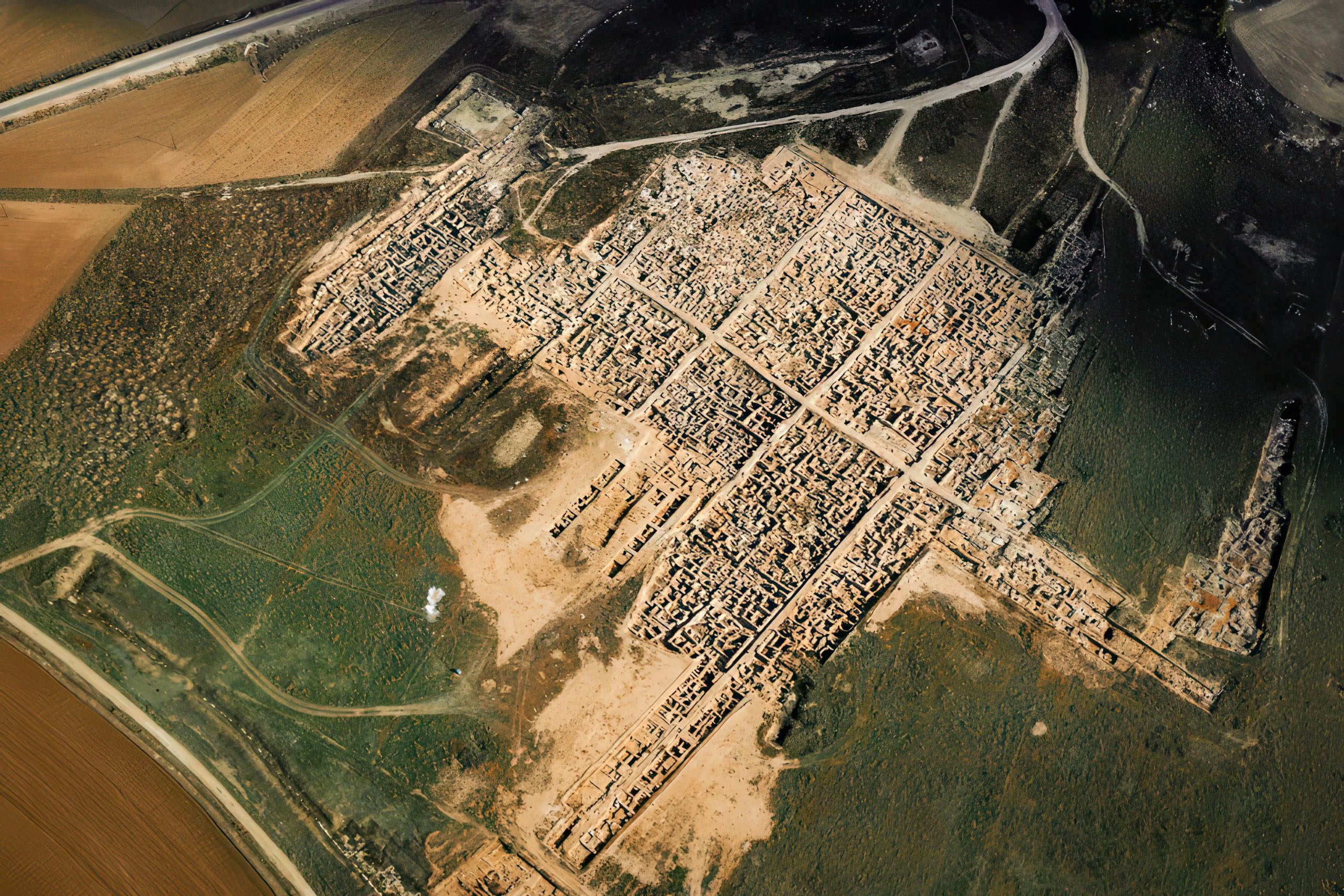
During the 12th century BCE, even as the Hittite kingdom collapsed and Egypt’s New Kingdom weakened, Enkomi remained inhabited. Copper trade, which had been the foundation of the city’s prosperity, declined as the Bronze Age gave way to the Iron Age. House 18, one of the major elite buildings, was destroyed by fire. It was subsequently repaired and subdivided into smaller residential units.
According to the travel account of Wen-Amun, an Egyptian diplomat who was blown off course and ended up at Alashiya around 1100 BCE, the city was ruled by a princess named Hatbi. This reference provides rare information about Enkomi’s political structure. It confirms that some form of organized authority persisted even during the city’s decline.
By 1050 BCE, Enkomi was abandoned. The reasons for final abandonment likely included the silting up of the harbor, which would have eliminated the city’s primary advantage as a port. This combined with reduced demand for copper as iron gradually replaced bronze for tools and weapons. In the first millennium BCE, habitation shifted to the nearby coastal site of Salamis, which became the dominant city in the region.
Visiting Enkomi Today
Enkomi is located approximately 15 minutes by car north of Famagusta in the Turkish-occupied part of Cyprus. The site has limited signage, and visitors may find it helpful to arrange for a guided tour or obtain detailed directions in advance.
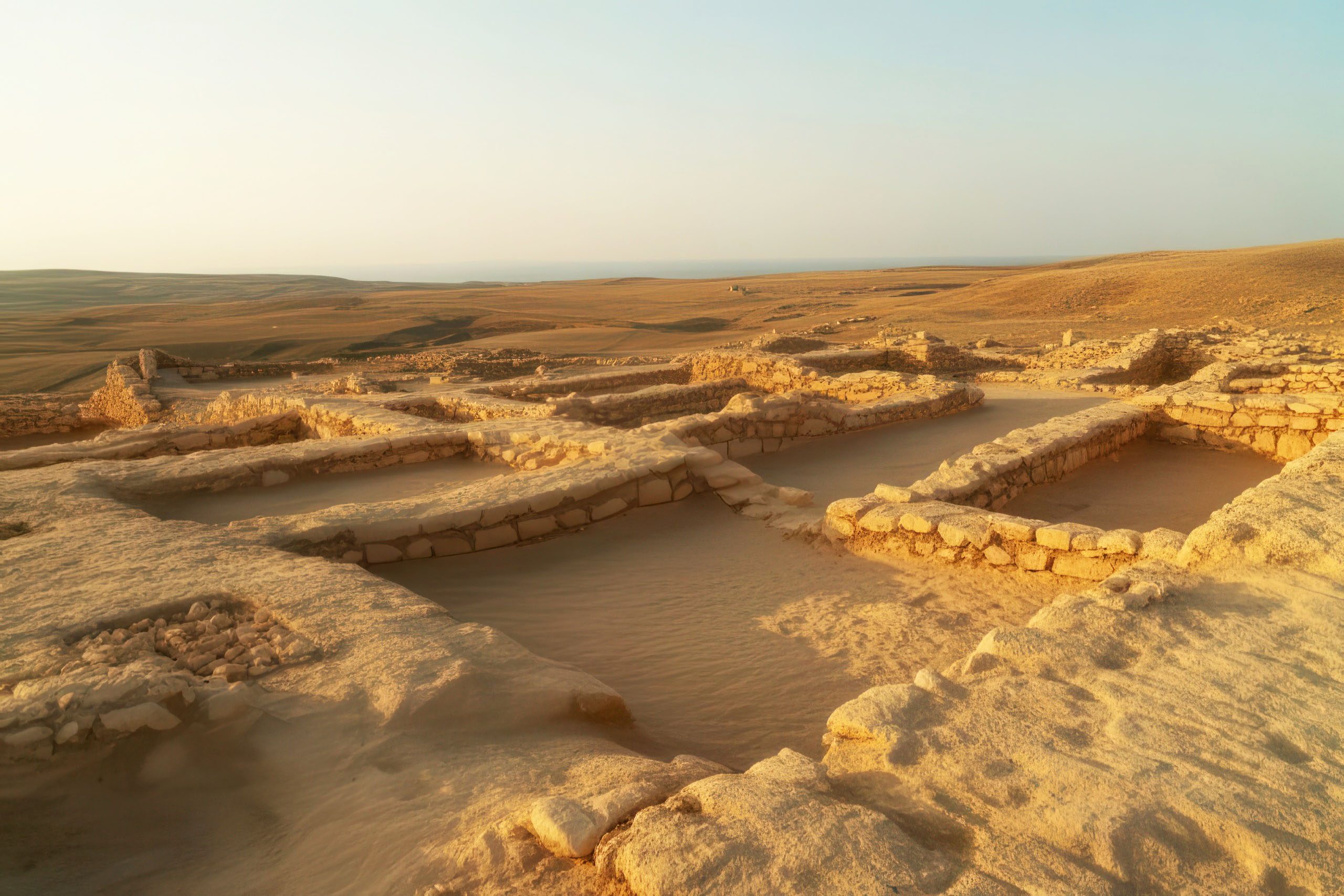
Due to the political situation in Cyprus, access to the site may be subject to restrictions or special requirements. Travelers should check current conditions and any necessary documentation before planning a visit.
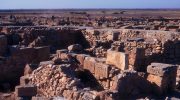
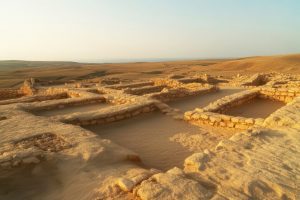
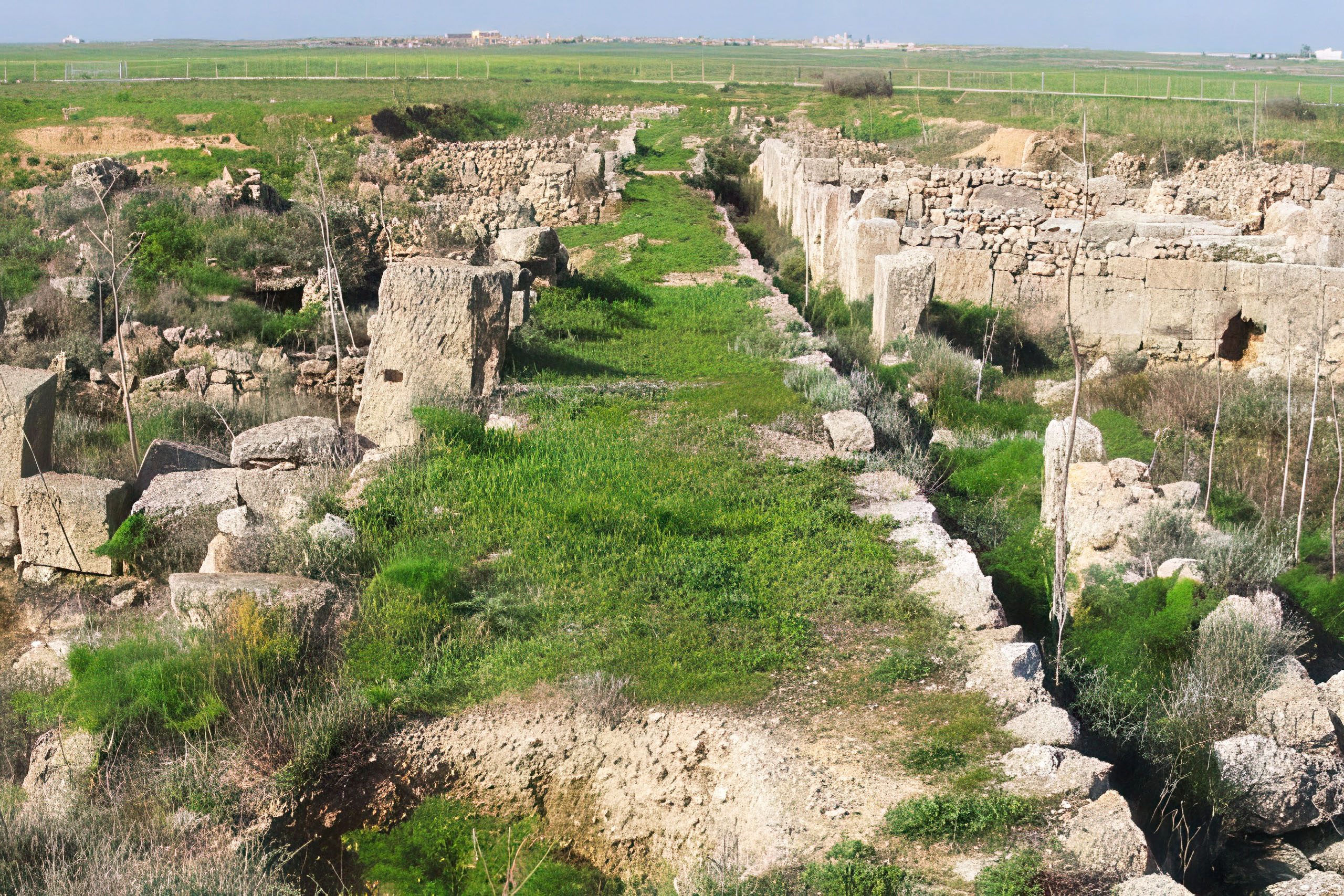
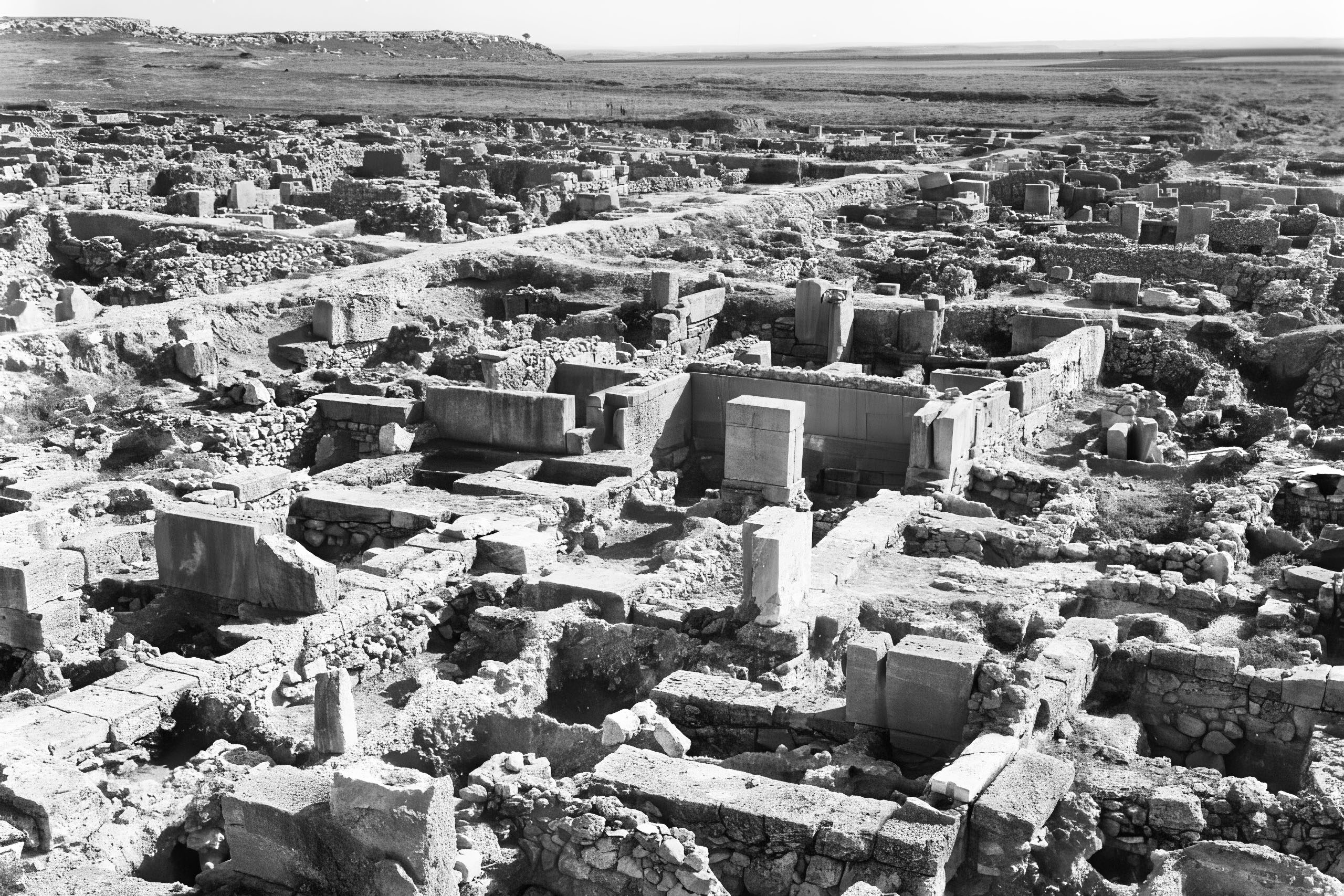
Most visitors spend between 1.5 and 2 hours at the site. The visible remains include foundations of the cyclopean walls, building foundations showing the grid plan layout, and various structural features. While less visually impressive than some archaeological sites with standing architecture, Enkomi’s importance lies in what it reveals about Bronze Age civilization.
The Legacy of Bronze Age Cyprus
Enkomi’s history illustrates fundamental aspects of Bronze Age civilization: the critical importance of metal resources and the cultural exchange that occurred in cosmopolitan trading centers. The city’s copper industry supported not just local prosperity but supplied essential materials to civilizations throughout the eastern Mediterranean.
The multicultural nature of Enkomi, evident in its Greek, Egyptian, Near Eastern, and local Cypriot influences, shows that ancient societies were not isolated but participated in extensive networks of trade, cultural exchange, and mutual influence. Understanding sites like Enkomi helps reconstruct how these networks functioned and how they shaped the development of Mediterranean civilization during the Bronze Age.