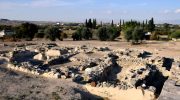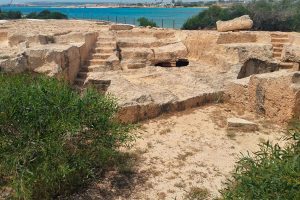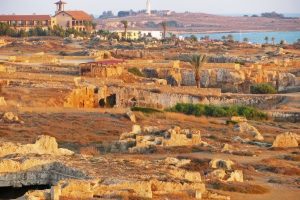
The Tombs of the Kings is a large necropolis that served the ancient city of Nea Paphos from the 3rd century BCE to the 3rd century CE. The site covers approximately 1.2 square kilometers in the northwestern part of the city, just outside the ancient fortifications. Eight major tomb complexes have been excavated, along with numerous smaller burial chambers.
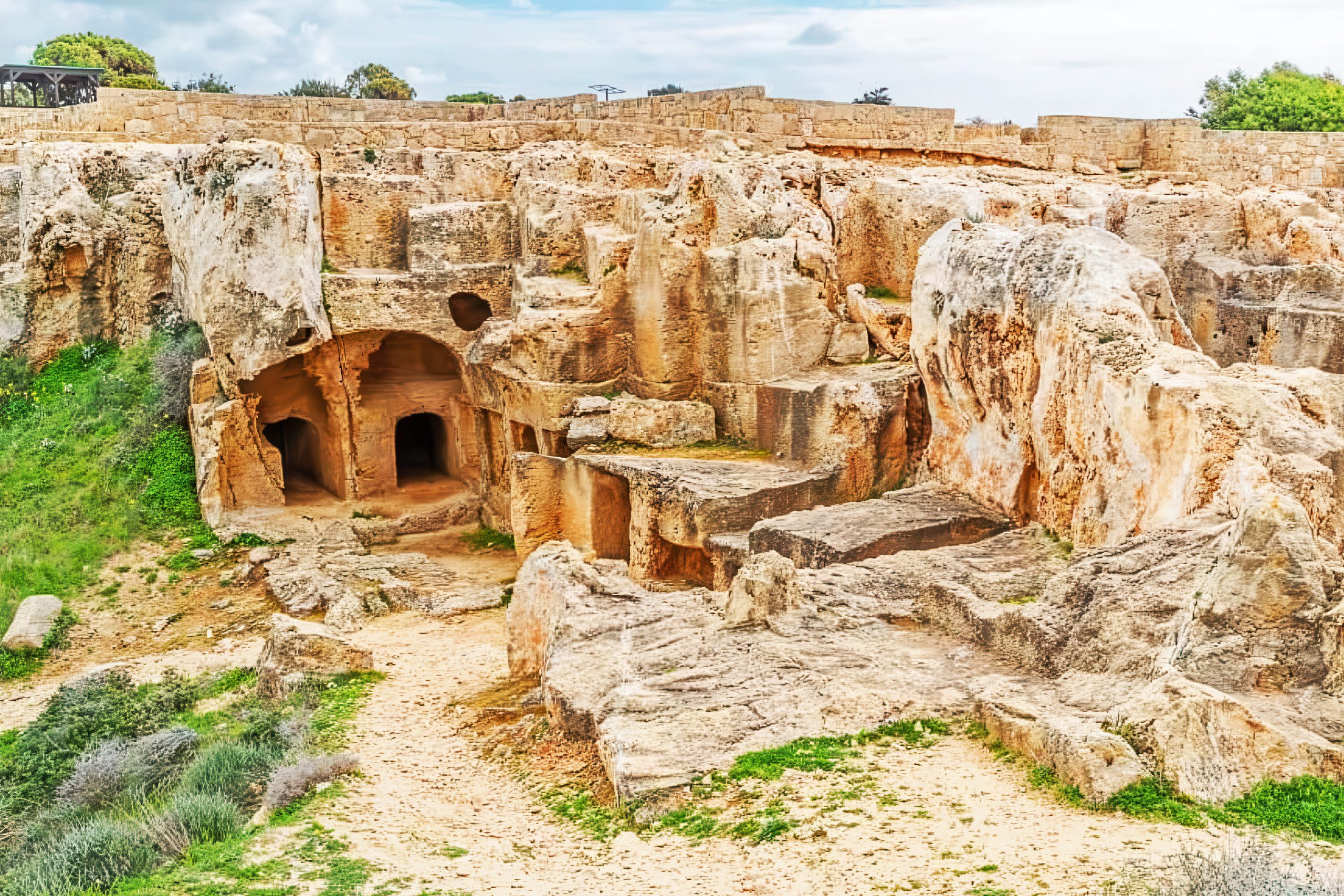
These monuments were built for Ptolemaic officials and aristocratic families who governed Cyprus during the Hellenistic period. The royal institution had been abolished in 312 BCE, so no actual kings were buried here. The name comes purely from the impressive scale and elaborate architecture of the tombs themselves. When early visitors saw these underground structures with their Doric columns and painted frescoes, they assumed only royalty could command such magnificent burial monuments.
The tombs were carved from the natural limestone bedrock using tools and techniques developed in Alexandria, Egypt. The architecture imitates the houses of the living, following an Egyptian tradition that believed the dead should reside in spaces resembling their earthly homes. This created underground courtyards, burial chambers, and ritual spaces that remain remarkably preserved today.
Historical Background
Nea Paphos, meaning “New Paphos,” was founded in the late 4th century BCE as the administrative capital of Cyprus under Ptolemaic rule. After Alexander the Great’s death in 323 BCE, his empire was divided among his generals. Cyprus fell to the Ptolemies, the dynasty that ruled Egypt from Alexandria. The island became strategically important because of its location between Egypt, the Levant, and the Aegean world.
The Ptolemies appointed a non-Cypriot strategos to govern Cyprus. This official served as the island’s governor, commander-in-chief, high priest, and admiral of the fleet. He ruled from Nea Paphos, which had an excellent harbor and direct sea access to Alexandria. These powerful administrators brought their own burial customs with them, which explains why the tombs resemble Alexandrian architectural models rather than traditional Cypriot designs.
Approximately 100 members of this ruling elite were buried in the necropolis over the centuries. These were wealthy families who controlled Cyprus’s administration, trade, and military. Their tombs demonstrate the resources available to the Ptolemaic elite and their desire to create permanent monuments that proclaimed their status even in death.
The necropolis continued to be used throughout the Roman period after Rome annexed Cyprus in 58 BCE. Some tombs were reused, with new bodies placed in chambers after earlier burials were removed. The site remained active as a burial ground until approximately the 4th century CE, when Christianity became the dominant religion and burial practices began to change.
Architecture and Design of the Major Tombs
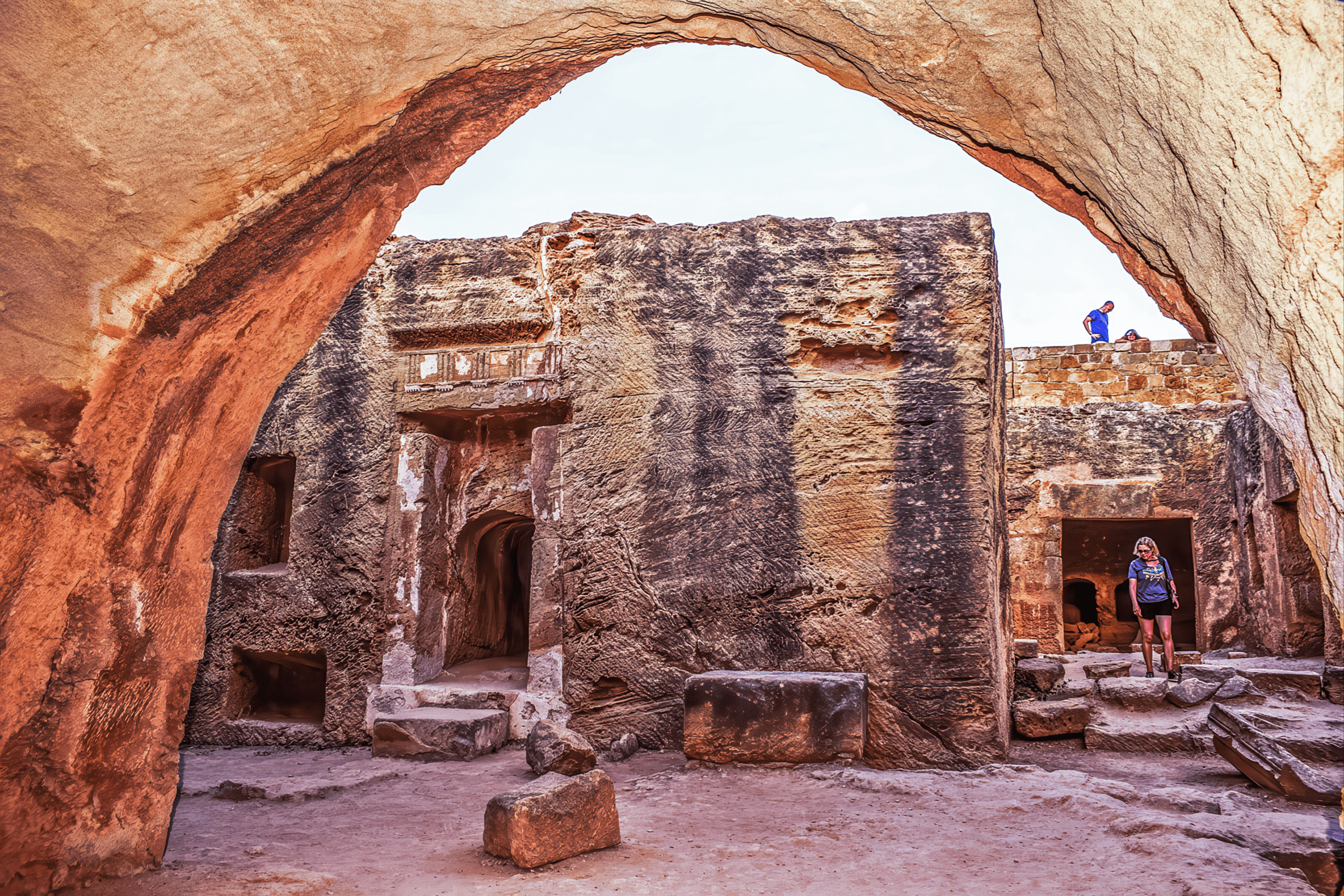
The tombs are extraordinary examples of rock-cut architecture. Each complex was carved downward and inward from the surface, creating underground chambers, courtyards, and passages. The architects designed these spaces to imitate actual houses, complete with rooms, doorways, and decorative elements.
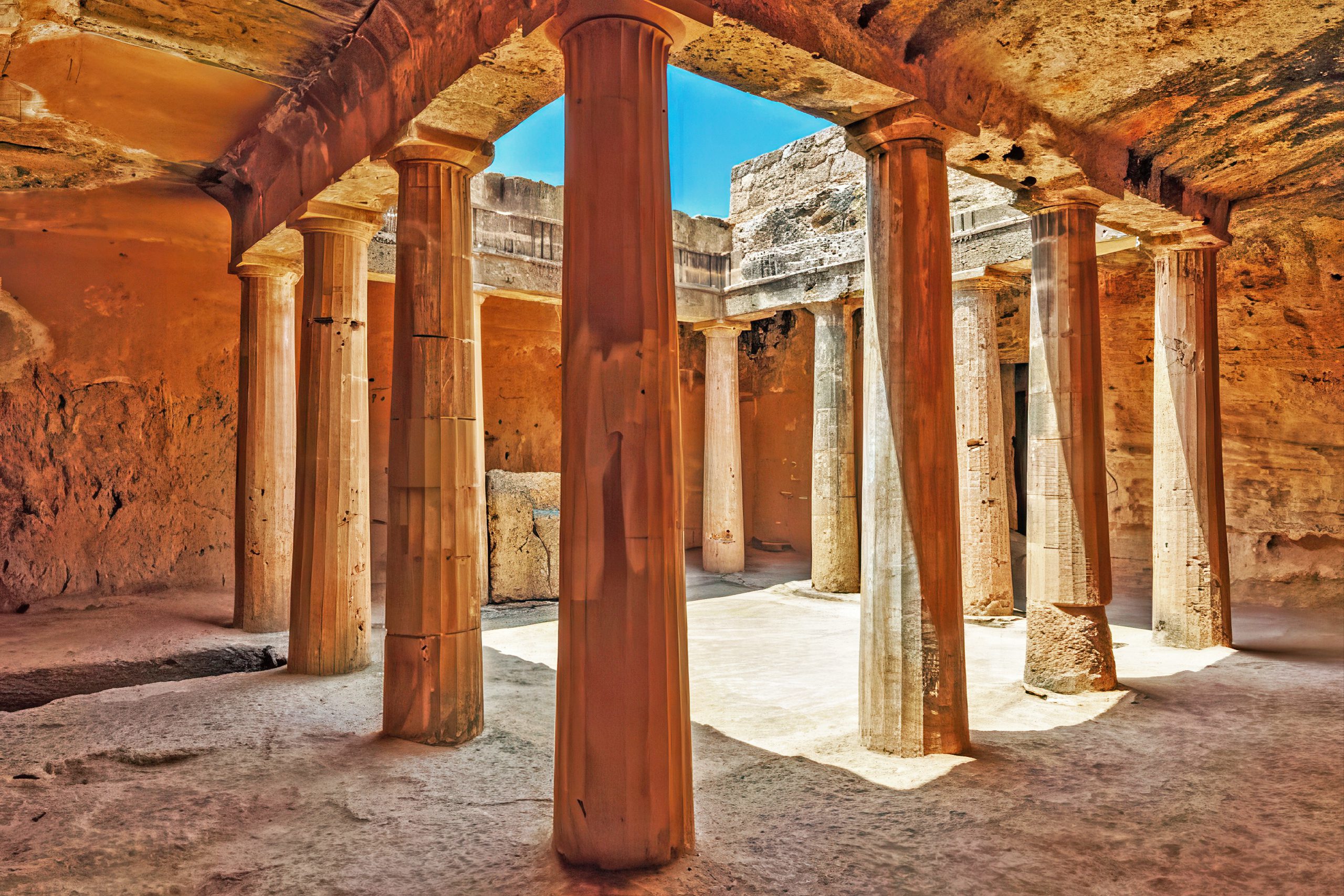
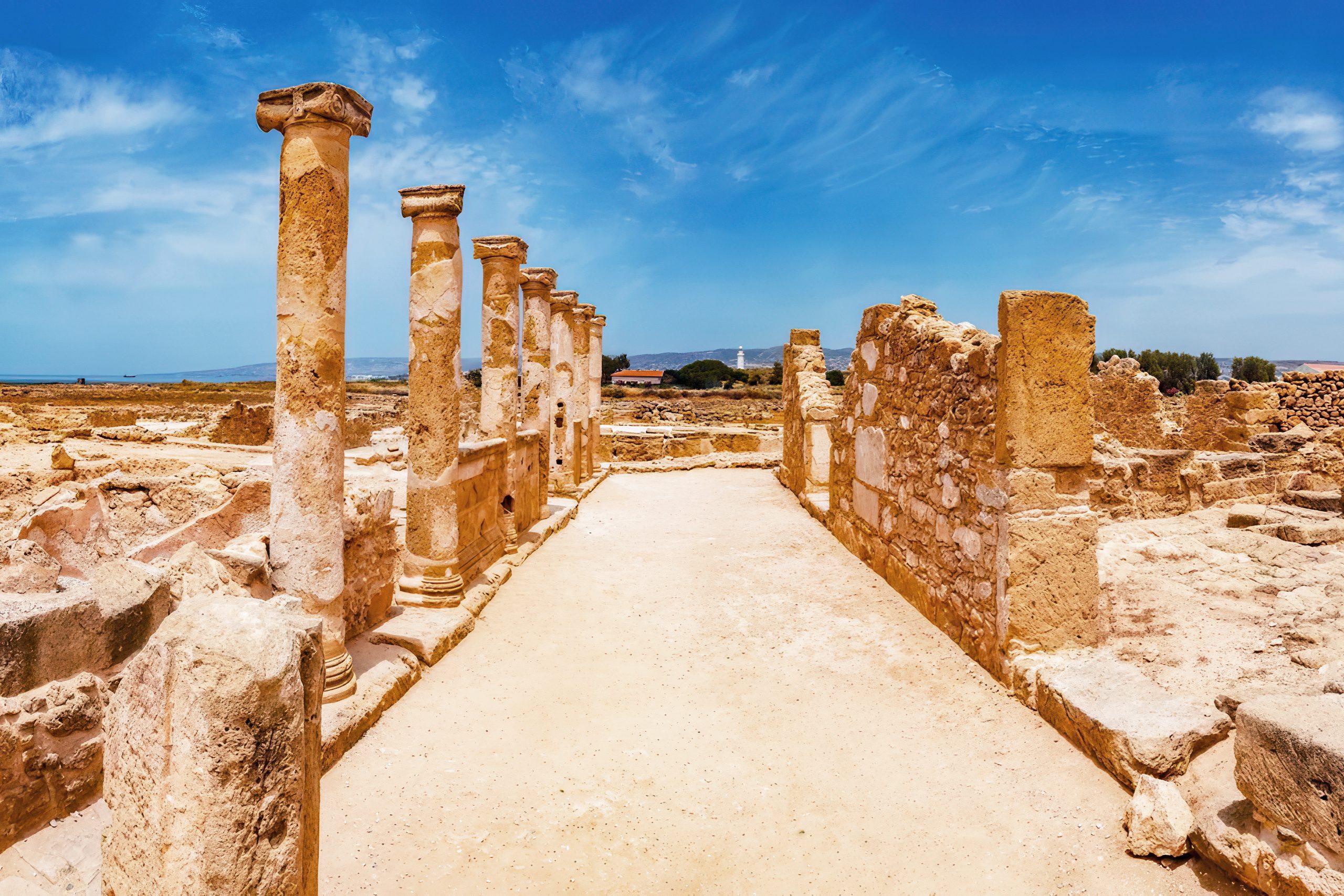
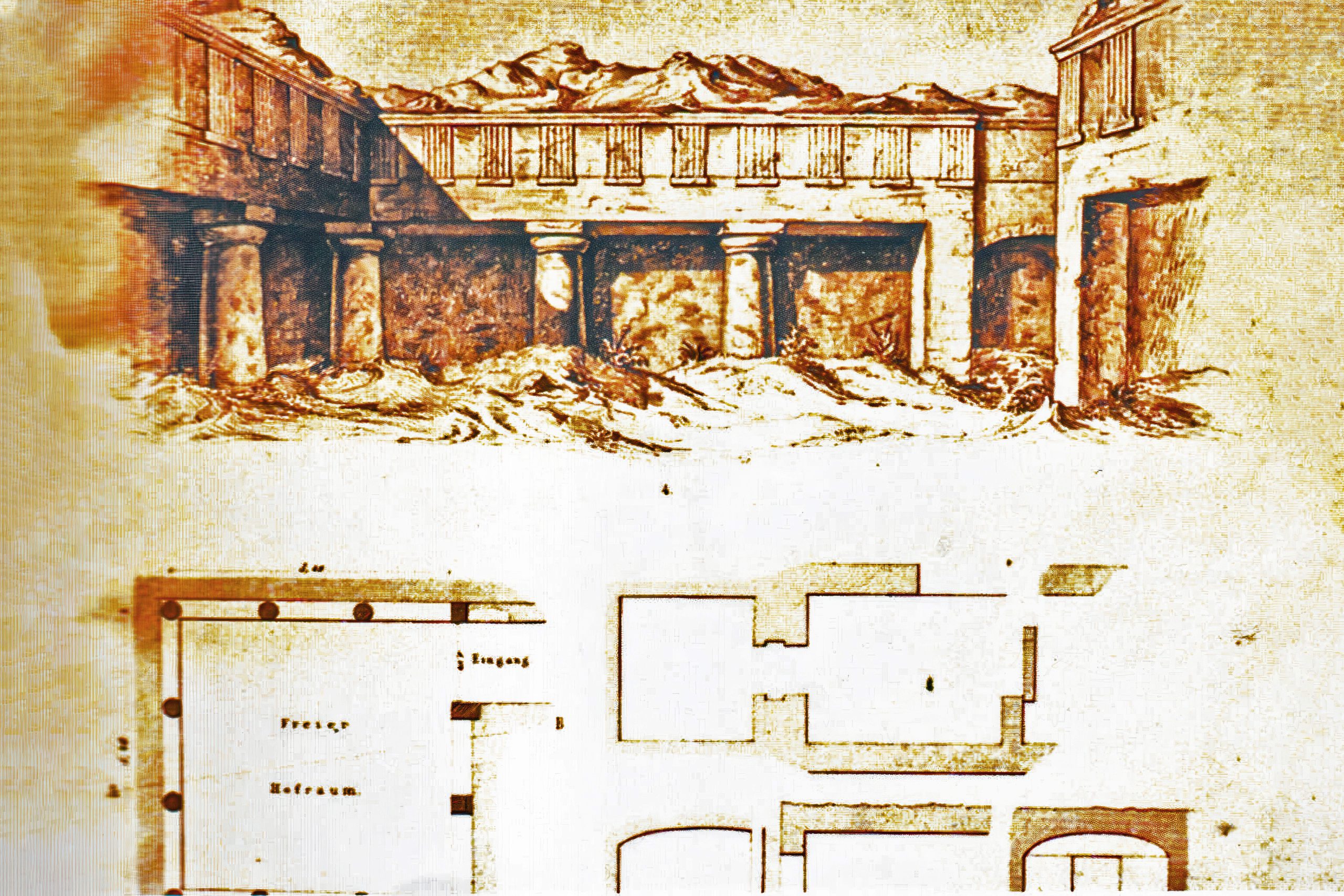
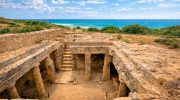
The most impressive tomb is Number 3, which features a large open-air atrium surrounded by a portico supported by Doric columns. Visitors descend a stepped pathway called a dromos to reach the courtyard level. The columns are carved from the same bedrock as the rest of the structure, each precisely shaped to match Classical Greek proportions. Above the columns, architects carved triglyphs and metopes, decorative elements typical of Doric architecture. The walls surrounding the courtyard contain multiple burial chambers where bodies were placed in niches cut into the rock.
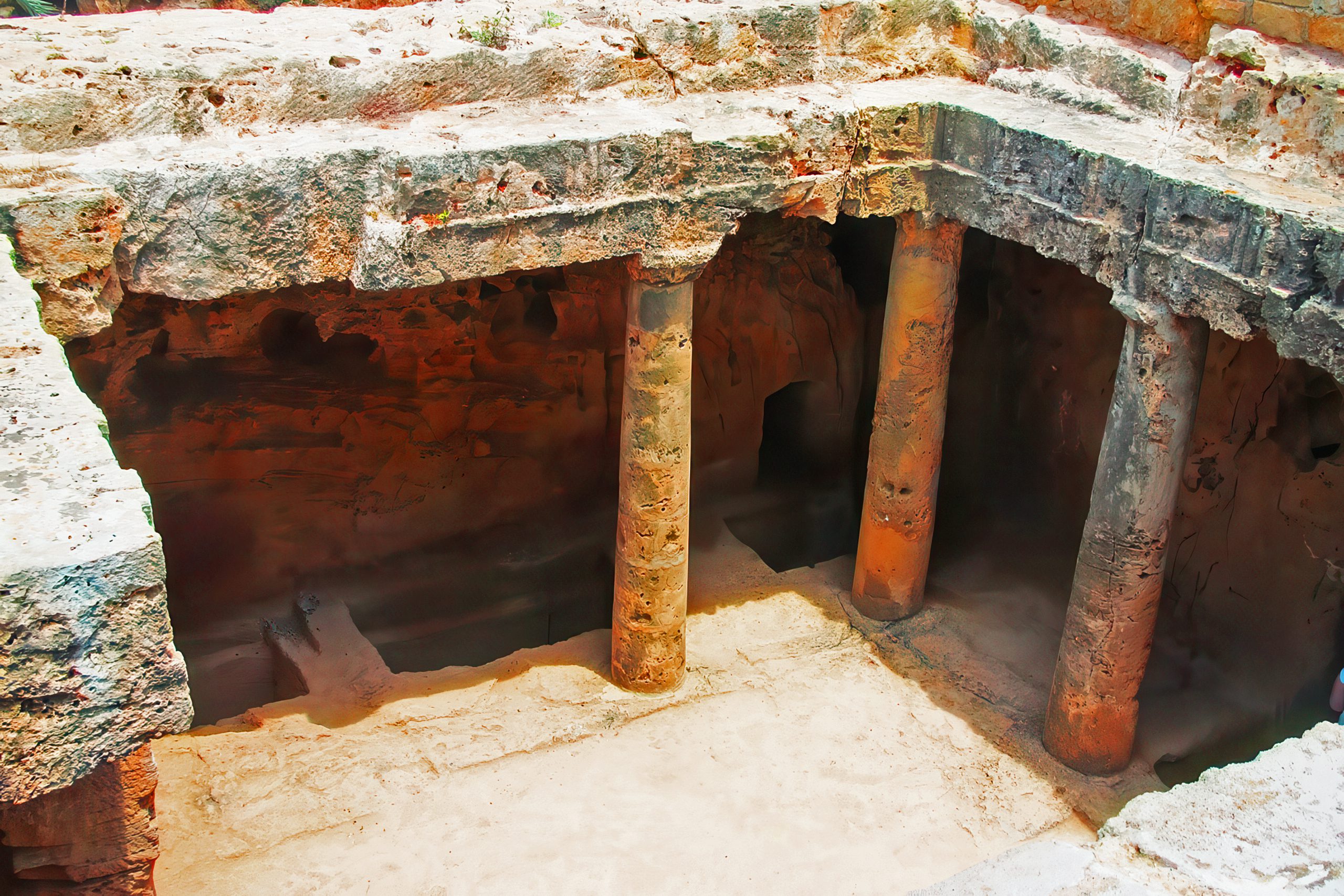
Tomb 4 is also well-preserved and shows the typical layout of elite burials. A stepped dromos leads down to an underground courtyard surrounded by burial chambers. The walls retain traces of painted frescoes that once covered the interior surfaces. These frescoes have largely disappeared due to weathering and damage, but small fragments show that the tombs were brightly decorated with geometric patterns and possibly figurative scenes.
Tomb 5 is one of the largest excavated structures, covering approximately 390 square meters and descending 5 meters below ground level. The courtyard features 12 intact Doric columns that create a peristyle arrangement. This tomb demonstrates the full development of the Alexandrian architectural style adapted to Cypriot conditions. In one corner of Tomb 5, archaeologists found evidence of a ceramic kiln that was built much later during the medieval period, when squatters occupied portions of the necropolis.
Tomb 8 stands apart from all others in design and has generated the most scholarly debate. The center of this tomb’s atrium contains a square rock with a carved chamber inside. A corridor was formed around this central feature, and burial chambers surround it. Two stone bird figures were discovered here during excavations. Some archaeologists argue these represent eagles, the royal emblem of the Ptolemaic dynasty, suggesting this tomb might hold the remains of a Ptolemaic king who died in Cyprus, possibly Ptolemy XIV, brother of Cleopatra VII. Others believe the birds are falcons representing the Egyptian god Horus. The unusual architecture and these symbolic statues indicate someone of exceptional importance was buried here.
Archaeological Discoveries and Dating Methods
Systematic excavations at the Tombs of the Kings began in 1977, conducted by the Department of Antiquities of the Republic of Cyprus. These excavations followed earlier work by various archaeologists, including Luigi Palma di Cesnola in 1870 and clearance operations in 1915-16 and 1937. The modern excavations have brought to light eight major tomb complexes and numerous smaller chambers.
Archaeological work has revealed important information about burial customs and chronology. The Paphian practice of including Rhodian amphorae among burial offerings has been particularly valuable for dating. These large ceramic jars were manufactured on the Greek island of Rhodes and exported throughout the Mediterranean. The handles of Rhodian amphorae were stamped with symbols identifying the workshop and the year of manufacture. By dating these stamps, archaeologists can establish precise chronologies for burials and, by extension, for other artifacts found in the same contexts.
Coins discovered in the tombs provide additional dating evidence. Bronze and silver coins from the Ptolemaic and Roman periods help establish when specific burials took place and when certain tombs were reused. Pottery styles also assist in dating, as ceramic forms and decorative techniques changed over time in predictable patterns.
Despite these discoveries, much information about the tombs has been lost. It is believed that the dead were buried with expensive grave goods including gold jewelry, precious ornaments, and valuable objects. However, very few such items have been recovered by official excavations. Grave robbers systematically looted the tombs over the centuries, removing portable valuables and destroying burial contexts. What remains are primarily architectural features, pottery fragments, and objects that looters considered worthless or overlooked.
The Site Today and UNESCO Recognition
In 1980, the entire town of Paphos, including the Tombs of the Kings, was designated a UNESCO World Heritage Site. This recognition acknowledges the exceptional cultural value of the archaeological remains and commits Cyprus to their preservation. The Tombs of the Kings is considered one of the most important examples of Hellenistic burial architecture in the Mediterranean region.
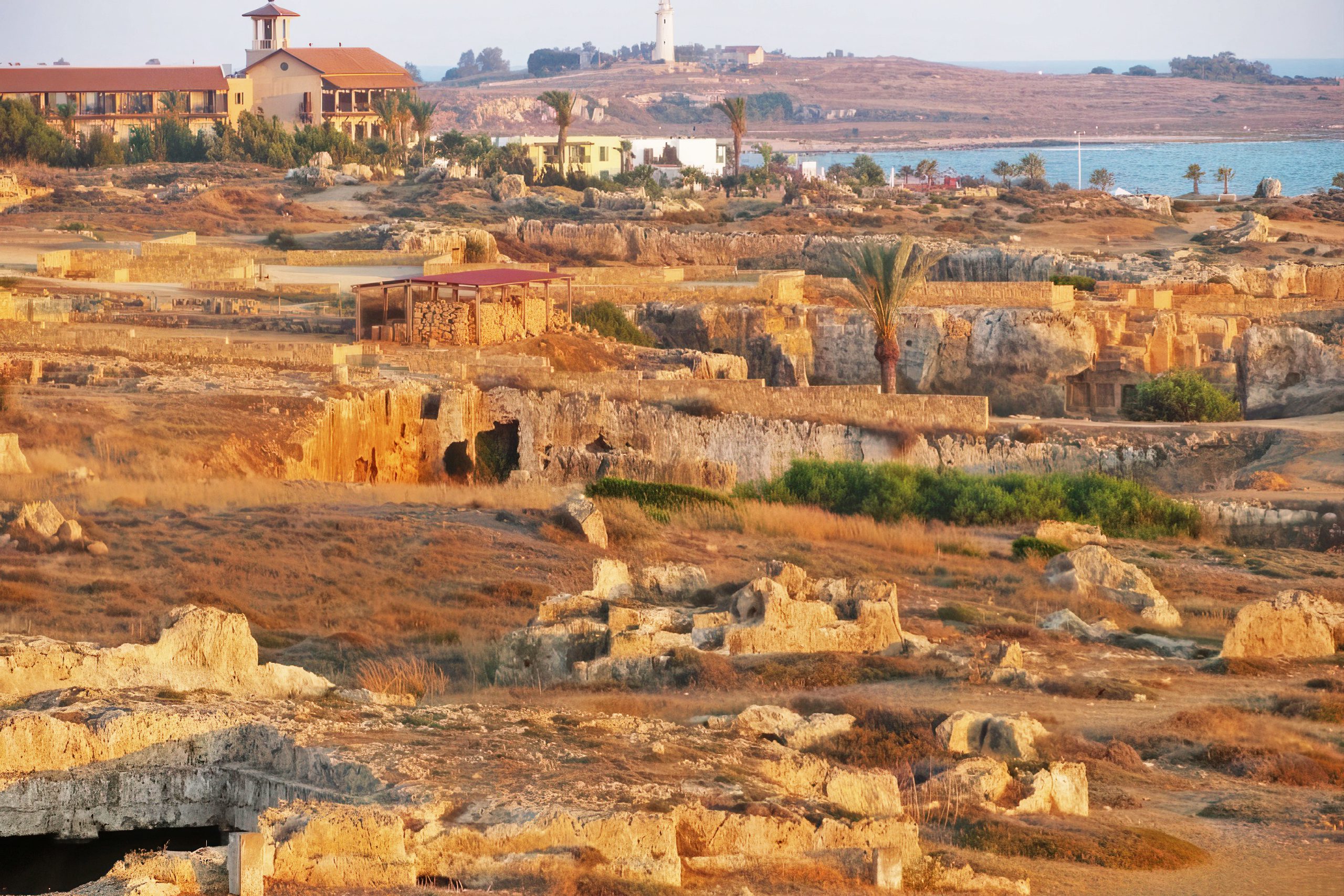
The Department of Antiquities of the Republic of Cyprus manages the site and continues archaeological research. Excavations are ongoing, with new discoveries still being made. Conservation work focuses on stabilizing the rock-cut structures, protecting remaining frescoes, and maintaining the site for public access.
The tombs attract visitors from around the world who come to experience this remarkable fusion of architecture, history, and cultural heritage. The site provides tangible evidence of how Cyprus’s elite lived and how they chose to be remembered after death. Walking through these underground chambers offers a direct connection to people who lived over 2,000 years ago.
Visiting the Tombs of the Kings
The archaeological site is located approximately 2 kilometers northwest of Paphos Harbour along Tombs of the Kings Avenue. The site is open daily throughout the year. Admission fees are modest, typically around 2.50 euros. The entrance provides access to all excavated tombs and the surrounding necropolis area.
Bus 615 runs from Paphos Harbour to Coral Bay and stops directly outside the entrance, with departures approximately every 10-15 minutes. The site can also be reached by taxi or on foot. Walking from the harbor takes about 25-30 minutes along a well-marked coastal route.
Visitors should plan to spend at least 1.5 to 2 hours exploring the tombs. The site is extensive, with tombs spread across a large area. Comfortable walking shoes are essential, as the terrain includes uneven ground, steps, and rocky surfaces. The site offers minimal shade, so sun protection, hats, and water are necessary, especially during summer months when temperatures can exceed 35 degrees Celsius.
The tombs can be entered, allowing visitors to descend into the underground chambers and experience the architecture firsthand. Information signs in English and Greek provide historical context and explain the significance of different structures. The Doric columns of Tomb 3 are particularly photogenic, and many visitors spend time in the peristyle courtyard appreciating the scale and craftsmanship of the ancient architects.
Why the Tombs of the Kings Matter
The Tombs of the Kings demonstrate that Paphos was a major center of political power during the Hellenistic and Roman periods. The resources invested in these monuments reflect the wealth and ambition of the Ptolemaic administration. These tombs were not simple graves but elaborate architectural statements designed to proclaim the status of those buried within.
The site provides crucial evidence about cultural exchange in the ancient Mediterranean. The blending of Egyptian, Greek, and local Cypriot traditions visible in the tomb architecture shows how ideas and practices moved between different regions. Cyprus served as a cultural crossroads where influences from multiple civilizations merged to create something distinctive.
For modern Cyprus, the Tombs of the Kings represent an important link to the island’s Hellenistic heritage. They stand as proof that Cyprus played a significant role in the Ptolemaic world and maintained connections with the great cultural centers of Alexandria, Athens, and other Mediterranean cities. The continued archaeological research at the site adds new knowledge about ancient Cyprus and its place in the broader historical narrative of the Mediterranean region.