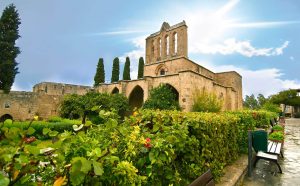
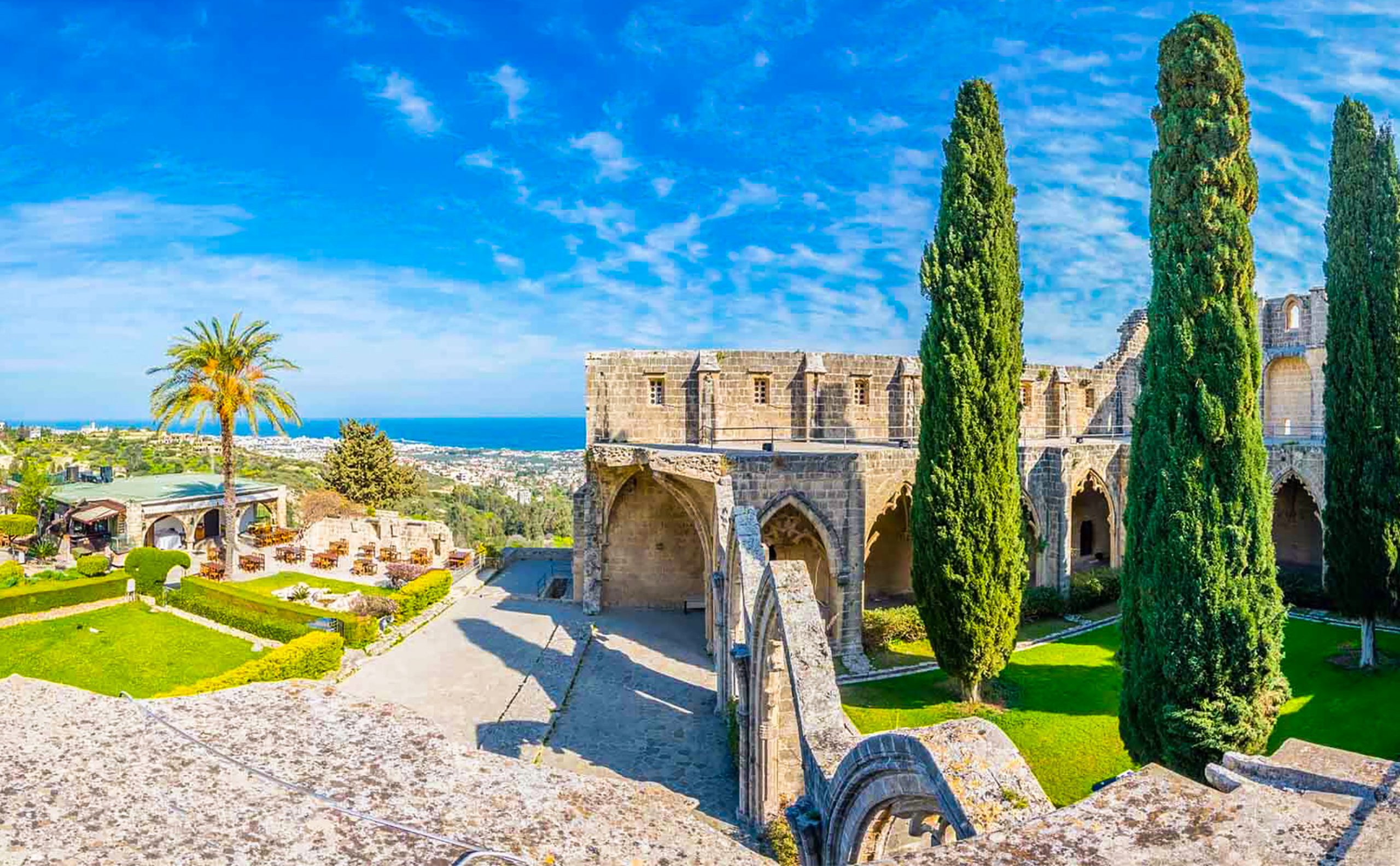
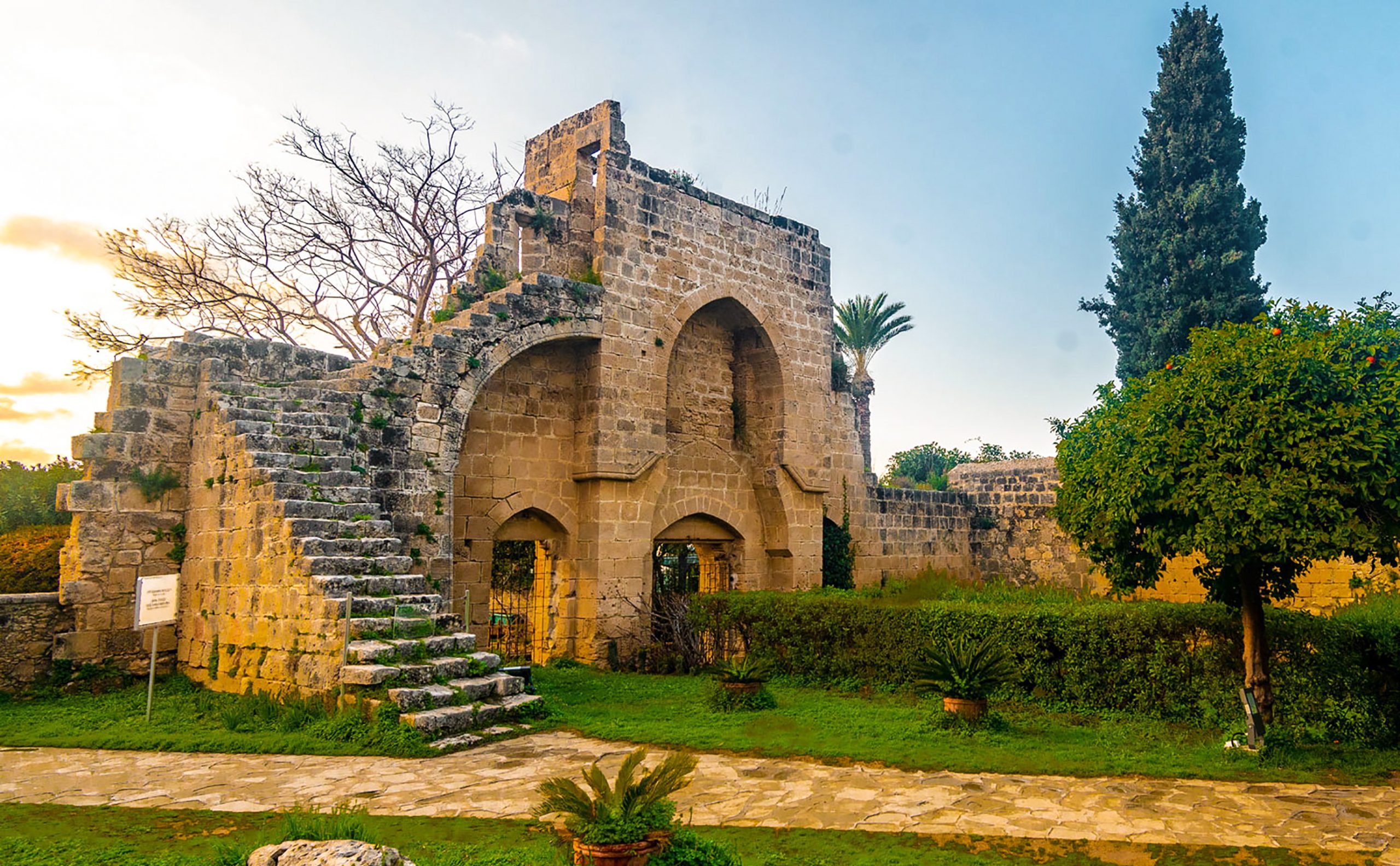
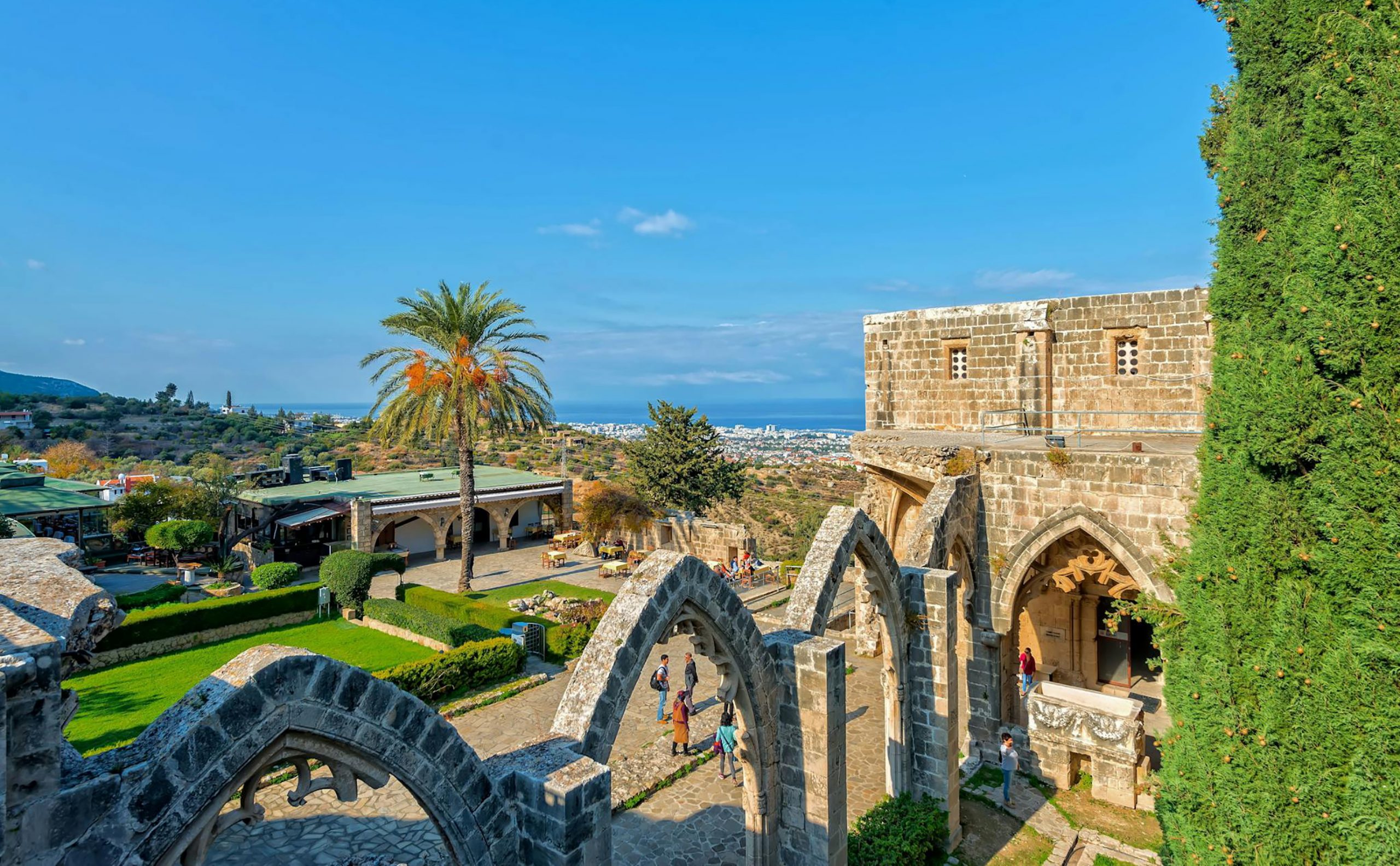
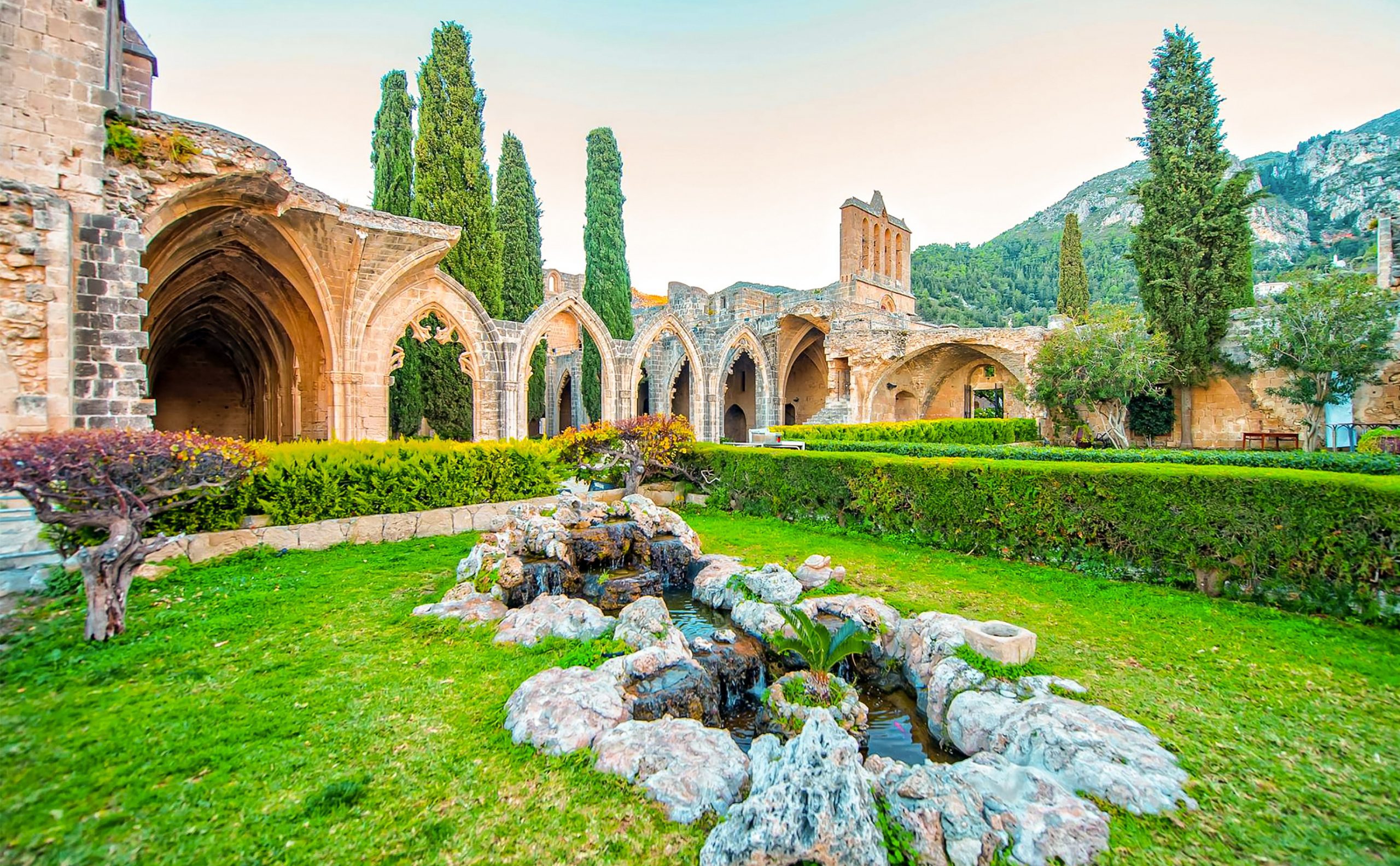
Bellapais Abbey is a 13th-century monastery ruin located in the village of Bellapais, about 5 kilometers from Kyrenia in the Turkish-occupied part of Cyprus. Built on a hillside at 220 meters above sea level, the abbey offers views across the coast to the Mediterranean Sea. This Gothic structure is considered one of the finest examples of medieval architecture in the Eastern Mediterranean and remains one of Cyprus’s most visited historical sites.
The site may have been known as Episcopia or Piscopia before the abbey was built, suggesting it served as a residence for the Bishop of Kyrenia and as a refuge during Arab raids in the 7th and 8th centuries. The elevated position and defensible location made it suitable for both religious and protective purposes during periods of coastal threats.
Historical Background
The first occupants known to settle at the site were Augustinian monks called the Canons Regular of the Holy Sepulchre, who fled Jerusalem in 1187 after the city fell to Saladin during the Crusades.
These monks had previously been custodians of the Church of the Holy Sepulchre in Jerusalem, one of Christianity’s holiest sites. King Aimery de Lusignan granted them land and founded the monastery between 1198 and 1205. The abbey was consecrated as the Abbey of St. Mary of the Mountain.
In 1206, the Premonstratensians, also known as the White Canons or Norbertines after their founder St. Norbert, took over from the Augustinians. These monks wore white habits, which gave the abbey one of its alternate names.
Documents from the 15th and 16th centuries refer to it as the White Abbey. The church within the complex is dedicated to Ayia Asprophorusa, meaning Our Lady of the White Garments.
The Origins of the Bellapais Abbey Name
The name Bellapais has been explained through several theories. The most common explanation is that the French name Abbaye de la Paix, meaning Abbey of Peace, was corrupted during the period of Italian influence into Bellapais.
This was then reinterpreted as Bella Paese, meaning Beautiful Land or Beautiful Country in Italian. The Venetians, who controlled Cyprus from 1489, shortened the name to De la Pais, which evolved into the modern form Bellapais.
Another account suggests the site was an ancient Jewish village called Mallep. However, most historians favor the French-Italian derivation as the most likely explanation for the current name.
Architectural Features
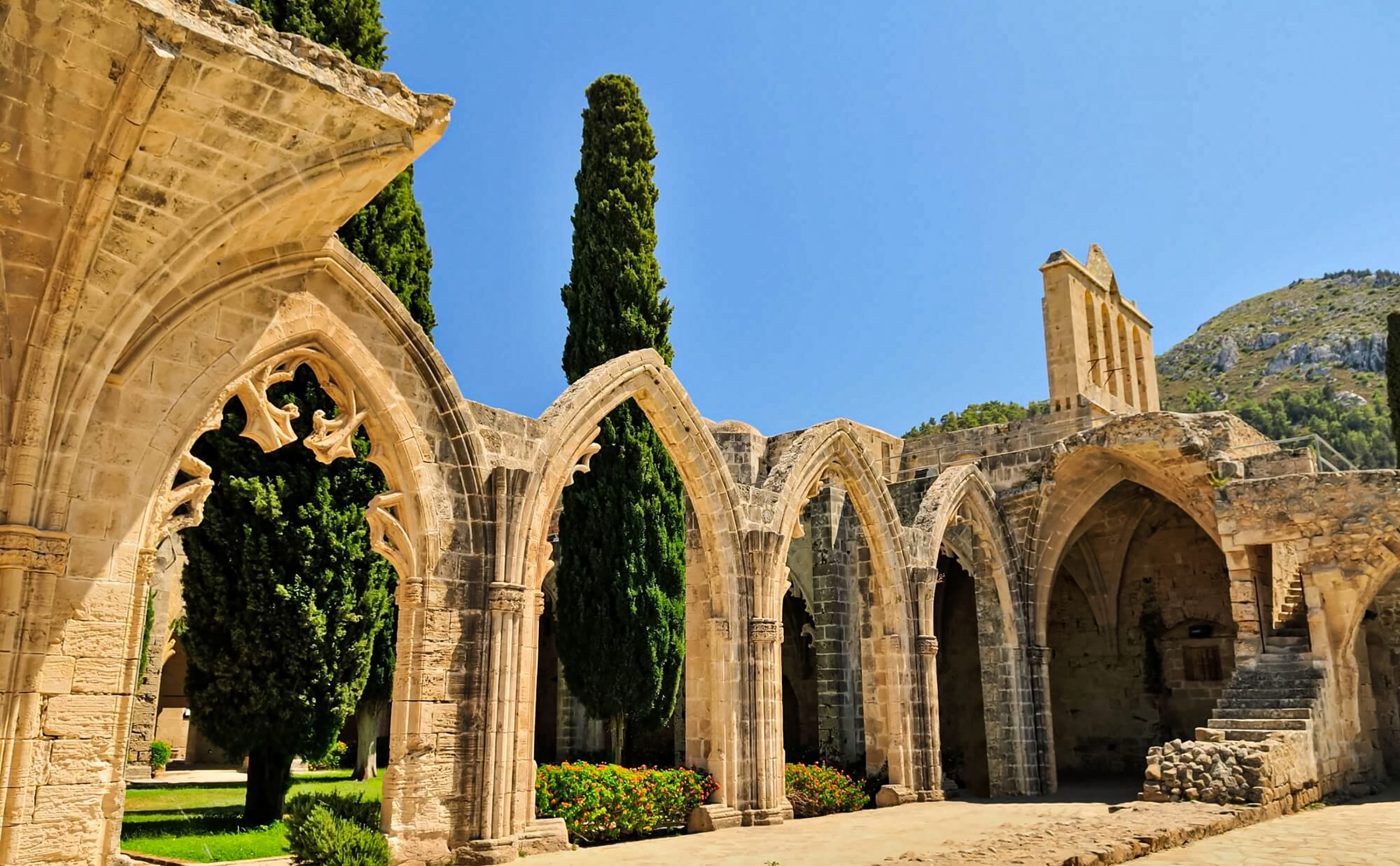
The abbey complex consists of a church, cloisters, refectory, chapter house, undercroft, and various support buildings. The main entrance is through a fortified gateway on the south side, which replaced an earlier drawbridge. A tower was added to the gatehouse in a later period. Palm trees line the approach, creating an exotic contrast with the European Gothic architecture.
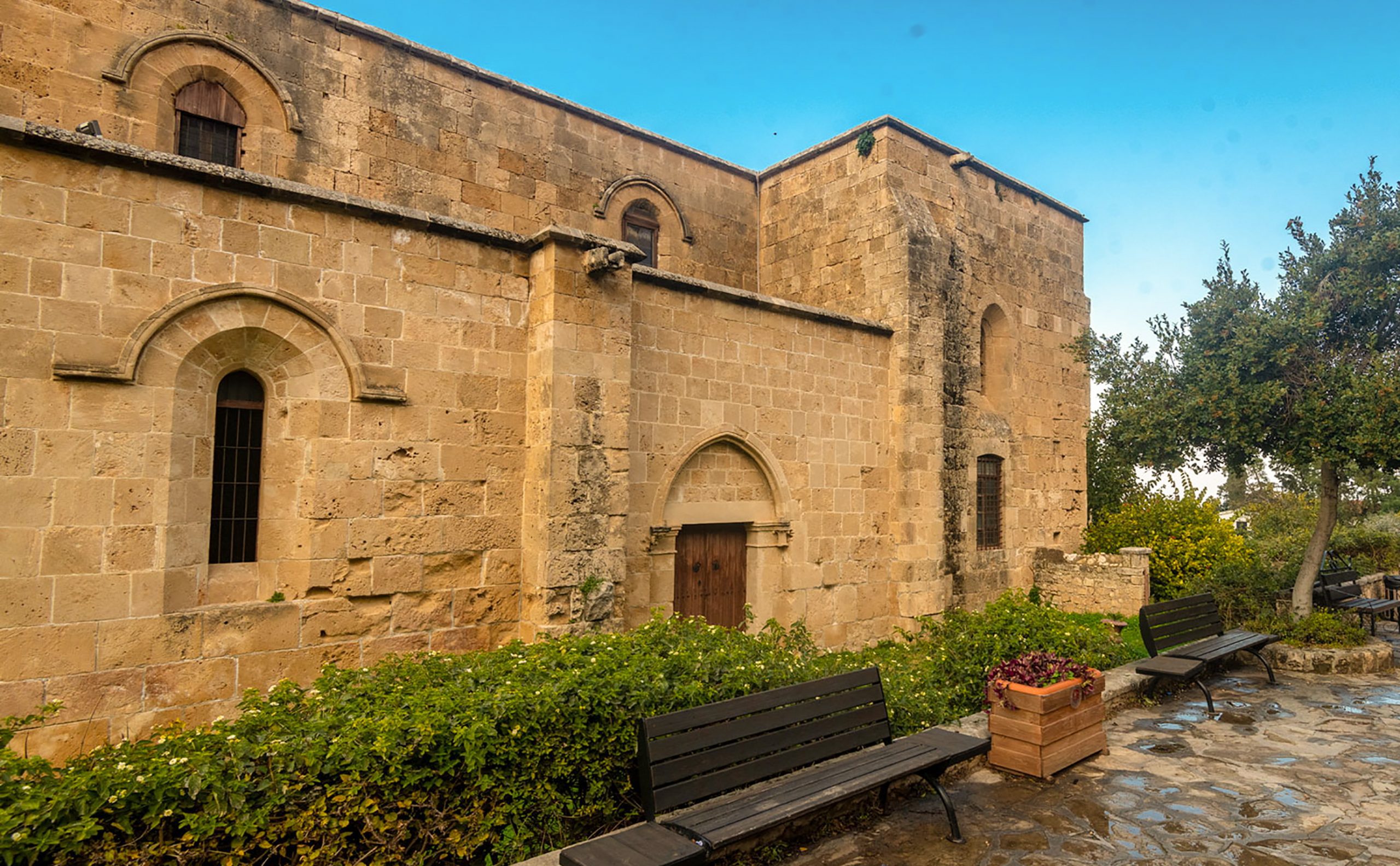
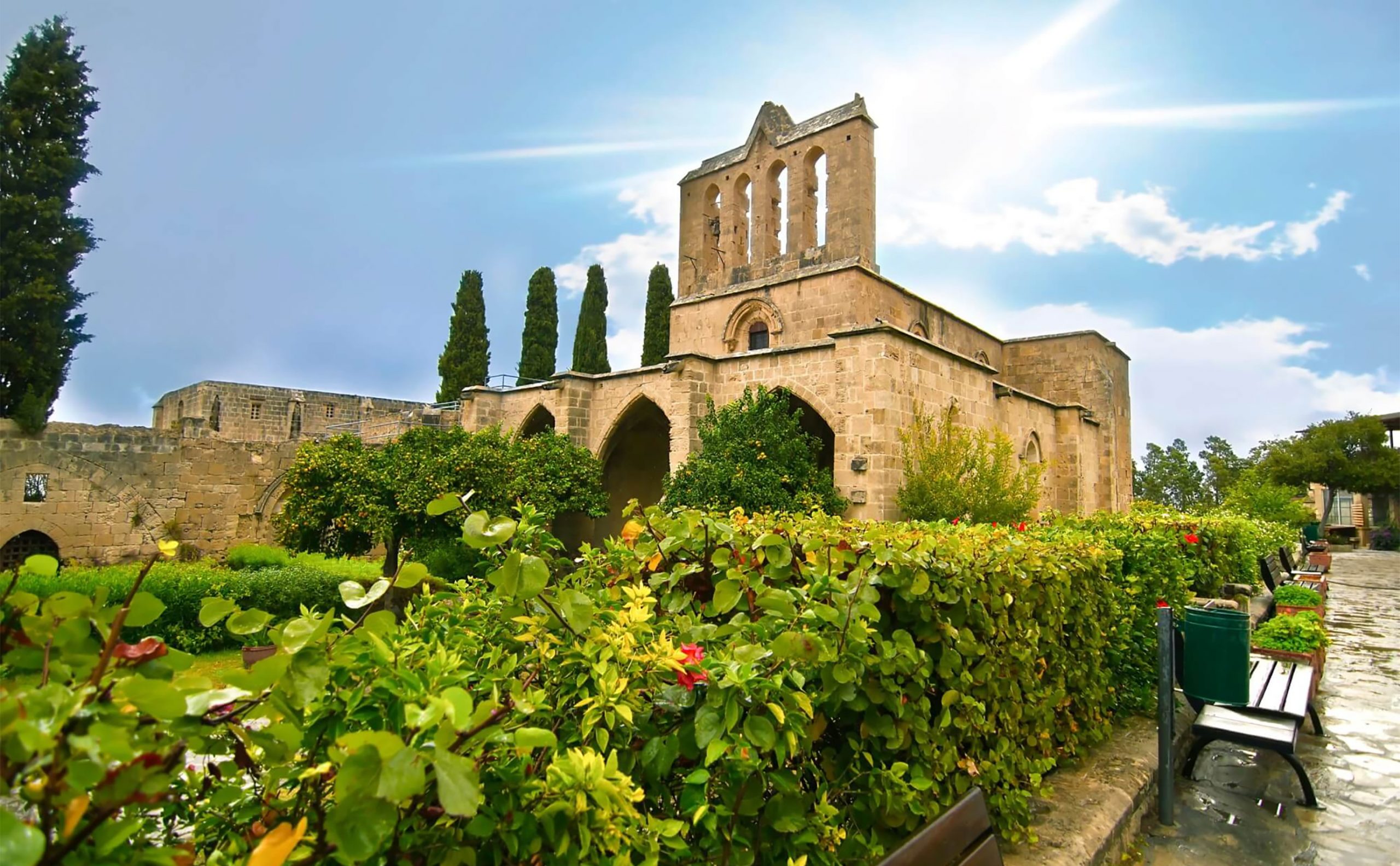
The church dates to the 13th century and is the best-preserved part of the complex. It has a flat roof with a belfry above the entrance that retains one surviving bell. Remains of 15th-century Italian murals can be seen in the entrance porch. The interior consists of a wide nave with two side aisles, a square choir, and a sacristy. Several Lusignan kings are believed to be entombed beneath the floor, though their exact locations are unknown.
Surviving decorations include an intricately carved pulpit, the bishop’s throne, and five chandeliers. The dark interior with its remaining service books and partially melted candles creates an atmospheric space that many visitors describe as solemn.
Current Status Of Bellapais Abbey
Bellapais Abbey functions as a museum, cultural venue, and tourist attraction. The site is illuminated at night, creating a dramatic appearance visible from Kyrenia. The abbey hosts restaurants and cafes within or adjacent to the complex. The Kybele Restaurant operates near the former kitchens, and other dining establishments serve visitors in the forecourt and surrounding areas.
Opening hours vary by season. In summer (roughly April to September), the abbey is open from 9:00 AM to 7:30 PM. In winter (October to March), hours are 9:00 AM to 5:00 PM. An admission fee is charged, with proceeds going toward maintenance and preservation. As of recent reports, the entrance fee is 50 Turkish lira per person, with discounts available for students and schoolchildren.
The abbey remains in relatively good condition compared to other medieval ruins in Cyprus. Ongoing preservation work continues to address weathering and visitor impact. The balance between public access and conservation is carefully managed to prevent damage while allowing people to experience this remarkable structure.
Cultural Events
The Bellapais Music Festival is the most prominent annual event, featuring classical music concerts by international and local performers. The refectory’s excellent acoustics make it an ideal concert venue. The so called International North Cyprus Music Festival, held illegally by the authorities of Turkish Cypriot administration, also includes performances at the abbey. These events attract both tourists and residents, bringing cultural activity to the historical setting.
Concerts and lectures occur throughout the year, utilizing the refectory and other spaces within the complex. The abbey is also a popular venue for weddings, with couples using the Gothic architecture and Mediterranean views as backdrops for ceremonies and photographs.
Visiting the Abbey
Bellapais is easily accessible from Kyrenia. Local buses (dolmus) depart regularly from Kyrenia bus station, with the journey taking 15 to 20 minutes. The bus fare is approximately 2 to 3 US dollars. Buses drop passengers at the center of Bellapais village, from where it is a short uphill walk of 5 to 10 minutes to the abbey entrance.
Taxis from Kyrenia city center take 10 to 15 minutes and cost around 20 to 30 US dollars for a one-way trip. The abbey grounds can be explored at a leisurely pace, with most visitors spending 1 to 2 hours examining the church, cloisters, refectory, and other structures. Information boards throughout the site provide historical context and architectural details in multiple languages. The relatively compact layout makes it easy to see all major features without excessive walking.
Village Atmosphere
Bellapais village maintains a quiet, traditional character despite tourism. Narrow cobblestone streets wind between old stone houses, some dating back several centuries. Small shops sell souvenirs, local crafts, and regional products. Several restaurants and cafes offer traditional Turkish Cypriot cuisine and refreshments.
The village preserves much of the atmosphere that Lawrence Durrell described in Bitter Lemons. The pace of life remains slow, and the mountain setting creates a cooler, more relaxed environment than the coastal areas. Evening visits are particularly pleasant, when the abbey is illuminated and temperatures drop after sunset.
The combination of the abbey ruins, mountain views, literary connections, and village charm creates a distinctive atmosphere. Unlike some tourist sites that feel commercialized, Bellapais retains authenticity while accommodating visitors.
Historical Significance
Bellapais Abbey represents an important example of Gothic architecture adapted to the Eastern Mediterranean climate and conditions. The positioning of monastic buildings on the north side of the church (contrary to typical European practice of placing them on the south) reflects the need for cooler spaces in Cyprus’s hot climate. This demonstrates how medieval builders modified standard architectural patterns to suit local requirements.
The reuse of Roman sarcophagi as lavabos and the incorporation of a Byzantine column in the chapter house show the practice of recycling earlier materials. This was common throughout the medieval Mediterranean, where builders salvaged stone, columns, and decorative elements from classical and early Christian structures.
The abbey’s decline from a wealthy religious institution to a family-run enterprise mirrors broader patterns in late medieval monasticism, where corruption and secularization undermined original religious purposes. The contrast between the abbey’s golden age under the Lusignans and its later deterioration provides insight into changing social and religious conditions across several centuries.
Preservation Challenges
The abbey faces ongoing preservation challenges common to medieval ruins in Mediterranean climates. Weather exposure, particularly rain and wind, gradually erodes the limestone. The high number of visitors creates wear on floors and stairs. The proximity to the sea introduces salt-laden air that accelerates stone deterioration.
The 1959 restoration of the Byzantine chapel and the 1912 repairs by George Jeffery represent major conservation efforts. More recent work has focused on stabilizing walls, protecting vulnerable surfaces, and managing visitor flow to prevent damage. The bullet holes from British Army target practice serve as permanent reminders of past misuse, but they are now considered part of the abbey’s historical record rather than damage requiring repair.
The location in the Turkish-occupied part of Cyprus affects access to international funding and conservation expertise. However, local authorities recognize the abbey’s importance for tourism and have invested in its maintenance. The entrance fees contribute to ongoing preservation costs.
Why Bellapais Matters
Bellapais Abbey stands as one of the finest examples of Gothic architecture in the Eastern Mediterranean. Its combination of impressive scale, well-preserved features, and dramatic setting makes it exceptional among medieval ruins in the region. The abbey demonstrates how Western European architectural styles were transported to Cyprus during the Crusader period and adapted to local conditions.
The abbey connects multiple layers of Cypriot history, from its foundation by refugees from Jerusalem through its role in Lusignan royal life to its transformation into an Orthodox church under Ottoman rule. The literary association with Lawrence Durrell adds a modern cultural dimension that attracts readers and writers interested in 20th-century Mediterranean literature.