Cyprus maintains an extensive environmental legal system designed to protect natural resources, manage pollution, preserve biodiversity, and promote sustainable development. As a European Union member since 2004, the island has harmonized national laws with over 300 EU environmental directives and regulations.

The framework addresses air and water quality, waste management, nature conservation, climate change, and industrial emissions. This legal infrastructure aims to balance economic development with environmental protection across both public and private sectors.
- The Evolution of Cyprus Environmental Law
- Core Environmental Protection Laws
- Notable Environmental Standards and Requirements
- Interesting Facts About Environmental Compliance
- Current Enforcement and Implementation Challenges
- Modern Environmental Governance Tools
- Experiencing Environmental Law in Practice
- Why Environmental Legislation Matters for Cyprus
The Evolution of Cyprus Environmental Law
Environmental governance in Cyprus formally began in 1986 with the establishment of the Environmental Service, which evolved into the Department of Environment in 2010. The first Director of the Service was appointed in 1992. Early environmental measures focused primarily on basic pollution control and resource management.

The country ratified several key international agreements in the early 2000s. Cyprus ratified the UN Convention on Wetlands of International Importance in March 2001. In October 2001, the nation ratified the Barcelona Convention Protocol concerning Specially Protected Areas and Biological Diversity in the Mediterranean, plus the Protocol for the Protection of the Mediterranean Sea against Pollution from Land-Based Sources. Cyprus joined the Washington Convention on International Trade in Endangered Species in 2000 and ratified the Convention on Desertification along with the Convention on the Protection of Migratory Species of Wild Animals.
EU accession in 2004 transformed environmental legislation completely. Cyprus had to transpose approximately 200 EU legal instruments covering water and air pollution, waste management, chemicals, biotechnology, radiation protection, and nature conservation. The Ministry of Agriculture, Natural Resources, and Environment became the competent authority for implementing governmental policy on environmental matters.
Core Environmental Protection Laws
The Environment Protection Law serves as the cornerstone legislation. This overarching framework establishes standards for environmental management, pollution control, and protection of air, water, and soil. It provides legal grounds for assessing, managing, and enforcing environmental standards across all sectors.
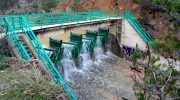
Water protection receives particular emphasis given Cyprus’s semi-arid climate and scarcity concerns. The Water Pollution Control Law establishes quality standards for surface water and groundwater, sets pollutant thresholds, regulates wastewater treatment and disposal from industries and sewage systems, and prevents harmful substance discharge into water bodies. A monitoring program implements the Water Framework Directive, with full compliance achieved for bathing water standards.

The Waste Management Law of 2011 regulates disposal and treatment of solid and hazardous waste. This legislation incorporates the Extended Producer Responsibility principle, requiring manufacturers and importers to finance infrastructure enabling consumers to return products when they become waste. The law applies to packaging, electrical and electronic equipment, batteries, accumulators, and tires. Penalties for violations can reach three years imprisonment, €500,000 fines, or both, with stricter penalties for legal entities than individuals.

The Packaging and Packaging Waste Law adopted in 2002 requires producers who package or import packaged products exceeding two tons per material annually to meet European quantitative targets. Green Dot Cyprus operates the primary collective compliance system. By 2025, Cyprus must prepare for reuse or recycle 55 percent of municipal waste and 65 percent of packaging waste.
Air quality legislation harmonizes EU directives through the Ambient Air Quality Laws of 2010 to 2020. The Department of Labour Inspection implements monitoring and management, defining limit values and target values for atmospheric pollutants. Cyprus constitutes one air quality zone for all pollutants.
Notable Environmental Standards and Requirements
The Environmental Impact Assessment process, mandated by EU Directive 2011/92/EU, requires rigorous assessment of potential environmental impacts before any development project begins. Projects must evaluate effects on natural habitats and biodiversity.

The National Forests Law regulates management of forests covering approximately 20 percent of Cyprus land area. It protects forested areas from illegal logging and development, promotes reforestation to increase forest cover and combat soil erosion, and establishes guidelines for sustainable forest management.

The Nature Conservation Laws align with the EU Habitats Directive and Birds Directive. These mandate specific protective measures for endangered species including plants, animals, and birds. They regulate hunting and wildlife collection to prevent overexploitation, safeguard biodiversity in marine and terrestrial ecosystems, and address habitat destruction and pollution threats.
Climate change legislation implements EU directives, sets national greenhouse gas emission reduction targets, outlines adaptation measures like improved water management and coastal protection, establishes mitigation strategies to reduce carbon emissions from transport and industry, and provides frameworks for national action plans aligned with EU climate targets.
The Environmental Liability Law ensures businesses take responsibility for environmental damage from their activities. Operators face liability for pollution, biodiversity loss, and failures to comply with environmental standards.
Interesting Facts About Environmental Compliance
Cyprus incorporated the Aarhus Convention through Law 33(III)/2003, granting citizens three fundamental rights: access to environmental information held by public authorities, participation in environmental decisions, and access to justice to challenge violations. Public authorities must maintain publicly accessible lists, registers, and files, with progressive use of electronic databases.
The Department of Environment operates four specialized divisions: Waste Management and Climate Change, Pollution Regulation, Horizontal Matters and Goods, and Nature Protection and Land Use.
Cyprus participates in the European Environment Agency and designated 69 Natura 2000 sites covering 37.4 percent of land area under EU conservation regulations.
The legislation recognizes specific circumstances where authorities may refuse environmental information disclosure, including protecting rare species locations, maintaining confidentiality in ongoing legal proceedings, safeguarding national defense and public security, and preserving intellectual property rights.
Packaging waste generation in Cyprus reached 99 kilograms per capita in 2022, significantly below the EU average. The country has maintained roughly the same generation level since 2010.
Current Enforcement and Implementation Challenges
Despite comprehensive legislation, enforcement faces several obstacles. Diminished personnel numbers limit monitoring and inspection capacity. Judicial delays slow prosecution of violations. Fragmentation of responsibilities across multiple departments creates coordination difficulties. The Department of Town Planning and Housing, Public Health Service, State General Laboratory, and semi-governmental authorities all share environmental competences.

Public awareness remains insufficient in some areas. Limited resources at the local authority level hinder implementation of waste collection, disposal, and recycling programs. Testing bodies for noise regulations require approval. The supervision system for waste shipments and permit systems for end-of-life vehicles need strengthened implementation.
Administrative capacity requires continuous enhancement to guarantee environmental protection. Integration of sustainable development principles into all sectoral policies remains an ongoing process. Mining sector regulations balance economic development with environmental sustainability through detailed licensing processes and strict environmental safeguards.
Modern Environmental Governance Tools
The Law on Public Access to Information Related to the Environment of 2004 harmonized Cyprus legislation with EU Directive 2003/4/EC. Citizens can submit requests for environmental information at minimal cost through digital platforms. Recent Court of Justice of the European Union judgments clarified that access rights do not depend on justification of interest but may require limited identification to prevent administrative abuse through mass anonymous requests.
Strategic Environmental Assessment legislation underwent transposition to evaluate environmental impacts of plans and programs during their preparation stage. The process ensures environmental considerations integrate into policy formulation before implementation.
Industrial emissions regulations control pollution from manufacturing, energy production, and transport sectors. Facilities with wastewater must obtain licenses to protect soil and water resources. An integrated network of waste management installations promotes separation at source.
Experiencing Environmental Law in Practice
Citizens encounter environmental legislation through numerous daily interactions. Building permits require environmental impact assessments. Businesses must comply with waste separation requirements and producer responsibility obligations. Public consultations on development projects provide participation opportunities as guaranteed under the Aarhus Convention.
The Department of Environment conducts regular inspections to control implementation. It responds to complaints and grievances, investigates urgent issues, and enforces penalties for violations. Environmental NGOs play active roles in monitoring compliance and advocating for stricter enforcement.
Academic institutions and law firms provide specialized environmental law services. They advise on existing legislation, assist clients with developmental program enrollment, and support compliance with national and international standards.
Why Environmental Legislation Matters for Cyprus
Strong environmental laws protect the island’s limited natural resources from overexploitation and degradation. Water scarcity makes protection of aquatic ecosystems essential for human survival and economic activity. Biodiversity conservation preserves unique species found nowhere else while maintaining ecosystem services.
Tourism, a cornerstone of the Cypriot economy, depends on clean beaches, clear waters, and attractive landscapes. Environmental regulations ensure these assets remain viable for future generations. Agricultural productivity relies on soil quality and water availability that legislation protects.
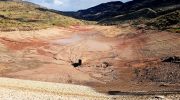
Climate change poses existential threats to small island nations. Legal frameworks provide tools to reduce emissions, adapt infrastructure, and build resilience against rising temperatures and changing precipitation patterns.
Public health depends directly on air quality, water purity, and proper waste management. Environmental laws establish standards that prevent pollution-related diseases and protect vulnerable populations. The integration of EU environmental standards elevated Cyprus from basic pollution control to comprehensive environmental governance, demonstrating how international cooperation strengthens national capacity and creates accountability mechanisms that benefit both people and nature.