Funerary reliefs in ancient Cyprus were public status tools, not private grief markers, and Marion and Tamassos developed two distinct ways of making rank visible in stone. Marion favoured framed relief panels and inscriptions that anchored individuals within families, while Tamassos emphasised tomb architecture, guardians, and scale to project continuity and authority.
This article compares how imagery, materials, and writing systems shaped remembrance in both kingdoms, and what those choices still reveal about power and belief on the island.
Two Kingdoms, Two Worlds
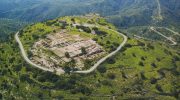
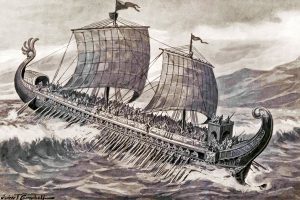
Although Marion and Tamassos existed on the same island, their landscapes shaped very different societies. Marion, located on the northwestern coast near modern Polis Chrysochous, was outward-facing. Its wealth depended on maritime trade and access to copper exported through nearby harbours. This openness brought strong Aegean influence, visible in imported pottery and artistic styles.
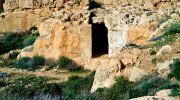
Tamassos, by contrast, was inland. Situated close to the copper-rich foothills of the Troodos Mountains, it drew power from controlling resources rather than sea routes. Its rulers operated within Near Eastern political networks, and that reality shaped how authority and status were presented in death.
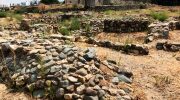
These different foundations mattered. They influenced not just economics, but how memory itself was constructed in stone.
Cemeteries Built to Be Seen
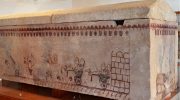
The cemeteries of Marion were expansive and varied. Tombs stretched across eastern and western necropoleis, with grave markers ranging from simple stelae to carved relief panels and sculpted sarcophagi. These markers stood as individual statements, often accompanied by inscriptions that named the dead and located them within family networks.
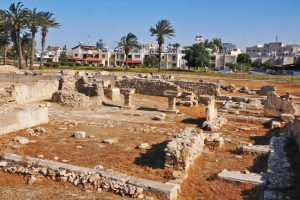
At Tamassos, funerary display worked differently. Reliefs were integrated into tomb architecture itself. Monumental facades, carved pilasters, and guardian figures transformed burial spaces into permanent assertions of authority. Rather than focusing on individual biography, these tombs projected continuity, stability, and royal power.
In both cases, burial grounds were not hidden spaces. They were visible expressions of social order.
From Guardians to Life Stories
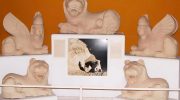
In the earliest phases of funerary carving, both Marion and Tamassos relied on symbolic guardianship rather than narrative detail. Lions, sphinxes, and composite creatures appeared at tomb entrances, drawing on Egyptian and Near Eastern traditions in which death was understood as a vulnerable passage requiring protection. These figures did not describe the deceased. They defended them.
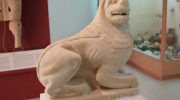
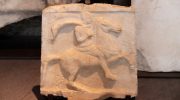
By the 5th century BC, this approach began to change, particularly at Marion. Reliefs increasingly shifted toward scenes drawn from lived experience. Banquets suggested abundance and social belonging. Warriors embodied civic duty and masculine virtue. Family groups projected continuity across generations. Rather than shielding the dead from the unknown, these images presented a carefully constructed vision of life extended beyond the grave.
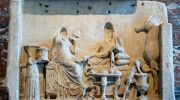
Tamassos adopted narrative imagery more cautiously. When figures appeared, they were absorbed into architectural schemes that emphasised scale, symmetry, and permanence. The tomb itself remained the dominant message. Individual stories were present, but always secondary to the assertion of enduring authority.
Marble as a Status Signal
The materials chosen for funerary reliefs carried meaning long before any image was carved. Local limestone dominated across Cyprus, valued for its workability and visual presence. Its softness allowed deep carving and bold forms that could be read from a distance, making it ideal for public display.
Marion stands apart for its occasional use of imported marble during the Classical period. Marble was not only costly but logistically complex to acquire, and its appearance in funerary contexts functioned as a statement in itself. The stone signalled access to trade networks, wealth, and cultural affiliation with the Aegean world before a single figure was carved.
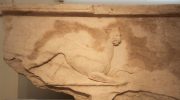
Workshop traditions reinforced these distinctions. At Tamassos, stone carving echoed the forms of elite wooden architecture, translating earlier prestige materials into permanent stone. At Marion, sculptors focused on framed reliefs, proportioned figures, and facial detail, adapting Attic artistic conventions to local expectations. In both regions, craftsmanship operated as a visible language of rank.
Reading the Visual Codes of Death
Funerary reliefs followed established visual hierarchies that would have been immediately understood by contemporary viewers. Male figures appeared as banqueters or warriors, their posture and attributes reinforcing ideals of citizenship, protection, and authority. Female figures were most often shown seated, accompanied by attendants, jewellery, or birds associated with fertility and domestic continuity.
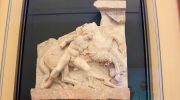
Scale communicated power as clearly as subject matter. Principal figures dominated relief panels, while servants and children were rendered smaller, reinforcing social order through proportion. Even restraint functioned as a signal. Plain stelae without decoration marked the boundaries of status just as clearly as elaborate carvings proclaimed elite identity.
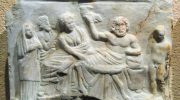
These reliefs were not portraits in the modern sense. They were recognisable types, designed to be read socially rather than individually.
Syllabary Names at Marion
Inscriptions added precision to this visual language, particularly in Marion, where reliefs were frequently inscribed using the Cypriot syllabary. This writing system, closely tied to local dialects, appeared most consistently in funerary contexts rather than civic monuments. Death, it seems, was the space where linguistic tradition endured longest.
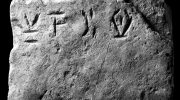
Names, patronymics, and places of origin anchored individuals within family and community memory. Over time, alphabetic Greek replaced the syllabary, reflecting Cyprus’s growing integration into the Hellenistic world. Even so, funerary inscriptions remained conservative, preserving older forms long after they disappeared from public life.
Power Beyond Burial
Funerary reliefs did not simply mark where a body lay. They negotiated status long after death. Size, imagery, material, and placement combined to position the deceased within the social landscape of the living.
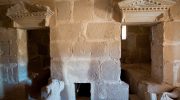
At Marion, this negotiation unfolded through narrative and individuality. At Tamassos, it was expressed through monumentality and architectural dominance. Different strategies, shared purpose. Memory was not left to chance. It was carved, structured, and displayed.
What These Stones Speak about
Today, the funerary reliefs of Marion and Tamassos are scattered across museums in Cyprus and beyond, removed from their original cemeteries but not from their meaning. They continue to reveal a society engaged with the wider Mediterranean world while remaining selective in what it absorbed.
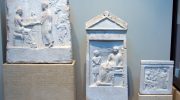
More than artistic objects, these reliefs are deliberate statements about life, hierarchy, and belief. Through them, ancient Cypriots shaped how they would be seen, remembered, and protected. The stones do not merely record the dead. They preserve the values of the living who carved them.