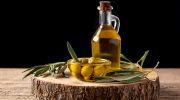
The olive harvest in Cyprus represents a tradition stretching back over 6,000 years, connecting modern Cypriots to their ancient agricultural roots. This annual event occurs from October through January across approximately 400 villages where olive trees flourish in the island’s Mediterranean climate. The harvest combines practical necessity with cultural ritual, bringing together families and communities to collect olives that will become food and oil for the coming year
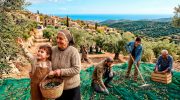
Beyond its agricultural function, the olive harvest holds deep spiritual significance in Orthodox Christian life, with olive oil playing essential roles in church sacraments and folk beliefs. The tradition preserves ancient techniques while adapting to modern equipment, creating a bridge between Cyprus’s past and present. Each harvest season renews the bond between Cypriots and their land through shared labor, traditional foods, and religious customs that have defined island life for millennia.
Historical Background
Archaeological evidence confirms olive cultivation in Cyprus dates to approximately 4000 BC, making the island one of the world’s oldest olive-producing regions. The earliest olive presses discovered on Cyprus come from the 12th to 6th centuries BC, consisting of stone millstones turned by donkeys. These ancient tools crushed olives between stone plates, extracting oil that was stored in clay vessels. The technology changed little over millennia, with variations of the same basic pressing method used into the 20th century.
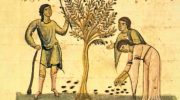
Ancient Cypriots exported olive oil throughout the Mediterranean world. Archaeologists have found remnants of Cypriot oil containers in Egypt, the Middle East, Greece, and Turkey, proving the island’s role as a major oil supplier. Cyprus’s position as a transportation hub for Mediterranean sailors facilitated this trade alongside pottery and copper exports. The economic importance of olive oil in ancient Cyprus paralleled its use in daily life, religious rituals, medicine, and cosmetics.
During the Roman period, olive cultivation expanded across the island. Byzantine rule from 330 to 1191 AD saw continued development of olive agriculture as the Orthodox Church incorporated olive oil into Christian sacraments. The transition from pagan to Christian civilization preserved the olive’s sacred status while changing its religious context from Dionysian festivals to Orthodox liturgy.
From Tree to Mill and the First Oil
After collection, olives sometimes lay exposed in sunlight for several days before pressing, a practice that affects oil flavor and quality. Families transport harvested olives to local mills, either small private enterprises serving village farmers or larger factories with extensive plantations. The transition from harvest field to mill marks a crucial period where timing and care determine the final product’s characteristics.
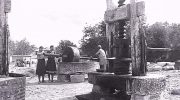
At traditional mills still operating in remote villages during the late 20th century, the process preserved Bronze Age techniques. Olives were poured into circular stone troughs where heavy limestone millstones, turned by human or animal power, crushed the fruit. The grinding broke olive skins and pits, releasing oily substances that pooled in the trough. The resulting paste was then pressed to extract pure oil, with multiple pressings yielding oils of varying quality.
Modern mills use automated systems with temperature control and centrifugal separation, producing cleaner oil more efficiently. However, the experience of watching first oil emerge remains meaningful. Families wait at mills to witness golden-green oil flowing from machines, a moment described as almost magical. Mill owners traditionally offer kapires, toasted bread dipped in fresh olive oil with salt and lemon, accompanied by tsakkistes olives and zivania, Cypriot grape spirit, or wine. This ritual transforms industrial process into communal feast.
Olive Oil in Orthodox Christian Sacraments
Olive oil holds central importance in Orthodox Christian worship, used in multiple sacraments that mark crucial life transitions. In baptism, infants receive anointing with consecrated oil called myron or chrism, a mixture of olive oil and aromatic essences. This anointing signifies the Holy Spirit’s seal upon the baptized person, incorporating them into the church community. The oil’s purity symbolizes the spiritual cleansing that accompanies baptism’s water immersion.
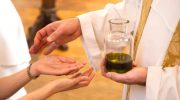
The sacrament of Euchelaion, anointing of the sick, employs pure olive oil to bring healing grace. Priests visit sick or dying Orthodox Cypriots to perform this anointing, offering spiritual comfort and divine intervention for physical ailments. Beyond formal sacraments, olive oil burns constantly in lamps before icons in churches, at family iconostases in homes, and on graves in cemeteries. The continuous flame represents eternal prayer and the presence of divine light.
The Orthodox Church recognizes olive trees and olive oil as inherently blessed, connecting earthly agricultural products to heavenly grace. Cypriots traditionally keep small bottles of church-blessed olive oil at home for protection and healing. This sanctified oil treats minor ailments, wards off evil influences, and serves in folk rituals addressing spiritual concerns. The religious significance elevates olive harvest beyond mere agriculture into an activity touched by divine blessing.
The Symbol of Peace and Cypriot Identity
The olive branch appears on the Republic of Cyprus flag, where two olive branches encircle the island’s copper-colored outline, symbolizing the nation’s hope for peace and reconciliation. This iconography connects to ancient traditions where olive branches represented peace across Mediterranean cultures. The phrase offering an olive branch, meaning proposing peace with an adversary, remains common in Cypriot speech. Noah’s dove carrying an olive branch after the biblical flood established the symbol’s meaning as divine mercy and renewed covenant between humans and God.
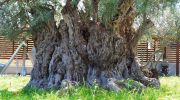
Cyprus’s Forestry Department has identified 115 individual trees and 27 tree groves as Monuments of Nature, protected for their historical and cultural significance. Notable ancient olive trees include an 800-year-old specimen in Kyperounta village standing five meters tall with a trunk perimeter of 8.10 meters, another 800-year-old tree in Lefkara, a 700-year-old giant in Agglisides measuring six meters tall with 10.35 meter circumference, and a 700-year-old tree in Avdimou. These living monuments connect modern Cypriots to medieval ancestors who planted them during Frankish or Lusignan rule.
The variety called Franco-Olives was introduced and spread during Frankish rule from the 12th to 15th centuries, demonstrating how cultural exchange shaped Cypriot agriculture. These centuries-old trees produce fruit and oil to this day, their survival through wars, occupations, and political upheavals mirroring Cypriot resilience. Local legend claims those who eat olives from these ancient trees receive their endurance and longevity, a belief supported by Cyprus’s life expectancy exceeding European averages.
Traditional Foods Celebrating the Harvest
The harvest season brings specific foods that celebrate olive bounty. Tsakkistes olives, made by cracking green olives and marinating them in salt brine with lemon juice, coriander, and garlic, represent one of Cyprus’s most beloved dishes. The preparation requires timing the harvest precisely when olives have reached proper size but remain green and firm. Fresh olive oil drizzled over traditional bread, accompanied by village cheese and fresh vegetables, forms a simple meal that showcases oil’s flavor.

Elioti, olive bread, incorporates whole olives into dough, creating savory bread traditionally baked in outdoor ovens. This bread sustained agricultural workers during long harvest days. The combination of carbohydrates from flour and fats from olives provided necessary calories for physical labor. Modern bakeries continue producing elioti, maintaining the tradition while serving contemporary consumers seeking authentic Cypriot flavors.
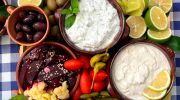
Olive oil features prominently in Cypriot mezze, the array of small dishes served at tavernas. Koupes, bulgur wheat shells filled with minced meat and fried in olive oil, demonstrate the oil’s cooking versatility. Louvi me lahana combines black-eyed beans with greens, olive oil, and lemon in a simple vegetarian dish. Kolokasi, taro root stewed in tomato sauce enriched with olive oil, represents traditional Cypriot comfort food. These dishes connect dining tables to olive groves through direct use of locally produced oil.
Preserving Tradition in Modern Cyprus
The olive harvest survives as living tradition because it fulfills multiple functions simultaneously. Economically, it provides income for rural families and supplies essential dietary staples. Socially, it creates occasions for family reunification and community bonding in an era of urban migration and diaspora. Culturally, it maintains knowledge of agricultural techniques and strengthens Cypriot identity rooted in Mediterranean agricultural civilization. Spiritually, it connects Orthodox believers to church sacraments and folk traditions that give meaning to material existence.
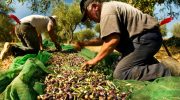
Young Cypriots increasingly recognize the value of agricultural heritage that previous generations took for granted. The organic food movement, slow food philosophy, and agricultural tourism have created new appreciation for traditional farming practices. Families who abandoned villages for urban employment now return for harvests, teaching children about olive cultivation and family history. These connections prevent complete rupture between urban modernity and rural tradition.
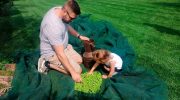
The olive tree itself, capable of living 2,500 years and producing fruit for centuries, embodies continuity that resonates with Cypriots’ experience of maintaining cultural identity through successive foreign occupations. Each harvest season renews the cycle that has sustained the island since the Bronze Age, providing tangible connection to ancestors who harvested these same groves. The olive harvest remains not merely an agricultural activity but a ritual affirming Cypriot belonging to their land and their faith.