Fusion of Eastern and Western Symbolic Systems in Cypriot art stands out in the ancient world for its masterful blending of Near Eastern grandeur, Aegean elegance, and broader Mediterranean motifs, resulting in a uniquely hybrid visual language.
Rather than direct imitation, Cypriot artisans integrated these influences to create fresh expressions that reflected trade, migration, and cultural intersections. This approach produced artworks that appear both familiar and original, providing insight into how an island positioned at the fringes of empires became a hub for creative synthesis.
A Canvas of Cultural Crossroads
Cypriot art embodies the island’s role as a bridge between continents, where symbols from diverse traditions merged into cohesive forms. Pottery adorned with mythical beasts and sculptures combining human and animal elements illustrate narratives of sailors, traders, and settlers exchanging ideas across seas. This synthesis arose from Cyprus’s involvement in extensive trade networks, where motifs representing power, fertility, and divinity were reinterpreted to form a distinctly local style. The result is a visual dialogue between worlds, characterized by vitality and innovation.
Tracing the Threads of Influence
The fusion began in the Bronze Age around 3000 BC, as early Cypriot artists incorporated elements from neighboring regions. The island’s copper mines attracted interactions with Anatolia, the Levant, and the Aegean, leading to prehistoric figurines that combined Near Eastern curves with local abstraction. Exaggerated hips symbolizing abundance echoed Mesopotamian mother goddesses, yet were simplified to align with Cypriot preferences.
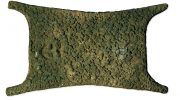
In the Late Bronze Age, from approximately 1650 to 1050 BC, Mycenaean Greeks introduced pottery featuring warriors and chariots. Cypriot adaptations fused these with Levantine motifs, such as Syrian sphinxes or Egyptian lotus patterns, producing vases where Aegean octopuses appeared alongside Eastern palm trees. The Uluburun shipwreck off Turkey, containing Cypriot goods from around 1300 BC, includes oxhide-shaped ingots – a local innovation – alongside Canaanite jars and Aegean swords, evidencing this exchange.
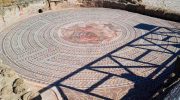
The Iron Age after 1050 BC deepened the blend, with Phoenician traders contributing alphabetic scripts and intricate ivories, while Greek colonizers added heroic myths. Persian rule from 525 BC introduced Eastern imperial symbols like winged lions, combined with Western realism in sculptures. Roman influence from 58 BC continued the pattern, as mosaics in Paphos villas integrated Pompeian styles with Cypriot elements. Throughout invasions by Assyrians, Persians, and Ptolemies, Cypriot art adapted, serving as a record of enduring cultural resilience.
Blends That Tell a Story
Cypriot art’s appeal lies in its harmonious hybrid symbols. The “Horned God” bronze from Enkomi, dated to around 1200 BC, depicts a figure on an ingot with Near Eastern bull horns, Aegean armor, and a Cypriot skirt. This creates a novel emblem of power, merging Levantine fertility deities with Mycenaean warriors to signify local kingship linked to copper resources.
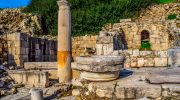
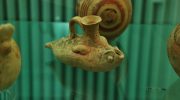
Pottery exemplifies this further. Iron Age bichrome ware employs red-and-black designs where Eastern geometric bands encircle Aegean birds or ships, yielding contrasting patterns. Egyptian scarab amulets for rebirth received Cypriot engravings on the reverse, fusing Nile mysticism with island craftsmanship. Architecture participated as well, with temples like Amathus incorporating Greek columns alongside Phoenician sphinx capitals, transforming structures into embodiments of East-West symbolism.
This selective creativity drew from imported goods – Syrian ivory carvings, Egyptian faience beads, Cretan goldwork – and reshaped them. Mesopotamian tree of life motifs evolved into Cypriot vines encircling Greek-style figures. The outcome is a layered visual language, where a single artifact conveys narratives from multiple cultures.
Little-Known Gems That Surprise
Cypriot art contains intriguing hybrids. The “Ingot God” statuettes from the 12th century BC portray a warrior-deity on an oxhide-shaped copper ingot, with an Aegean helmet and Levantine priestly stance, elevating a trade object to divine status.
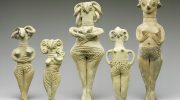
The “Bird Lady” terracottas from the Archaic period around 600 BC feature female forms with bird faces, combining Egyptian Hathor associations with Aegean Minoan bird motifs, possibly depicting Aphrodite’s familiars, sometimes holding local fruits rather than lotuses.
Cypriot innovation in bichrome pottery painting, using iron-red and manganese-black slips from 1050 BC, merged Near Eastern color symbolism (red for life, black for death) with Greek narratives, later influencing Phoenician wares that reached Carthage. Roman mosaics in Paphos depicting Dionysus with Eastern tigers inspired Renaissance works, such as Titian’s Bacchus scenes.
Peeling Back the Symbolic Layers
Deeper examination shows symbols carrying cross-cultural depth. Fertility motifs fused Near Eastern trees of life with Aegean spirals in seals, forming emblems of renewal. Protection symbols combined Levantine apotropaic eyes with Greek gorgons, yielding amulets for sailors and farmers.
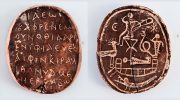
Trade facilitated this, as evidenced by the Uluburun wreck’s Cypriot pottery with blended designs. Socially, elite thrones incorporated Egyptian lotus feet and Aegean griffins to assert cosmopolitan authority. Religiously, Aphrodite’s cult integrated Levantine doves and Minoan shell births, crafting a Cypriot deity. Metallurgy contributed, with copper figurines merging Hittite poses and Mycenaean anatomy to symbolize mineral wealth as divine endowment. This integration aided navigation of multicultural identities, positioning art as a medium for unity.
Weaving Ancient Blends into Today
Contemporary Cyprus reflects this fusion in various forms. Hybrid artworks from antiquity serve as emblems of resilience in a divided island, displayed in museums to highlight shared heritage predating modern boundaries and encouraging dialogue on unity. Modern sculptors incorporate ancient motifs into new works, exhibiting them in galleries from Nicosia to international venues, maintaining the tradition of cultural synthesis.
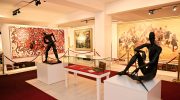
Tourism sustains this legacy through “fusion trails” at archaeological sites, where blended symbols illustrate historical exchanges. Environmental initiatives draw on nature motifs in art to advocate for conservation, such as efforts to preserve areas like the Akamas Peninsula. Educational programs in schools utilize these artifacts to teach multiculturalism, promoting tolerance within diverse communities. Popular media, including films and literature, romanticize these blends, portraying Cyprus as an enduring crossroads. In a globalized context, this artistic heritage fosters appreciation for diversity, demonstrating how historical adaptations inform current cultural expressions.
Discovering the Fusion Up Close
The Cyprus Museum in Nicosia houses hybrid treasures like the Enkomi bronzes, with entry at €4.50 and daily access except Mondays; audio guides provide context on the symbols. Paphos Archaeological Park features mosaics blending Roman and Eastern elements under open skies, with €4.50 admission and shaded paths for exploration.
Amathus ruins near Limassol offer free entry, with sea views that evoke the inspirations behind the blends. The Larnaca District Museum displays scarabs and seals, complementing visits to nearby sites. Spring or fall provides ideal conditions, avoiding summer heat; guided tours at €15-20 focus on influences and highlight subtle hybrids. Travel advisories for north-south crossings ensure smooth visits to varied locations.
A Fusion That Endures and Inspires
The fusion of Eastern and Western symbolic systems in Cypriot art represents a vibrant testament to the island’s position as a cultural bridge, where diverse elements combined into forms of lasting beauty and depth. This synthesis captured Cyprus’s character as an inclusive crossroads, transforming influences into innovations from protective symbols to celebrations of life. Exploration of a hybrid vase or blended landscape reveals the value placed on integration in a multifaceted society. This legacy underscores how borrowing and adaptation yield enduring contributions, offering perspectives on diversity in contemporary contexts.