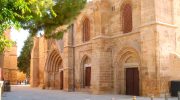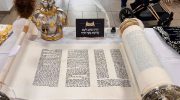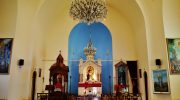
Cyprus is home to several officially recognized minority communities that form part of its broader religious and cultural landscape. Alongside the Greek Orthodox majority, three long-established minority groups are traditionally identified in official records: Maronites, Armenians, and Latin Catholics. Together, these communities represent a small but historically significant portion of the population, estimated at under five percent in total.
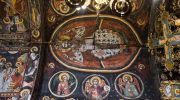
The 1960 Constitution of the Republic of Cyprus formally recognized these groups as religious minorities and provided parliamentary representation for each community. This arrangement reflects the island’s multi-layered social structure, shaped by centuries of migration, trade, and political change in the eastern Mediterranean.
Each community developed its own linguistic, cultural, and institutional identity while also integrating into wider Cypriot society. Their presence illustrates how Cyprus evolved as a crossroads of civilizations, influenced by movements of people from the Levant, Anatolia, and Europe.
Maronites keep ancient Arabic dialect alive
The Maronite community has been present in Cyprus since at least the early medieval period, with migration waves beginning around the 8th century. These movements were linked to broader population shifts in the eastern Mediterranean during periods of political instability in the Levant.
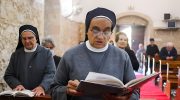
Over time, Maronite settlements became established primarily in the northern coastal regions of Cyprus. Historical records indicate that during the Lusignan period (1192–1572), the community maintained a strong rural presence and contributed to local agricultural and defensive systems of the island.
During the Ottoman conquest of Cyprus in 1570, significant demographic and social changes affected all communities on the island, including Maronite settlements. Many villages were abandoned or experienced population decline over subsequent centuries due to migration and economic pressures.
One of the most distinctive cultural features of the Maronite community is Cypriot Maronite Arabic, a language variety that developed in relative isolation from standardized Arabic dialects. Historically, it was concentrated in villages such as Kormakitis, which remained its main linguistic center into the modern period.
In 2008, Cypriot Maronite Arabic was officially recognized as a minority language by the Republic of Cyprus, reflecting broader efforts to preserve intangible cultural heritage. Today, however, Greek is widely used among younger generations, while linguistic preservation initiatives continue at the community level.
Armenian refugees built new lives after genocide
The Armenian presence in Cyprus dates back to at least the Byzantine period, when small groups were relocated to the island as part of imperial population policies. Over time, additional waves of settlement occurred during the Crusader and Lusignan periods, when political and economic ties between Cilicia and Cyprus encouraged movement between the two regions.
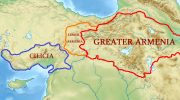
Following the fall of the Armenian Kingdom of Cilicia in 1375, further Armenian groups sought refuge in Cyprus and other parts of the eastern Mediterranean. During the Venetian period (1489–1572), Armenian communities were recognized as part of the island’s diverse urban population, particularly in commercial centers.
A major demographic change occurred in the early twentieth century, when survivors of violence and displacement in Anatolia and surrounding regions arrived in Cyprus. Many settled in cities such as Nicosia, Larnaca, and Limassol, contributing to urban development, craftsmanship, trade, and education.
The Armenian community established schools, cultural associations, churches, and social organizations that helped preserve language and identity. These institutions also played a role in introducing new culinary traditions, crafts, and professional skills into Cypriot society.
The 1974 division scattered minority communities
The events of 1974 had significant social and demographic consequences for all communities in Cyprus, including minorities. Population movements following the division of the island led to changes in settlement patterns, particularly for villages located in the northern part of Cyprus.
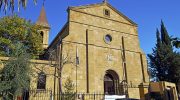
Some Maronite villages in the north became isolated or experienced major population decline, with residents relocating primarily to southern urban areas such as Nicosia. Smaller elderly populations remain in certain original settlements, while community life is now largely centered in the capital.
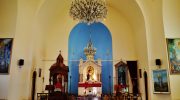
The Armenian community also experienced the loss or relocation of several important cultural and religious properties, particularly in areas affected by displacement. As a result, new community centers, churches, and schools were established in southern urban districts to maintain cultural continuity.
Latin Catholic communities, many of which were concentrated in urban centers, also adapted to demographic changes, with increased emphasis on urban parish life and integration into broader Cypriot society.
Education, Language, and Cultural Preservation
Each of the minority communities in Cyprus maintains educational and cultural institutions that support language preservation and cultural continuity.
Armenian schools in Cyprus focus on Armenian language, history, and cultural studies, ensuring that younger generations remain connected to their heritage. Schools operate in major cities including Nicosia, Larnaca, and Limassol, often functioning as important cultural centers in addition to educational institutions.
Community organizations also support cultural activities such as music, dance, and literature. Publications, media programs, and social associations contribute to maintaining linguistic identity in a multilingual environment.
The Maronite community has also undertaken initiatives to preserve Cypriot Maronite Arabic, particularly through cultural programs and documentation efforts. Meanwhile, Latin Catholic institutions reflect a multilingual environment shaped by both local Cypriot and international influences.

Religious and Liturgical Traditions
The Maronite community follows an Eastern liturgical tradition rooted in Syriac heritage, reflecting historical connections between the Levant and Cyprus. Their religious practices include elements of ancient Semitic languages and Eastern Mediterranean ritual traditions that evolved over many centuries.
The Armenian community in Cyprus is primarily associated with the Armenian Apostolic tradition, one of the oldest branches of Christianity in the Caucasus region. A smaller Armenian Catholic presence also exists, reflecting historical diversity within Armenian religious development.
Latin Catholics in Cyprus follow Western liturgical traditions linked to broader European religious history. Today, their community includes both Cypriot families and international residents, making it one of the more linguistically diverse religious groups on the island.
Each of these communities maintains places of worship, cultural associations, and annual commemorations that reflect their historical development and ongoing cultural identity within Cyprus.
Commemoration, Memory, and Social Solidarity
Public commemorations organized by Armenian community institutions in Cyprus have become part of the island’s broader civic and cultural calendar. These events often include memorial services, public gatherings, and cultural programs in major urban centers such as Nicosia.
Cyprus was among the early countries to formally recognize historical events affecting the Armenian population in the early twentieth century. This recognition has contributed to strong cultural and diplomatic ties between Cyprus and Armenian communities worldwide.
Over time, shared experiences of displacement and historical upheaval among different Cypriot communities have contributed to broader social understanding and solidarity. These overlapping historical narratives form part of the island’s modern identity and collective memory.
Why these minorities matter to Cyprus
The Maronite, Armenian, and Latin Catholic communities demonstrate the long-standing cultural diversity of Cyprus beyond its dominant linguistic and religious groups. Their histories reflect centuries of migration, trade, and regional interaction across the eastern Mediterranean.
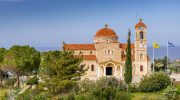
These communities have contributed to Cyprus in areas such as education, craftsmanship, commerce, cuisine, and cultural preservation. Although numerically small, their influence is visible in urban development, cultural institutions, and social life.
Their continued presence highlights the island’s historical role as a meeting point between Europe, the Middle East, and the wider Mediterranean world. Each community preserves distinct traditions while also participating in the shared civic identity of modern Cyprus.
Together, they illustrate how Cyprus developed as a multicultural society shaped by layered historical experiences rather than a single cultural narrative.