The legend of Pygmalion is one of the most enduring stories of transformation in Greek mythology, and it is closely connected to Cyprus, an island long associated with Aphrodite and the themes of beauty, love, and artistic creation. According to the myth, Pygmalion was a sculptor and, in some traditions, a king of Cyprus who became disillusioned with the behavior of the women around him. Rejecting ordinary human relationships, he devoted himself to his art and carved a statue of a woman so beautiful and perfect that he fell deeply in love with his own creation. This story, set in the sacred landscape of Cyprus, reflects local traditions that linked the island not only to divine beauty but also to the creative power of art under divine influence.
Cyprus’s association with Aphrodite, the goddess of love and beauty, makes it a fitting setting for a myth centered on aesthetic perfection and emotional longing. The island’s reputation as a place favored by the goddess reinforces the narrative’s theme that artistic achievement and divine presence are intertwined. In this context, the story of Pygmalion serves as an origin legend that connects Cypriot cultural identity to ideals of beauty, devotion, and sacred transformation.
The Sculptor and His Creation
Pygmalion’s role as a sculptor is central to the meaning of the myth. Sculpture in the ancient world was not simply craft but a form of creative expression that carried spiritual significance. By shaping stone into lifelike form, the artist imitated the creative power of the gods. Pygmalion’s statue, often described as an ivory figure of extraordinary grace, represents the pursuit of ideal beauty beyond the imperfections of ordinary life. His emotional attachment to the statue suggests that art can evoke feelings as powerful as those directed toward living beings.
The myth presents art as a bridge between imagination and reality. Pygmalion’s devotion to his sculpture blurs the boundary between creation and creator, reflecting ancient ideas about the potency of artistic representation. In loving the statue, he invests it with emotional and symbolic life even before divine intervention occurs. This aspect of the story highlights the belief that art could embody spiritual presence and that beauty was a form of divine expression.
Aphrodite’s Role and Divine Intervention
Moved by Pygmalion’s sincere devotion, Aphrodite answers his unspoken prayer. During a festival in her honor, Pygmalion asks the goddess to grant him a wife resembling his statue. In response, Aphrodite brings the statue to life, transforming it into a living woman. This moment of animation marks the union of human creativity and divine power. The goddess does not merely reward desire; she acknowledges the purity of the artist’s devotion and the sacred quality of beauty itself.
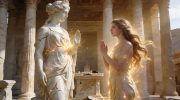
The transformation emphasizes the role of divine intervention in completing human aspiration. While Pygmalion could create physical form, only the goddess could grant life. This division of roles reflects the ancient understanding that artistic creation was an act of imitation that required divine approval to become fully real. Aphrodite’s involvement reinforces her identity as the patron of love, beauty, and generative power, while also affirming Cyprus as a land where the goddess’s presence was especially strong.
Ideal Beauty and Cultural Meaning
The Pygmalion myth reflects ancient concepts of ideal beauty as something transcendent and spiritually significant. The statue’s perfection represents an abstract ideal that surpasses ordinary human form. By bringing this ideal to life, the myth suggests that divine favor can elevate human imagination into reality. The story thus links aesthetic perfection with moral and spiritual aspiration, presenting beauty as a pathway to divine connection.
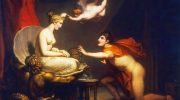
In the Cypriot context, where Aphrodite’s cult emphasized both physical and symbolic fertility, the myth carries additional meaning. The living statue becomes not only a beloved partner but also a participant in the cycle of life and renewal. In some traditions, she becomes the mother of Paphos, a figure associated with the foundation of the city of Paphos, further linking the myth to the island’s sacred geography.
Artistic Creation and Religious Thought
The legend of Pygmalion reveals how ancient societies viewed artistic creation as a sacred act. The sculptor’s ability to produce a lifelike image parallels divine creation of humanity. This parallel does not imply equality between human and god but highlights the idea that art participates in a divine process. The myth suggests that artistic skill is a gift that can approach sacred power when guided by devotion and reverence.
This concept reflects broader ancient beliefs in which images, statues, and representations held spiritual significance. Temples housed cult statues believed to embody divine presence, and rituals involved honoring these images as sacred objects. The story of Pygmalion echoes this belief by portraying a statue that becomes truly alive through divine blessing, illustrating the thin boundary between representation and reality in religious imagination.
Cyprus as a Landscape of Divine Favor
Setting the Pygmalion myth in Cyprus reinforces the island’s reputation as a place favored by the gods. The landscape associated with Aphrodite becomes a stage where art and divine power intersect. By locating the story on the island, tradition affirms Cyprus’s symbolic role as a birthplace of beauty and sacred transformation. The myth integrates artistic creativity into the island’s broader mythological identity, alongside other narratives connected to Aphrodite and her worship.
The association of Pygmalion with Cyprus also underscores the island’s cultural importance in Mediterranean storytelling. Myths set there often emphasize themes of love, fertility, and divine-human interaction, reinforcing its sacred reputation.
Legacy in Literature and Culture
The Pygmalion legend has had a long afterlife in literature, art, and philosophy. Ancient writers such as Ovid retold the story, shaping its emotional and symbolic dimensions for later audiences. In subsequent centuries, the myth inspired discussions about the nature of art, illusion, and reality. The idea of a creator falling in love with their creation became a powerful metaphor for artistic devotion and the transformative potential of imagination.

Although later interpretations often focus on psychological or aesthetic themes, the original setting in Cyprus preserves the myth’s religious foundation. The story’s enduring appeal demonstrates how ancient narratives continue to influence modern ideas about creativity and beauty.
Conclusion!
The legend of Pygmalion, set in Cyprus, expresses ancient beliefs about art, divine intervention, and ideal beauty. Through the sculptor’s devotion and Aphrodite’s transformative power, the myth illustrates the union of human creativity and divine grace. It reinforces Cyprus’s identity as a sacred landscape associated with love, beauty, and renewal. By presenting art as a pathway to the divine, the Pygmalion story captures a central aspect of ancient thought in which creativity, devotion, and transformation were inseparable parts of spiritual life.