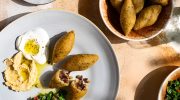
Souvla is not simply a way of cooking meat in Cyprus. It is a social rhythm, a shared understanding that some meals are meant to take time. Built around large chunks of meat slowly rotating over charcoal, souvla turns cooking into an event and eating into a collective reward. To understand souvla is to understand how Cypriots value patience, hospitality, and togetherness.
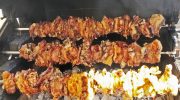
At its most basic level, souvla refers to large pieces of meat cooked on long metal skewers over charcoal. But the definition ends there, only technically. In practice, preparing souvla means committing several hours of the day to a shared experience that unfolds at its own pace.
Unlike fast-grilled skewered meats found across the Mediterranean, souvla rejects speed. Once the fire is lit, the day slows down. Conversations begin, drinks are poured, and the cooking becomes the backdrop rather than the focus. The food will be ready when it is ready, and everyone involved understands that this is the point.
Why Souvla Is Not Souvlaki
The distinction between souvla and souvlaki is essential to Cypriot food culture, even though the two are often confused abroad. Souvlaki is small, quick, and practical, fitting easily into daily routines and street food culture. Souvla, by contrast, is large, slow, and intentional, reshaping the day around its preparation.
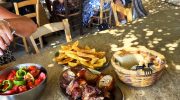
Preparing souvla signals that the gathering itself matters more than convenience. It is not something done for one person or in a hurry. It exists for families, celebrations, and long Sundays that stretch comfortably into the afternoon, where time is measured not by clocks but by turning skewers.
Roots in Rural Life
Souvla emerged from Cyprus’s agricultural past, when livestock was raised carefully and slaughtered infrequently. When an animal was prepared, it produced more meat than a single household could reasonably consume at once. Slow, communal roasting became both a practical solution and a social one.
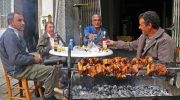
Charcoal, often sourced from carob or olive wood, provided a steady heat that allowed large, bone-in cuts to cook evenly. Over time, this method became associated not just with nourishment but with abundance and shared effort. The technique endured because it fit the realities of village life and reinforced social bonds, turning necessity into tradition.
The Foukou and the Fire
Central to souvla is the foukou, the charcoal grill designed to hold multiple long skewers. Traditionally simple in design, the foukou has evolved into a practical tool that allows steady rotation and careful control of heat, reflecting the importance of patience and precision in the process.
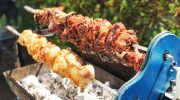
The fire is never rushed. Charcoal is allowed to burn down until it produces a consistent, glowing heat rather than open flames. The skewers begin high above the coals, warming the meat slowly before being lowered in stages. This gradual approach allows fat to render gently and flavours to develop without drying the meat.
The person managing the fire rarely steps away. Watching the heat, adjusting the height, and responding to subtle changes is part of the craft, transforming cooking into a form of quiet stewardship.
The Role of the Psistis
The psistis, the person in charge of the grill, holds a position of quiet authority. Often, a senior family member, the priest oversees the entire process from fire to carving, embodying experience and responsibility rather than control.
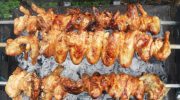
This role carries an unspoken etiquette. The priest typically eats last, ensuring everyone else is served first. Around the foukou, stories are exchanged, debates unfold, and younger generations observe how patience and attention shape the final result. In this way, the act of cooking becomes a lesson as much as a meal.
Simplicity Over Seasoning
One of the defining characteristics of souvla is restraint. Traditional preparation avoids heavy marinades, even though some regions use wine or additional spices. The focus remains on the quality of the meat, the charcoal, and the slow interaction between the two.
Seasoning is intentionally minimal. Salt is used to form a crust and enhance texture, oregano is added late for aroma rather than bitterness, and lemon is squeezed at the end to balance richness. This simplicity is deliberate, ensuring nothing distracts from the core elements that define souvla.
When Souvla Is Served
Souvla marks time in the Cypriot calendar and signals moments when ordinary routines are suspended. On Easter Sunday, after weeks of fasting, lamb, pork, or chicken souvla fills villages with smoke and anticipation. On Tsiknopempti, the island briefly disappears under a haze of charcoal as meat takes centre stage before Lent. On ordinary Sundays, souvla anchors family lunches that bring generations back to the same table.
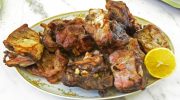
In each case, the dish announces more than a meal. It declares that the day is meant to be shared, that time has been set aside for people rather than schedules.
A Living Tradition in Modern Cyprus
Urban life has changed where souvla is cooked, but not how it is valued. In cities, foukoudes move to balconies and verandas, adapting tradition to modern living spaces. In tavernas, souvla is often offered only on specific days, acknowledging the time and care it requires.
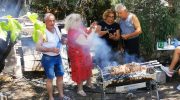
For younger Cypriots and those living abroad, hosting a souvla is a way of maintaining identity. The smell of charcoal and slow-roasting meat remains instantly recognisable, whether in a village courtyard or a distant diaspora gathering, linking people back to home through sensory memory.
Why Souvla Still Matters
Souvla endures because it resists modern pressure to hurry. It insists on time, presence, and shared attention, turning waiting into a meaningful part of the experience. The meat turns slowly, conversations unfold naturally, and the reward comes only after patience has been practised.
In a culture shaped by movement, change, and outside influence, souvla remains a steady reference point. It reflects a Cypriot belief that some pleasures are worth waiting for and that the best meals are the ones that bring people together long before the food is ready.